




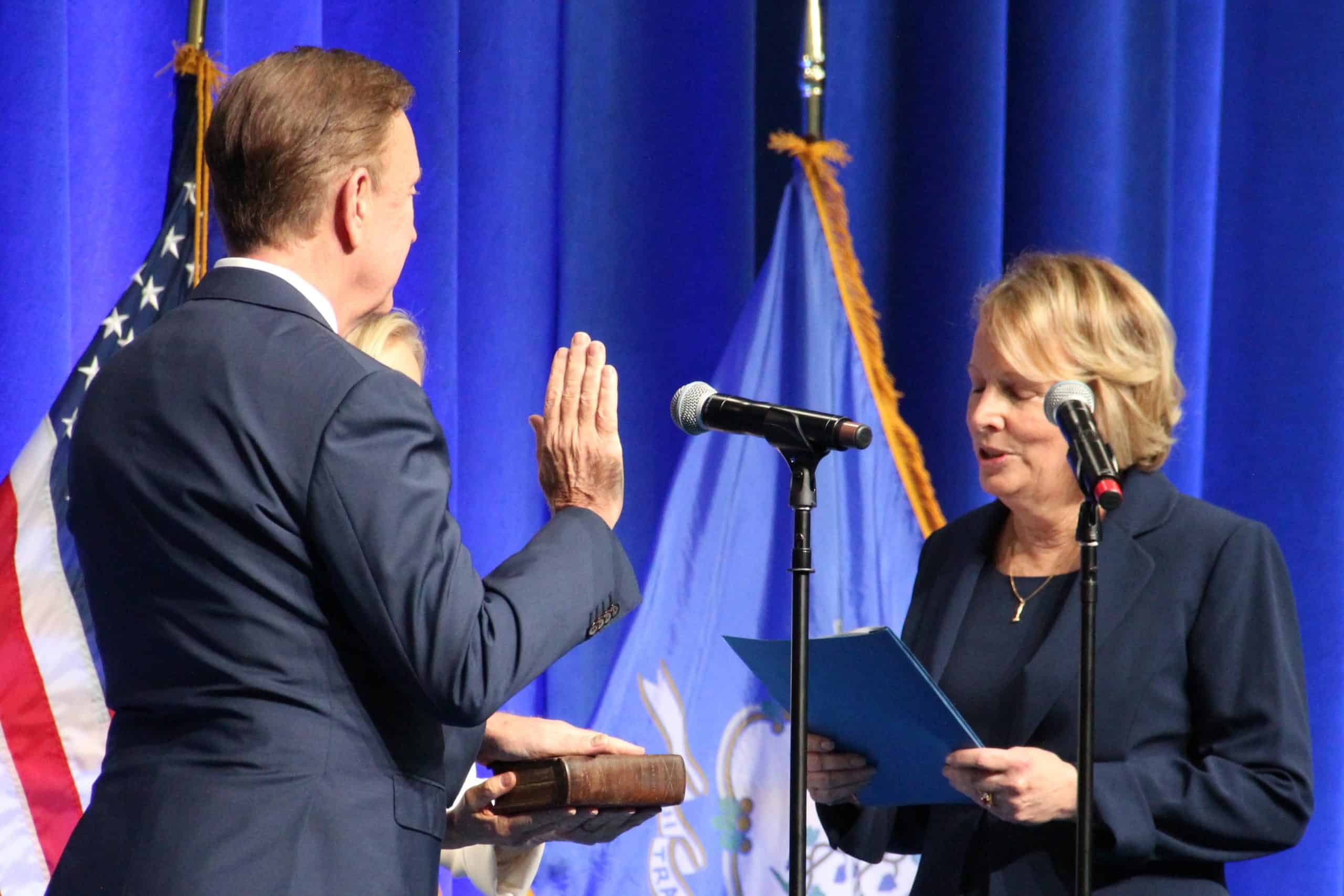
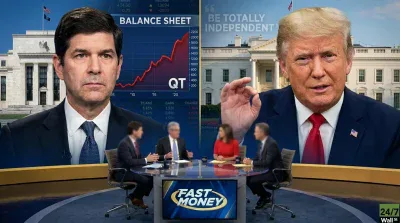
Kevin Warsh was sworn in as Federal Reserve Chairman this week, and the most striking thing about his arrival is how little Wall Street seems to care. On CNBC’s Halftime Report Friday, one host captured the moment with a line worth holding onto: “The Fed is not the first or second or third sentence of talking about the market these days.” AI has eaten the conversation.
Historically, a Fed chair transition is a market-defining event. Bond desks reposition for weeks, equity strategists rewrite year-ahead notes, and volatility creeps higher into the swearing-in. This time, the VIX sits at 16.76, down 14% over the past month, parked in the complacency zone. The S&P 500 is up 9% year to date and pushing record highs on AI capex enthusiasm, with the Fed running a distant third in the daily narrative.
What Warsh Actually Inherits
The underlying macroeconomic plumbing that the incoming leadership takes over is vastly more interesting than the general political silence surrounding it. The target federal funds upper bound currently stands at 3.75%, down exactly 75 basis points from its 2025 peak after three consecutive cuts. The Federal Reserve has held its benchmark policy rate steady since its December meeting, an active holding pattern that is now stretching past five full months.
A re-accelerating domestic inflation backdrop comfortably justifies why central bank officials are maintaining this extended pause. Core PCE, which remains the Fed’s absolute preferred inflation gauge, printed at 129.28 for March to mark its highest level in a rolling twelve-month window. The index continues to hover in the 91st percentile of its recent range, indicating persistent upward pricing pressure rather than the structural disinflation policymakers wanted.
The incoming employment data offers a much cleaner read on the true health of the domestic economy. The national unemployment rate printed at 4.3% as of the April release, remaining completely unchanged for two consecutive months and sitting safely inside the central bank’s traditional comfort band. This stability shows that the dual mandate remains fairly balanced for the moment. The ultimate question for fixed-income markets is which side of the ledger breaks first heading into the summer.
The Bond Market Is Quietly Repricing
Treasuries are telling a different story than the VIX, with the 10-year yield closing at 4.57% on May 21, up 27 basis points over the past month and sitting in the 98th percentile of its 12-month range. The 10Y-2Y spread has compressed to 0.43%, the low of the past year, down from a 0.74% peak in February. Long rates are rising while the curve flattens, a combination that historically signals markets pricing in higher-for-longer policy and slower forward growth.
Warsh’s Real Problem: Productivity vs. Prices
The Halftime panel framed Warsh’s challenge as navigating competing forces. On one side: inflationary pressures from war and AI infrastructure spending, with AI “now overtaking issuance in the investment grade debt market.” On the other: potential productivity gains could let the Fed cut without reigniting prices.
Vanguard’s 2026 outlook frames this directly. Their base case sees U.S. growth at 2.25% with core inflation at 2.6% and the policy rate at 3.5% by year-end, with limited room to cut below a 3.5% neutral rate. JPMorgan expects 2 to 3 cuts through 2026 on a shallow easing path. Both views require Warsh to convince a divided FOMC that forward productivity data matters more than backward inflation prints.
That fight is already starting. Fed Governor Christopher Waller is signaling openness to rate hikes, internal dissent that arrives on day one. Gary Cohn vouched for Warsh’s crisis credentials from 2008, saying “we wouldn’t have fixed it like we did without him.” The panel also noted Warsh is “a smooth political operator” who “got 8.5 years since he was considered for this job last time to think about exactly what he’s going to be doing.” He will need both skill sets.
What to Watch
The overarching structural setup across global capital markets looks highly unusual as we move into the summer. Equity investors have completely stopped caring about Federal Reserve announcements because the massive artificial intelligence capital expenditure boom is currently the only growth story that truly matters to Wall Street. Meanwhile, fixed-income bond investors are actively repricing their long-term risk expectations.
With benchmark ten-year Treasury yields breaking cleanly above four and a half percent and the curve flattening fast, this deep disconnect between stock complacency and rate repricing is where Warsh’s first major policy mistake will show up. Investors who want the authoritative read on the interest rate path itself can track it directly via the St. Louis Fed’s official DFEDTAR series. The Fed still controls the plumbing of the financial system, even if it no longer leads the daily media headlines.
Contact [email protected] for any questions or corrections.








 Top Gaining Stocks
 Top Losing Stocks