Jensen Huang Says Nvidia and Microsoft Just Reinvented the PC. But There Might Be 1 Problem
For years, the PC industry has been stuck in a rut. Consumers stretched upgrade cycles from three years to five or more, smartphone sales stole attention, and innovation often boiled down to slightly faster processors and better battery life. So…

For years, the PC industry has been stuck in a rut. Consumers stretched upgrade cycles from three years to five or more, smartphone sales stole attention, and innovation often boiled down to slightly faster processors and better battery life. So when Nvidia (NASDAQ:NVDA | NVDA Price Prediction) CEO Jensen Huang declares that the PC has been “reinvented,” investors should pay attention.
The real question is whether this is the beginning of a new hypergrowth cycle — or just another ambitious technology promise.
Nvidia Wants AI to Live on Your Desktop
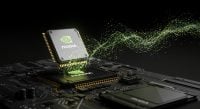
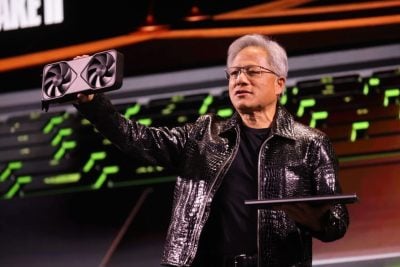
At Computex 2026, Nvidia and Microsoft (NASDAQ:MSFT) unveiled RTX Spark, a new class of Windows PCs designed specifically for agentic AI. According to Nvidia’s June 1 announcement, RTX Spark combines a 20-core Arm (NASDAQ:ARM)-based CPU derived from Nvidia’s Grace architecture with a Blackwell-based RTX GPU containing 6,144 CUDA cores and up to 128GB of unified memory. The system delivers up to 1 petaflop of AI performance while maintaining laptop-class power efficiency.
This is not Vera Rubin, Nvidia’s next-generation data center platform. Nor is it a traditional Blackwell accelerator. Instead, RTX Spark — internally known as N1X — is a custom system-on-chip designed specifically for PCs. It combines Nvidia’s AI, graphics, and computing technologies into a single Arm-based package optimized for local AI workloads.
The goal is straightforward: move AI agents from the cloud onto the device.
That matters because every trip to a remote server adds latency and cost. An AI agent running locally can respond faster, operate privately, and execute tasks without generating cloud-computing fees every time it acts. Microsoft and Nvidia are even building native Windows security tools and agent frameworks to make those assistants a permanent part of the desktop experience.
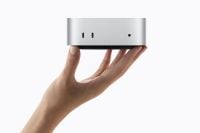
If successful, the strategy could challenge Apple‘s (NASDAQ:AAPL) growing dominance in premium computing and create the first truly compelling reason for consumers to upgrade PCs in years.
The Memory Problem Nobody Wants to Talk About
Granted, Nvidia’s vision is exciting. But investors should pay attention to one potential pain point: memory.
AI models are memory-hungry. The larger the model, the more memory it requires. Nvidia itself highlighted the ability to run local 120-billion-parameter language models and process contexts of up to 1 million tokens on RTX Spark systems. That capability depends heavily on large memory pools.
Here’s the problem. The semiconductor industry is already navigating what many analysts have nicknamed “RAMaggedon” — a severe shortage of advanced AI memory. High-bandwidth memory (HBM), the premium memory technology used in AI systems, remains in tight supply, and pricing has climbed as demand from hyperscalers continues to outpace production. Industry reports indicate that leading suppliers have largely pre-allocated 2026 HBM capacity.
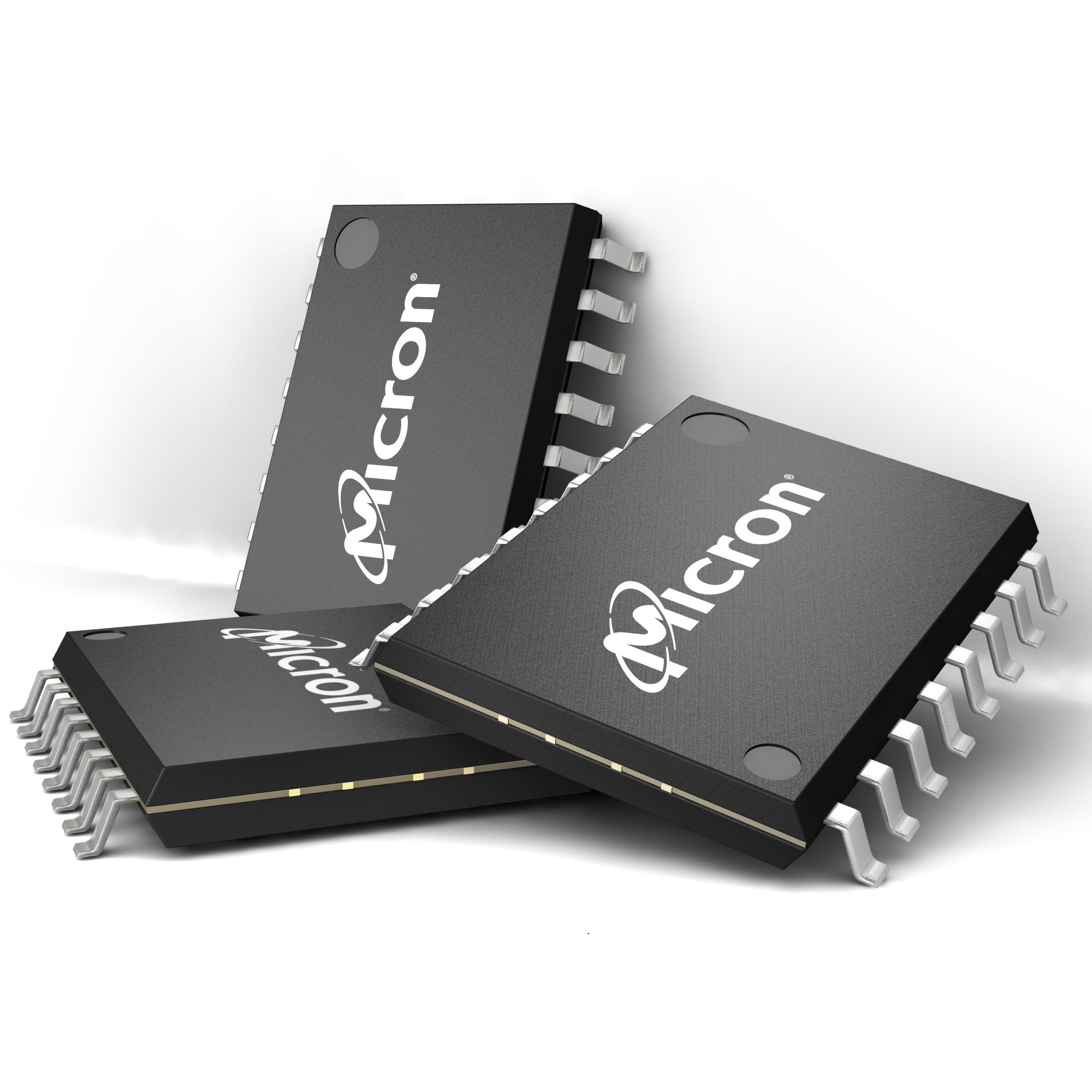
Micron (NASDAQ:MU) has repeatedly noted that its HBM capacity is effectively sold out through 2026, reflecting how aggressively AI infrastructure customers are consuming available supply.
While RTX Spark systems use unified memory rather than the exact HBM configurations found in data centers, the broader point remains: advanced AI computing increasingly competes for the same memory manufacturing resources.
And memory costs matter. Intel (NASDAQ:INTC) is even turning “scrap” CPUs into big profits. Consumers may love the idea of a personal AI assistant running 24 hours a day. They may be less enthusiastic about paying premium prices for the hardware needed to support it.
Microsoft Has Been Here Before
Surprisingly, Microsoft has already tried a version of this story. The company spent years promoting digital assistants, from Cortana to various AI-enhanced Windows experiences. Adoption rarely matched expectations because the assistants lacked enough capability to justify becoming a permanent part of users’ workflows.
Agentic AI is more powerful than those earlier efforts. Yet consumers still need a reason to upgrade functioning PCs.
That means Nvidia and Microsoft must prove that local AI agents are not merely interesting demos but indispensable tools. Yet that’s exactly why manufacturers including Dell (NYSE:DELL), HP (NYSE:HPQ), Lenovo, Asus, MSI, and Microsoft have already lined up behind RTX Spark-powered devices. They think it will.
Key Takeaway
In short, Nvidia’s RTX Spark announcement may be the most ambitious attempt to reinvent personal computing since Apple’s M-series processors arrived in Macs. Running AI agents locally could slash latency, improve privacy, and reduce cloud costs while creating a new PC upgrade cycle.
That said, investors should not assume success is guaranteed. Memory shortages, rising component costs, and uncertain consumer demand remain real obstacles. Regardless, Nvidia and Microsoft have introduced a fascinating new vision for computing.
The technology looks ready. Whether the economics are ready may determine if this becomes the next iPhone moment — or simply the next ambitious PC refresh.
Contact [email protected] for any questions or corrections.
After two decades of patrolling the dark corners of suburbia as a police officer, Rich Duprey hung up his badge and gun to begin writing full time about stocks and investing. For the past 20 years, he’s been cruising the markets looking for companies to lock up as long-term holdings in a portfolio while writing extensively on the broad sectors of consumer goods, technology, and industrials. Because his experience isn’t from the typical financial analyst track, Rich is able to break down complex topics into understandable and useful action points for the average investor. His writings have appeared on The Motley Fool, InvestorPlace, Yahoo! Finance, Money Morning, and, of course, 24/7 Wall St. He has been featured in both U.S. and international publications, including MarketWatch, Financial Times, Forbes, Fast Company, and USA Today.