XMAG vs. MAGS: Betting Against or All-In on the Magnificent 7?
The Defiance Large Cap ex-Mag 7 ETF (NASDAQ:XMAG) and the Roundhill Magnificent Seven ETF (NASDAQ:MAGS) are photographic negatives of one another. MAGS holds only the seven mega-caps driving the AI cycle, while XMAG holds the S&P 500 with those same…

This post may contain links from our sponsors and affiliates, and Flywheel Publishing may receive compensation for actions taken through them.

The Defiance Large Cap ex-Mag 7 ETF (NASDAQ:XMAG) and the Roundhill Magnificent Seven ETF (NASDAQ:MAGS) are photographic negatives of one another. MAGS holds only the seven mega-caps driving the AI cycle, while XMAG holds the S&P 500 with those same seven names surgically removed. Owning one is the inverse of owning the other, and 2026 is the first year in which that inversion has produced a meaningful real-time gap: XMAG is up 10.73% year to date, while MAGS is down 0.45%.
What each fund is actually betting on
MAGS is a concentration bet on the AI capex cycle. The seven economic exposures are NVIDIA, Apple, Amazon, Meta, Microsoft, Tesla, and Alphabet, sized in a tight band between 3.64% (NVDA) and 2.52% (GOOGL). The implicit thesis is straightforward: hyperscaler demand sustains, Blackwell-class chips ship into a structurally undersupplied market, and mega-cap dominance persists. The data still supports the setup. NVIDIA reported Q1 FY27 revenue of $81.61 billion, up 85.2% year over year, and Microsoft’s AI business is now running at a $37 billion annual run rate, up 123%.
XMAG flips that thesis, making it a breadth bet, wagering that valuations on the leaders are stretched (NVDA carries a market cap of roughly $5.05 trillion and Apple trades at a 36 P/E), that concentration risk in cap-weighted indexes has become uncomfortable, and that the other 490-plus large caps will close the gap as rate and earnings conditions normalize. Sector mix tells the story: MAGS is effectively 100% technology, communication services, and consumer discretionary. XMAG redistributes weight into financials, industrials, healthcare, energy, and staples, sectors MAGS has zero exposure to.
Where the divergence shows up
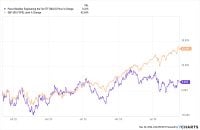
The last month is the clearest example. Microsoft is down 16.21% year to date, Amazon dropped 10.45% in the past month, and Apple lost 7.82% in a single week. MAGS absorbed all of that, falling 5.07% over the week. XMAG, holding none of those names, slipped just 1.95% over the same stretch and is up 2.80% over the past month. Over a full year, the gap narrows: MAGS +26.42% versus XMAG +21.71%. That is the trade in two numbers, and MAGS wins when the leaders lead, while XMAG wins when breadth reasserts.
The structural details that matter
MAGS charges 0.29% on roughly $3.5 billion in assets, and its latest NPORT filing shows something most investors never notice. Only about a third of its net assets are held directly in the Mag 7. More than half is parked in Treasury bills, with the rest in swap contracts that synthetically deliver the economic exposure. That structure introduces counterparty risk that a physical‑replication ETF simply doesn’t have. XMAG is smaller and newer, which means wider bid‑ask spreads, thinner daily liquidity, and a real chance of closure if assets don’t scale. It’s the classic trade‑off between synthetic exposure and fund durability.
The verdict
Both funds work best as satellites rather than core positions. MAGS fits the investor who already owns a broad index and wants to lean harder into the AI capex cycle without juggling seven individual tickers. XMAG suits the investor who holds an S&P 500 fund and wants to counterbalance the index’s heavy tilt toward those same seven names. The whole equation turns on one variable: whether the next twelve months reward concentration or breadth. Price action in 2026 so far is siding with breadth, the environment where overweighting diversification tends to beat concentrated leadership bets.
Contact [email protected] for any questions or corrections.
David Beren has been a Flywheel Publishing contributor since 2022. Writing for 24/7 Wall St. since 2023, David loves to write about topics of all shapes and sizes. As a technology expert, David focuses heavily on consumer electronics brands, automobiles, and general technology. He has previously written for LifeWire, formerly About.com. As a part-time freelance writer, David’s “day job” has been working on and leading social media for multiple Fortune 100 brands. David loves the flexibility of this field and its ability to reach customers exactly where they like to spend their time. Additionally, David previously published his own blog, TmoNews.com, which reached 3 million readers in its first year. In addition to freelance and social media work, David loves to spend time with his family and children and relive the glory days of video game consoles by playing any retro game console he can get his hands on.