‘Warsh Fooled Trump’ and the Market Is Already Reacting
Markets spend a lot of time trying to predict what central bankers will do next. Sometimes they get it right. Other times they build an entire narrative around an assumption that turns out to be wrong. That appears to be…

This post may contain links from our sponsors and affiliates, and Flywheel Publishing may receive compensation for actions taken through them.
Markets spend a lot of time trying to predict what central bankers will do next. Sometimes they get it right. Other times they build an entire narrative around an assumption that turns out to be wrong.
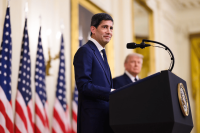
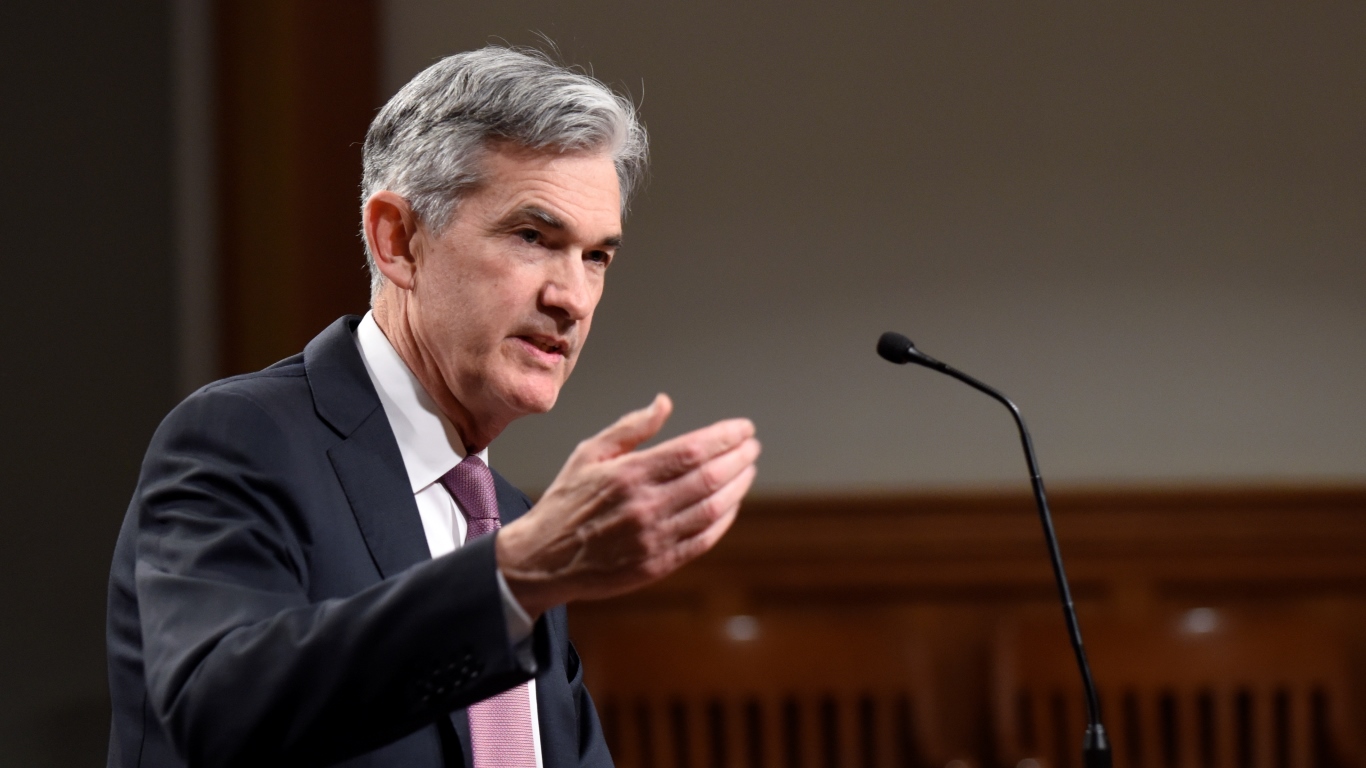
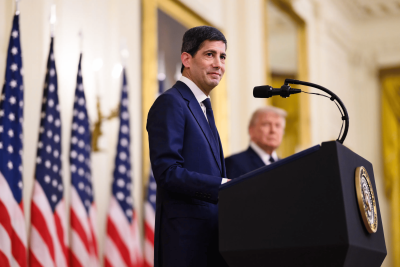
That appears to be happening with Federal Reserve Chair Kevin Warsh. When President Trump nominated him to lead the central bank, many investors immediately concluded lower interest rates were on the way. Critics warned he would simply deliver the White House’s preferred policy; supporters expected a more accommodative Fed.
Yet after Warsh’s first policy meeting, those expectations are being challenged. Betting markets swung sharply, with Bloomberg columnist Conor Sen noting that traders were pricing in a 35% to 40% chance of a July rate hike and concluding, “Warsh fooled Trump.” Whether that specific prediction proves correct is less important than what the shift reveals: investors may have misunderstood Warsh from the start. As of July 8, CME FedWatch pegs the probability of a hold at the July 28-29 meeting at roughly 70%, with a hike still firmly on the table for September.
The Assumption Was Always Too Simple
Many of Warsh’s critics argued his appointment would undermine the Federal Reserve’s independence. The expectation was that he would serve as a rubber stamp for the White House’s preferred policy of lower interest rates.
A closer look at Warsh’s record never fully supported that conclusion. During his confirmation hearings, he repeatedly emphasized preserving the Fed’s institutional credibility and independence, arguing that public trust in the central bank depends on policymakers making decisions based on economic conditions rather than political pressure.
That position is consistent with his earlier tenure as a Fed governor during the 2008 financial crisis. While Warsh has often criticized certain Fed policies, particularly large-scale balance sheet expansion and excessive market signaling, he has never suggested the central bank should surrender its independence.
Since his appointment, Warsh has charted his own course in ways that made the original narrative look simplistic almost immediately.
A Different Kind of Fed Chair
The most notable shift under Warsh may not be interest rates themselves but how the Fed communicates. For years, investors grew accustomed to extensive forward guidance, with Fed officials signaling future policy moves months in advance so markets could adjust gradually. Warsh is clearly less interested in that approach.
His first policy statement, released June 17, ran to roughly 130 words, about two-thirds shorter than prior editions, and stripped out the easing bias that had guided markets through the previous year. The FOMC voted 12-0 to hold the federal funds rate at 3.50% to 3.75%, but the real story was in the projections beneath that unanimous hold. Nine of the 18 officials who submitted forecasts now pencil in at least one rate hike before year-end, a dramatic reversal from March when the median projection implied a cut. The median year-end rate projection jumped to 3.8%, up from 3.4% in March. Warsh himself declined to submit a dot-plot projection, consistent with his longstanding skepticism of forward guidance.
Markets reacted quickly. The 2-year Treasury yield, a sensitive gauge of near-term Fed expectations, climbed roughly 11 basis points on June 17. The S&P 500 slipped about 0.6% on the day as investors recalibrated for a higher-for-longer rate path.
Inflation is at the center of the discussion. The May 2026 consumer price index came in at 4.2% year-over-year, well above the Fed’s 2% target, driven in large part by a surge in energy prices after the U.S.-Iran conflict disrupted oil markets. The Fed’s updated projections raised its 2026 PCE inflation forecast to 3.6%, up sharply from 2.7% in March, while core PCE is now expected to finish the year at 3.3%. Betting markets quickly swung from expecting rate cuts to pricing in possible rate hikes as investors worried inflation would reaccelerate. Then came a ceasefire agreement, and rate hike expectations eased briefly.
They have since climbed again. On July 1, Warsh made his first appearance on the international stage at the ECB’s annual Forum on Central Banking in Sintra, Portugal, where he shared a panel with ECB President Christine Lagarde, Bank of England Governor Andrew Bailey, and Bank of Canada Governor Tiff Macklem. He reaffirmed the Fed’s commitment to its 2% target and stated flatly that prices are too high, while declining to offer any guidance on the July meeting. The message was clear: the Fed under Warsh will respond to data, not to political pressure or market lobbying for easier policy.
By July 1, prediction markets Kalshi and Polymarket placed the likelihood of any 2026 rate hike at 53% to 54%. Separately, options traders were beginning to price in the possibility that the broader market was overestimating how aggressively the Fed would ultimately tighten, reflecting the genuine uncertainty that has replaced the earlier consensus of easy cuts.
Betting Markets Keep Swinging
The past several months have offered a useful lesson about prediction markets and their limits. Since Warsh’s nomination, betting markets have cycled from heavily favoring rate cuts, to forecasting hikes during the Middle East conflict, back toward steady rates after tensions eased, and now toward renewed tightening risks as inflation data continues to run hot.
Those shifts reflect changing headlines, but they also reveal the limits of crowd forecasting. The “wisdom of crowds” works best when participants independently evaluate available information. Once money and emotion enter the equation, crowd behavior can shift from careful analysis toward momentum, with traders following each other rather than the underlying economic reality.
Prediction markets remain useful as real-time snapshots of investor sentiment, and they should not be dismissed entirely. But treating them as definitive road maps has repeatedly led investors astray throughout Warsh’s short tenure. In most cases, they tell us more about what traders feel today than what will actually happen at the next FOMC meeting.
Key Takeaway
In short, Warsh is proving harder to categorize than either his supporters or critics expected. Markets increasingly believe he is willing to raise rates if inflation requires it, regardless of who appointed him or what the White House prefers.
That does not mean a July rate hike is coming. It means uncertainty remains elevated and the Fed is keeping all options open. The next major data points, including the June CPI report due July 14, will carry considerable weight in shaping the conversation before the July 28-29 meeting.
For observers trying to track what comes next, the larger lesson may be that betting markets are best used as one data point among many. Prediction markets capture sentiment, not certainty. Economic data, central bank communications, and a clear-eyed reading of what policymakers have actually said will always matter more than whichever wager happens to be attracting the most attention this week.
Editor’s note: This article was updated to include data from the June 17, 2026 FOMC meeting, including the dot-plot split of nine of 18 officials projecting a 2026 rate hike, the median year-end federal funds rate projection rising to 3.8%, and updated May 2026 CPI and PCE inflation figures. It also incorporates context from Warsh’s July 1 appearance at the ECB’s Sintra forum and the latest CME FedWatch and Polymarket rate-hike probabilities as of early July 2026.
Contact [email protected] for any questions or corrections.
After two decades of patrolling the dark corners of suburbia as a police officer, Rich Duprey hung up his badge and gun to begin writing full time about stocks and investing. For the past 20 years, he’s been cruising the markets looking for companies to lock up as long-term holdings in a portfolio while writing extensively on the broad sectors of consumer goods, technology, and industrials. Because his experience isn’t from the typical financial analyst track, Rich is able to break down complex topics into understandable and useful action points for the average investor. His writings have appeared on The Motley Fool, InvestorPlace, Yahoo! Finance, Money Morning, and, of course, 24/7 Wall St. He has been featured in both U.S. and international publications, including MarketWatch, Financial Times, Forbes, Fast Company, and USA Today.