3 Stocks Berkshire Hathaway Like This June
Berkshire Hathaway’s Q1 2026 13F filing, dated May 15, 2026, covering positions held as of March 31, 2026, offers the cleanest read yet on how Greg Abel is steering Berkshire’s $300+ billion equity book. The early-summer ritual of dissecting those…

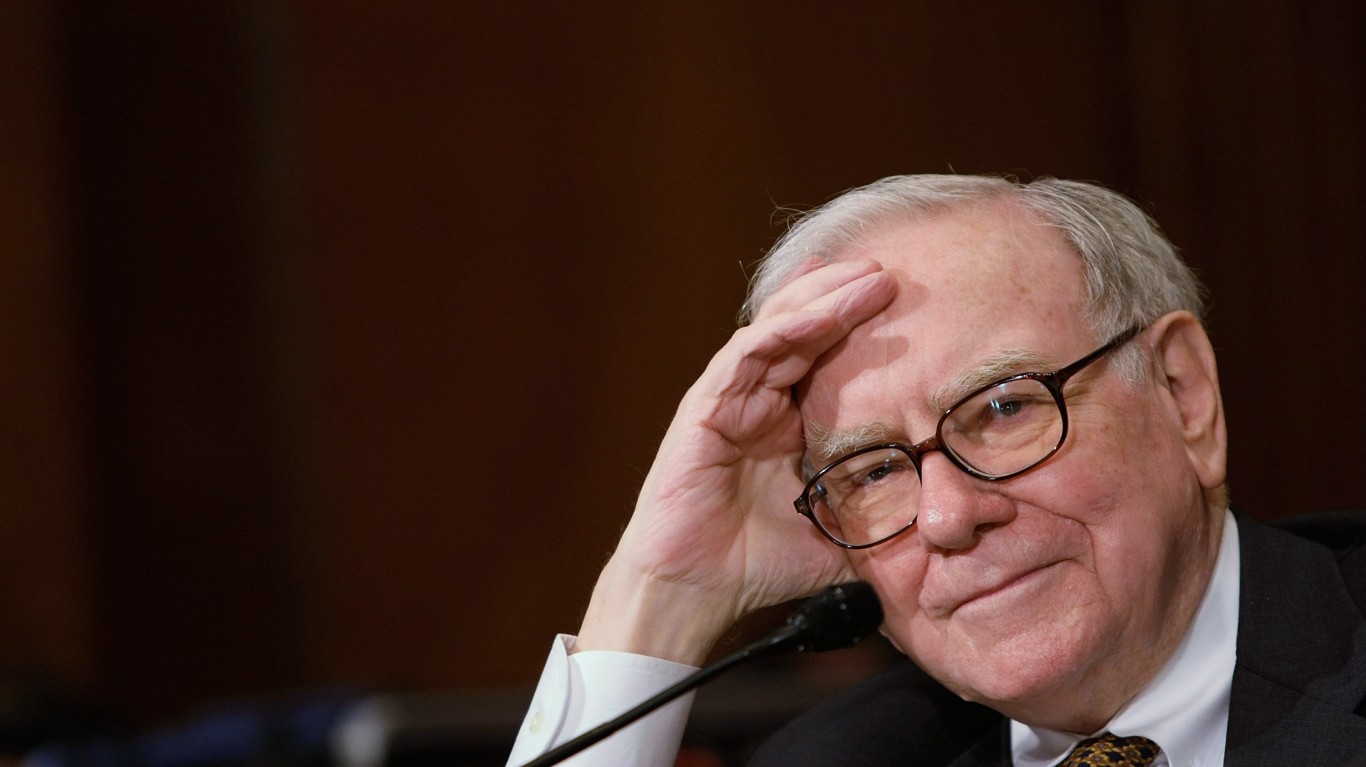
Berkshire Hathaway’s Q1 2026 13F filing, dated May 15, 2026, covering positions held as of March 31, 2026, offers the cleanest read yet on how Greg Abel is steering Berkshire’s $300+ billion equity book. The early-summer ritual of dissecting those moves has investors hunting for signals on where the most patient institutional capital sees value. Three names stood out for the size and conviction of the buying. 13F snapshots are point-in-time and may not reflect current holdings, but the message is clear: Berkshire is leaning into beaten-down cyclicals and one mega-cap AI compounder.
Delta Air Lines
Delta Air Lines (NYSE:DAL | DAL Price Prediction) is the headline grabber. Berkshire exited every airline during COVID, and Abel’s team just reversed course with a brand-new position of 39,809,456 shares worth roughly $2.65 billion. That is a deliberate, high-conviction re-entry.
The fundamentals back the call. Delta’s Q1 FY26 earnings report delivered adjusted EPS of $0.64, up 44% year over year, on revenue of $14.20 billion (+9%) with free cash flow of $1.227 billion. premium ticket revenue rose 14%, loyalty revenue rose 13%, and the American Express remuneration crossed $2.00 billion (+10%). Diversified high-margin revenue now accounts for 62% of total adjusted revenue. CEO Ed Bastian guided the June quarter to “$1 billion of profit” with EPS of $1.00 to $1.50, and the full-year framework calls for EPS of $6.50 to $7.50 and free cash flow of $3 billion to $4 billion.
The market is validating the thesis. Delta is up 23% since the 13F filing date and 26% year to date, with shares at $89.05 against a $58.23 billion market cap. Sentiment is leaning the same way, with a composite sentiment score of 62.03 (bullish, medium confidence).
Risk: Fuel is the swing variable. Adjusted fuel expense rose 8% to $2.59 billion last quarter, and management flagged a projected $2 billion-plus year-over-year fuel cost increase in the June quarter, which keeps a downward bias on capacity until that improves.

Lennar
Lennar (NYSE:LEN) saw a 43% increase in shares held. The buy ran straight into a soft quarter, exactly the kind of dislocation Berkshire historically rewards.
Lennar’s Q2 FY26 results, filed June 11, 2026, showed EPS of $1.24 (down from $1.81) on revenue of $7.94 billion (down from $8.38 billion), with gross margin on home sales compressing to 16% from 18% and average sales price down 5% to $371,000. Operationally: construction cycle time fell to a record-low 121 days from 132, construction costs improved 2% sequentially, and Lennar runs an asset-light strategy with less than 5% of land on the balance sheet. The company also repurchased 5 million shares for $447 million at an average $89.35 during Q2, near current levels.
CEO Stuart Miller framed the setup bluntly: “The fundamental shortage of housing in America has not been solved. Demand is real, deferred, and building.” The gap between current 13% incentive levels and a normalized 4% to 6% is narrowing for the first time in three years, which is the leading indicator that matters.
Shares trade at $92.72 with a $19.96 billion market cap, down 14% year to date and down 20% over one year. That weakness is precisely what Berkshire was buying.
Risk: Mortgage rates remain elevated, net homebuilding debt jumped to $1.98 billion from $643 million at the end of Q4 2025, and buyer incentives at 13% are still doing heavy lifting. Margins need that incentive number to compress.
Alphabet
Alphabet (NASDAQ:GOOGL) was the most aggressive add of the quarter, with Berkshire growing the Class A position by 204% and initiating a brand-new Class C (GOOG) stake. That is a portfolio-level statement on AI infrastructure.
The Q1 FY26 numbers explain the conviction. Alphabet delivered EPS of $5.11 versus $2.63 consensus on revenue of $109.90 billion (+22%), with operating income of $39.70 billion (+30%) and a 36% operating margin. Google Cloud put up $20.03 billion in revenue (+63%) with backlog nearly doubling quarter over quarter to more than $460 billion. Consumer AI is monetizing: 350 million paid subscriptions, Gemini Enterprise paid MAU growth of 40% QoQ, and Waymo running more than 500,000 fully autonomous rides per week. Sundar Pichai’s framing: “2026 is off to a terrific start. Our AI investments and full stack approach are lighting up every part of the business.”
Valuation is the rare part. Alphabet trades at a P/E of 15 with 36% ROE and a 33% net margin. The stock at $350.12 is down 13% since the 13F filing despite being up 110% over one year. Analyst consensus is 89% bullish with a $432.83 target, and the base-case model points to $437.05 over twelve months, implying 25% upside.

Risk: CapEx is the swing factor. Q1 CapEx hit $35.67 billion (+107%), free cash flow fell 47% to $10.1 billion, and full-year CapEx guidance sits at $175 billion to $185 billion. The ROI clock on those AI build-outs is now ticking in plain view.
What to watch
Three different theses, one common thread: Abel is buying earnings power where current sentiment underprices it. The next 13F, due August, will show whether these were starter positions or down payments.
Contact [email protected] for any questions or corrections.
Joel South covers large-cap stocks, dividend investing, and major market trends, with a focus on earnings analysis, valuation, and turning complex data into actionable insights for investors.
He brings more than 15 years of experience as an investor and financial journalist, including 12 years at The Motley Fool, where he served as an investment analyst, Bureau Chief, and later led the Fool.com investing news desk. He has also co-hosted an investing podcast and appeared across TV and radio discussing market trends.