Masayoshi Son Says Arm Holdings Could Be Worth $4 Trillion. Should You Believe Him?
Artificial intelligence is reshaping the semiconductor industry in ways few investors anticipated just a few years ago. The early winners were obvious: Nvidia (NASDAQ:NVDA | NVDA Price Prediction) dominated AI accelerators, while memory makers like Micron Technology (NASDAQ:MU) are benefiting…

Artificial intelligence is reshaping the semiconductor industry in ways few investors anticipated just a few years ago. The early winners were obvious: Nvidia (NASDAQ:NVDA | NVDA Price Prediction) dominated AI accelerators, while memory makers like Micron Technology (NASDAQ:MU) are benefiting from soaring demand for high-bandwidth memory.
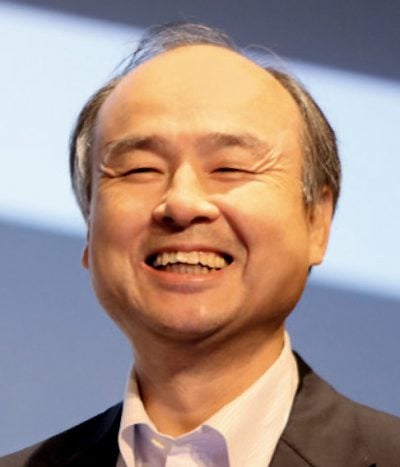
Now the battle is shifting toward a less glamorous but equally important component of AI infrastructure — the CPU. That shift helps explain why SoftBank CEO Masayoshi Son believes Arm Holdings (NASDAQ:ARM) could increase its value tenfold from its current market capitalization of roughly $390 billion. It is an ambitious prediction, but unlike many bold technology forecasts, there is a tangible roadmap behind it.
Arm Is Expanding Beyond Its Traditional Business
For decades, Arm operated one of the most profitable business models in technology. The company designed processor architectures and licensed them to companies such as Apple (NASDAQ:AAPL), Qualcomm (NASDAQ:QCOM), and Samsung. Last year, royalty and licensing revenue generated over $4 billion without Arm needing to manufacture a single chip. That model may be changing.
Arm is moving into supplying complete processors rather than simply licensing intellectual property. Instead of collecting a royalty on every chip sold, Arm could capture a much larger share of the economics by selling finished products.
The strategy mirrors what Nvidia accomplished when it evolved from a graphics chip designer into a full-stack AI infrastructure provider. For Arm, the opportunity is even larger because CPUs remain the central nervous system of every computing platform.
SoftBank has also invested heavily in Intel‘s (NASDAQ:INTC) foundry business, creating a potential manufacturing partner outside of Taiwan Semiconductor Manufacturing (NASDAQ:TSM). While Arm has no plans to build fabrication plants itself, access to multiple manufacturing partners could support a direct-chip strategy.
AI Is Turning CPUs Into Critical Infrastructure Again
Son’s thesis depends on one major assumption: AI becomes increasingly CPU-intensive. That sounds counterintuitive because Nvidia’s GPUs currently dominate AI training. Yet GPUs cannot operate independently. CPUs manage memory, route data, coordinate workloads, and keep AI systems running efficiently.
As AI increasingly shifts toward inference — the process of running trained models in real-world applications — CPU performance and power efficiency become increasingly important. This trend is already visible across the industry:
| Company | ARM-Based CPU Platform |
| Amazon (NASDAQ:AMZN) AWS | Graviton |
| Microsoft (NASDAQ:MSFT) Azure | Cobalt |
| Google Cloud | Axion |
| Nvidia | Grace |
According to Amazon, Graviton-powered instances now account for more than half of newly added server capacity. Meanwhile, Nvidia pairs its Grace CPU with Blackwell AI systems, making ARM architecture a core component of its AI infrastructure strategy.
The result is mounting pressure on Advanced Micro Devices‘ (NASDAQ:AMD) EPYC processors and Intel’s Xeon lineup. UBS estimates ARM-based chips could capture 40% to 45% of server CPU shipments by 2030.
Can Arm Really Challenge AMD and Intel?
The answer increasingly appears to be yes. For decades, AMD and Intel benefited from the dominance of x86 architecture. However, AI data centers face a new constraint: power consumption.
ARM’s architecture was originally designed for smartphones, where energy efficiency is paramount. As a result, ARM-based processors often deliver higher performance per watt than competing x86 chips. That is important when hyperscalers are spending tens of billions of dollars annually on power, cooling, and data center expansion.
The advantage is not merely theoretical. Amazon, Microsoft, Google, and Nvidia are all deploying custom ARM silicon instead of relying exclusively on AMD or Intel. In effect, the largest cloud companies are creating their own alternatives to the traditional CPU vendors.
At the same time, ARM benefits regardless of which customer wins because it sits in the middle collecting licensing fees — and potentially much larger hardware profits if its direct-chip strategy succeeds.
Key Takeaway
In short, Masayoshi Son’s prediction is aggressive, but it is not built on fantasy. Arm is benefiting from two powerful trends simultaneously: the rise of custom AI silicon and growing demand for energy-efficient CPUs.
Granted, a jump from roughly $390 billion to $4 trillion would require flawless execution, broader adoption of ARM servers, and success in selling its own processors. That is a tall order. Yet the company is no longer competing solely in smartphone chips. It is positioning itself at the center of AI infrastructure, cloud computing, and next-generation PCs.
For investors, the key question is not whether Arm will 10X tomorrow. It is whether ARM architecture becomes the foundation of the AI era. If that happens, Son’s forecast may look less outrageous than it does today.
Contact [email protected] for any questions or corrections.
After two decades of patrolling the dark corners of suburbia as a police officer, Rich Duprey hung up his badge and gun to begin writing full time about stocks and investing. For the past 20 years, he’s been cruising the markets looking for companies to lock up as long-term holdings in a portfolio while writing extensively on the broad sectors of consumer goods, technology, and industrials. Because his experience isn’t from the typical financial analyst track, Rich is able to break down complex topics into understandable and useful action points for the average investor. His writings have appeared on The Motley Fool, InvestorPlace, Yahoo! Finance, Money Morning, and, of course, 24/7 Wall St. He has been featured in both U.S. and international publications, including MarketWatch, Financial Times, Forbes, Fast Company, and USA Today.