3 iShares ETFs to Buy Now as South Korea and Taiwan Soar Past 100% Gains in 2026
The 2026 rally in North Asian equities has been led by the two countries that fabricate the world’s most advanced semiconductors. The iShares MSCI South Korea ETF (NYSEARCA:EWY) is up 103% year to date, the iShares MSCI Taiwan ETF (NYSEARCA:EWT)…


The 2026 rally in North Asian equities has been led by the two countries that fabricate the world’s most advanced semiconductors. The iShares MSCI South Korea ETF (NYSEARCA:EWY) is up 103% year to date, the iShares MSCI Taiwan ETF (NYSEARCA:EWT) is up 67%, and the broader iShares Asia 50 ETF (NASDAQ:AIA) has returned 43%. All three offer a way to express the same thesis at different risk concentrations.
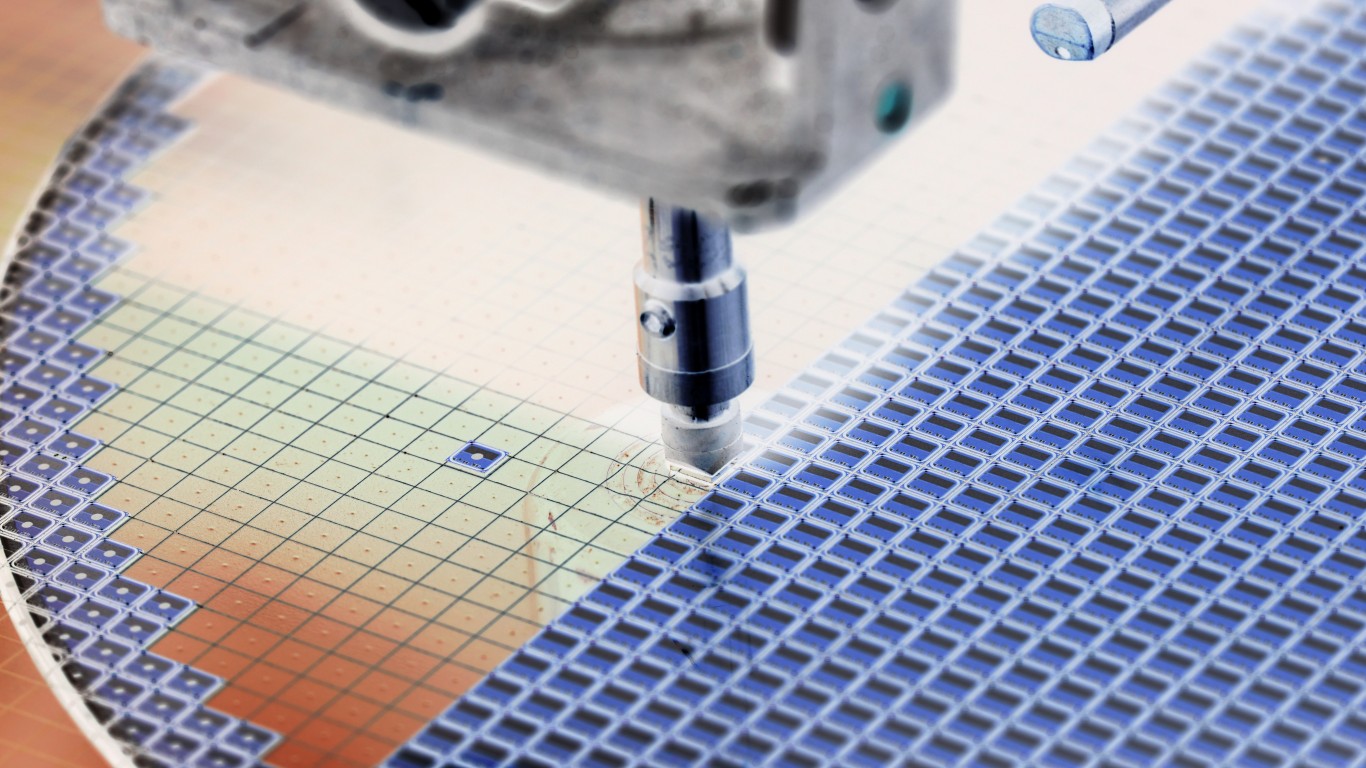
Taiwan and South Korea together account for roughly half of global value-added semiconductor production, with Taiwan at 22% and China at 30%, followed by the United States at 19% and South Korea rounding out the leaders. Taiwan’s IC industry alone is projected to generate NT$8.4 trillion (about $271 billion) in 2026, a 30% increase from 2025. The capital expenditure cycle behind AI accelerators flows disproportionately through these two economies, which is the structural reason behind the year’s price action.
EWT: the purest bet on the AI foundry
This fund stands as the most concentrated bet on the chip-making nation because its top holding physically builds the advanced logic processors designed by titans like Nvidia, AMD, and Apple. Taiwan Semiconductor Manufacturing dominates the portfolio with a 22% stake, while Hon Hai Precision adds 6% and MediaTek chips in another 5%. These three giants together account for roughly one-third of total assets, anchoring the entire fund at the core of the global semiconductor and electronics supply chain.
Assets under management have grown to $10.7 billion, and the expense ratio sits at 0.59%. The trailing yield is 2.7%, helped by the dividends Taiwanese hardware companies tend to pay. The portfolio is not a pure semiconductor sleeve, though. Financial holdings such as Fubon, CTBC, and Cathay each carry weights near 2%, providing some balance against the technology concentration.
The trade-off is single-country political risk and a portfolio whose return profile is more closely correlated with TSMC’s earnings cycle than with any broad index. An investor choosing EWT is implicitly underwriting one company’s foundry roadmap.
EWY: South Korea’s memory and HBM franchise
This fund targets a completely different layer of the AI hardware ecosystem. While Taiwan rules the world of logic foundry production, South Korea holds the throne for DRAM, NAND, and essential high-bandwidth memory. Samsung Electronics and SK Hynix are the key players in pricing the complex memory stacks that sit alongside every modern GPU, and they carry the most weight here. This dominance has fueled a vertical surge in the share price, pushing the fund to roughly $198 and delivering a massive 186% one-year return.
The fund is large and liquid, with $23.4 billion in assets and an expense ratio of 0.59%. The dividend yield runs near 1%, paid annually. EWY also captures Hyundai Motor, Kia, the major Korean banks, and Hanwha Aerospace, which provides greater sector diversification than EWT despite being a single-country product.
The risk worth understanding is the speed of the move. EWY is down 10% over the past week, and the 52-week range runs from $70 to nearly $221. That is the volatility profile of a fund where two memory names drive most of the marginal return.
AIA: the diluted chip thesis with a wider net
This fund tracks the 50 biggest companies in Asia outside of Japan, offering significant exposure to the chip sector without making it your only play. Taiwan Semiconductor sits at the top with 22% of assets, followed by Samsung Electronics at 13% and SK Hynix grabbing another 4%. When you add in other heavy hitters like MediaTek, UMC, and ASE, the semiconductor industry’s total footprint climbs to well over 40% of the entire portfolio.
The remainder is what differentiates AIA from the two single-country funds. Tencent at 7%, Alibaba at 4%, the major Chinese banks, AIA Group insurance, and Singapore lenders DBS, OCBC, and UOB all sit in the fund. Net assets stand at roughly $3.3 billion. The fund’s YTD return of 43% captures most of the chip nation upside but trails the single-country funds because the financials and consumer internet sleeves have appreciated less than the semiconductor names.
That dilution suits investors who want chip exposure embedded inside broader Asian large-cap diversification. The tradeoff is that AIA also carries China and Hong Kong policy risk that EWY and EWT do not.
Choosing between the three
The three funds map cleanly to three different views of the same theme. An investor who believes the AI capex cycle is far from over and wants the most direct foundry exposure would tilt toward EWT, accepting the TSMC concentration as the point of the trade. An investor who sees memory pricing as the next leg, with HBM demand outrunning supply, would lean toward EWY and absorb a larger Samsung position. Both single-country funds carry the same 0.59% expense ratio.
This fund suits investors who want a piece of the chip action without going all-in. The semiconductor slice is large enough to capture the upside, while the rest of the holdings in Chinese internet, regional banking, and local insurance help smooth out the ride. Blending 50% EWT, 40% EWY, and 10% AIA builds the ultimate concentrated chip-focused portfolio. A more measured approach flips those ratios, keeping this fund as your anchor while using the two single-country products as flexible satellites.
The factor that ties all three together is the same. JPMorgan’s 2026 outlook describes the AI theme as driving growth across both public and private markets, with international earnings growth particularly evident in Asian emerging markets. The choice among EWT, EWY, and AIA is mainly about how much of that single story an investor wants to own.
Contact [email protected] for any questions or corrections.
David Beren has been a Flywheel Publishing contributor since 2022. Writing for 24/7 Wall St. since 2023, David loves to write about topics of all shapes and sizes. As a technology expert, David focuses heavily on consumer electronics brands, automobiles, and general technology. He has previously written for LifeWire, formerly About.com. As a part-time freelance writer, David’s “day job” has been working on and leading social media for multiple Fortune 100 brands. David loves the flexibility of this field and its ability to reach customers exactly where they like to spend their time. Additionally, David previously published his own blog, TmoNews.com, which reached 3 million readers in its first year. In addition to freelance and social media work, David loves to spend time with his family and children and relive the glory days of video game consoles by playing any retro game console he can get his hands on.