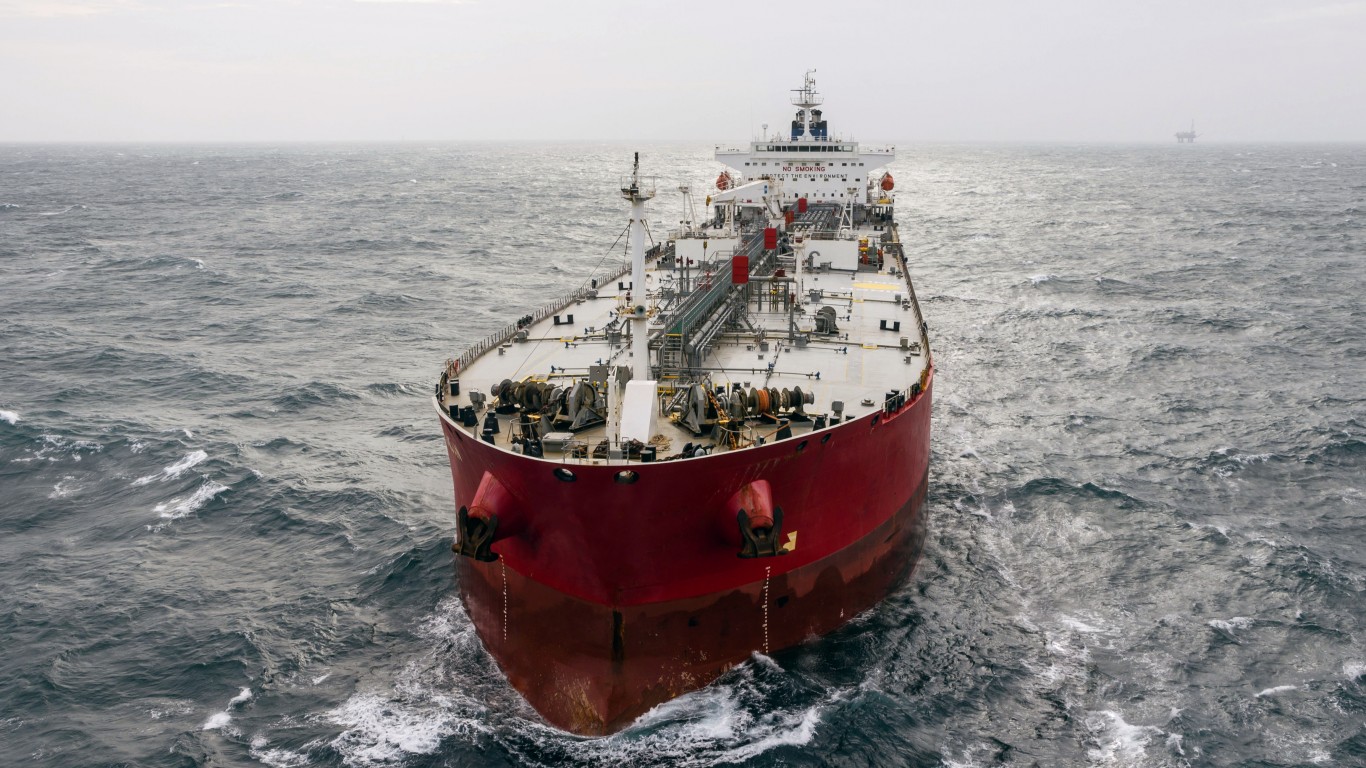
After Iran Says Strait of Hormuz Is Closed Again, Oil’s Risk to Economy Rises Once More
Iran just shut the Strait of Hormuz, and the ripple effects stretch far beyond rising gas prices. Here is what the closure means for inflation, corporate profits, and every investor watching the market.

This post may contain links from our sponsors and affiliates, and Flywheel Publishing may receive compensation for actions taken through them.
For much of 2026, investors have been able to focus on artificial intelligence, earnings growth, and record stock prices. Energy markets, meanwhile, have remained relatively calm lately despite lingering geopolitical risks. That calm is now fading.
President Trump declared the ceasefire with Iran over as the U.S. resumed strikes against targets inside Iran after Tehran began targeting vessels transiting the Strait of Hormuz. Iran just announced the Strait of Hormuz is closed “until further notice.” The conflict appears to be entering a broader phase, and while no one knows how long it will last, the world’s most important oil chokepoint has once again become the market’s center of attention.
Why the Strait of Hormuz Matters So Much
According to the U.S. Energy Information Administration (EIA), roughly 20 million barrels of crude oil and petroleum products pass through the Strait of Hormuz each day. That’s close to 20% of global petroleum consumption and around one-third of all seaborne oil trade.
Even a temporary disruption can ripple across the global economy because there are few alternative shipping routes capable of replacing that capacity.
| Metric | Figure |
| Oil flowing through Strait of Hormuz | ~20 million barrels/day |
| Share of global oil consumption | ~20% |
| Share of global seaborne oil trade | About one-third |
Source: U.S. Energy Information Administration
Iran has repeatedly threatened to disrupt shipping through the strait during previous conflicts. Now that commercial vessels are reportedly being targeted while the U.S. expands military operations, traders must begin pricing in a higher probability of supply interruptions — even if those disruptions never fully materialize.
That uncertainty alone can lift crude prices. Oil prices have moved from the mid-$60 to $70 a barrel range back into the $70 per barrel range again. Brent crude goes for around $76, while West Texas Intermediate — the benchmark for the U.S. economy — is above $71 a barrel.
Higher Oil Prices Reach Far Beyond the Gas Pump
Oil rarely stays confined to the energy sector. It works its way into transportation costs, manufacturing, agriculture, airlines, and consumer prices.
The U.S. Bureau of Labor Statistics reported that energy accounts for about 6% of the Consumer Price Index, but its indirect influence stretches much further because nearly every product requires transportation.
If Brent crude were to climb back above $100 per barrel, businesses would face higher input costs while consumers would spend more on gasoline and utilities. That combination can slow discretionary spending just as many economists expected inflation to continue easing.
Ironically, oil-producing companies would likely benefit first. Integrated producers such as Exxon Mobil (NYSE:XOM | XOM Price Prediction) and Chevron (NYSE:CVX) generate stronger cash flow when crude prices rise, while oil service companies often see increased drilling activity if elevated prices persist. Conversely, airlines, cruise operators, trucking companies, and many industrial manufacturers typically see profit margins narrow as fuel expenses rise.
Granted, markets have weathered geopolitical crises before without lasting economic damage. Strategic petroleum reserves, rising U.S. shale production, and additional output capacity from OPEC members could soften the blow if supply disruptions prove temporary.
Key Takeaway
In short, investors shouldn’t assume this is merely another geopolitical headline. The Strait of Hormuz remains one of the world’s most critical energy arteries, and renewed fighting between the United States and Iran raises the odds that oil prices become an economic story rather than simply an energy story.
That doesn’t mean a recession is inevitable or that investors should abandon diversified portfolios. Regardless, it does mean energy prices deserve renewed attention. If shipping through the Strait of Hormuz becomes materially disrupted, inflation could reaccelerate, corporate profits could come under pressure, and market volatility would likely increase. For smart investors, monitoring crude oil is once again becoming just as important as watching quarterly earnings.
Contact [email protected] for any questions or corrections.
After two decades of patrolling the dark corners of suburbia as a police officer, Rich Duprey hung up his badge and gun to begin writing full time about stocks and investing. For the past 20 years, he’s been cruising the markets looking for companies to lock up as long-term holdings in a portfolio while writing extensively on the broad sectors of consumer goods, technology, and industrials. Because his experience isn’t from the typical financial analyst track, Rich is able to break down complex topics into understandable and useful action points for the average investor. His writings have appeared on The Motley Fool, InvestorPlace, Yahoo! Finance, Money Morning, and, of course, 24/7 Wall St. He has been featured in both U.S. and international publications, including MarketWatch, Financial Times, Forbes, Fast Company, and USA Today.