Wall Street’s Bar for Big Tech Is on the Floor, and That Could Spark the Next Rally
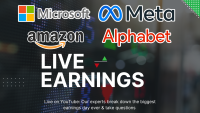
Wall Street is bracing for the worst out of Big Tech's Q2 earnings, and that gap between dread and reality may be exactly what sends the next rally higher. Five hyperscalers report soon, starting with Microsoft on July 29, and…


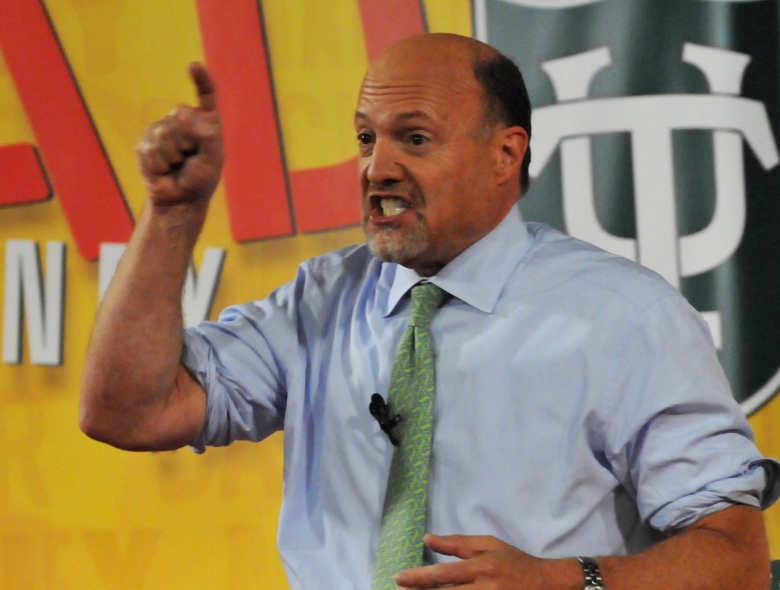
Max Kettner, HSBC’s chief multi-asset strategist, argued on CNBC’s Closing Bell Overtime on July 7, 2026, that mega-cap tech business models have “fundamentally changed in terms of taking on debt and being cash flow negative,” but the real story is that Wall Street walks into Q2 earnings expecting the worst on capex, which sets up a beat with real fuel behind it.
The five stocks that matter are Alphabet (NASDAQ:GOOG | GOOG Price Prediction), Microsoft (NASDAQ:MSFT), Amazon (NASDAQ:AMZN), Meta Platforms (NASDAQ:META), and NVIDIA (NASDAQ:NVDA). Microsoft reports first on July 29, 2026, roughly two weeks away, and will set the tone.
The Low-Expectations Setup
“We go into the Q2 reporting season with basically saying, oh my gosh, are they really going to be upgrading capex even more?” If hyperscalers confirm they can keep spending without breaking, that would “take the wind out of the sails of some of the AI bears.”
Look at Q1 results against sell-side estimates. Alphabet reported EPS of $5.11 versus a $2.63 consensus, a 94.10% beat, with Google Cloud revenue up 63% year over year and backlog nearly doubling quarter over quarter to over $460 billion. Meta printed $10.44 versus $6.66, a 56.79% beat, though most surprise came from $8.03 billion tax benefit tied to Treasury guidance on R&D costs. Amazon delivered $2.78 versus $1.73, a 60.69% beat, with AWS growing 28%, the fastest in 15 quarters. Microsoft’s AI business run rate hit $37 billion, up 123% year over year. NVIDIA reported data center revenue of $75.25 billion, up 92%, guided to $91 billion in Q2, and disclosed total supply commitments of $119 billion in its quarterly release. Five reports, five beats, most substantial.
Consensus revenue beats have narrowed to 1.24%-3.60% for Microsoft, while EPS beats remain in mid-single digits, meaning the Street is catching up on the top line but still lowballing profitability. Our team’s coverage of the names driving AI infrastructure spending digs into how that plays out across the supply chain.
Why the Debt Fear Is Overblown
The concern is capex financing. Alphabet guided $175 billion to $185 billion for 2026. Amazon set the bar around $200 billion. Meta lifted its range to $125 billion to $145 billion. Free cash flow is compressing at Alphabet, down 46.63% year over year in Q1, and Amazon’s TTM FCF has collapsed as capex nearly doubled.
Tech issuance is only about 10% of total supply so far this year of total supply, meaning the hyperscalers can fund what they need without saturating credit markets. Prediction markets echo the confidence. Polymarket assigns a 94.7% probability that Amazon’s 2026 capex exceeds $170 billion and an 87.5% probability that it exceeds $200 billion. The market is not pricing a funding crunch.
The Broadening Trap and What to Watch
Tech and AI within the S&P are up more than 40% since early March, while the other roughly 50% of the index has only clawed back its losses over the same window. Alphabet is up 18.84% from March 2 through July 7. Amazon is up 18.04% over the same window. NVIDIA gained 8.05%. Meta actually slipped 5.65%, and Microsoft fell 2.22%, both weighing on the group’s average while the broader complex ran.
Kettner expects broad-based earnings delivery in coming weeks, then a fading catalyst. Watch three things in Q2 earnings reports. Whether capex guidance ticks higher again, particularly at Alphabet after its $35.67 billion Q1 spend. Whether AWS maintains its 28% growth rate or accelerates further. And whether NVIDIA’s Q2 guide of $91 billion proves conservative when management reports in late August. Kettner thinks it will. Nobody expects the upgrade cycle to continue. If it does, the bears lose their footing.
Contact [email protected] for any questions or corrections.
Omor Ibne Ehsan is a writer at 24/7 Wall St. He is a self-taught investor with a focus on growth, cyclical, and dividend equities that have strong fundamentals, value, and long-term potential. He also has an interest in high-risk, high-reward investments such as penny stocks.