Magnificent 7 Trade Is Broken — Here’s Where Smart Investors Should Look Next
Buying all seven tech giants together made investors rich during the AI boom, but the basket trade has quietly become a drag on portfolios. Some of these companies are pulling ahead while others face serious questions about whether AI will…


The artificial intelligence boom reshaped the stock market faster than almost any investing trend in recent memory. When OpenAI released ChatGPT in late 2022, investors quickly realized AI wasn’t another speculative technology story — it was becoming the next computing platform.
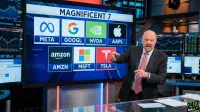
Capital flooded into the handful of companies with the chips, cloud infrastructure, software, and balance sheets needed to make AI a reality. Those seven companies — Apple (NASDAQ:AAPL | AAPL Price Prediction), Microsoft (NASDAQ:MSFT), Nvidia (NASDAQ:NVDA), Amazon (NASDAQ:AMZN), Alphabet (NASDAQ:GOOG), Meta Platforms (NASDAQ:META), and Tesla (NASDAQ:TSLA) — became known as the Magnificent 7.
Yet the nickname wasn’t originally a compliment. It was a warning that just seven stocks were responsible for an outsized share of the S&P 500‘s gains. Three years later, the market has become much broader, leaving investors to decide whether buying the group as a whole still makes sense.
From Market Leadership to Market Laggard
The Roundhill Magnificent Seven ETF (NASDAQ:MAGS), launched in April 2023, captured the AI trade almost perfectly. The ETF has returned 158% since inception, nearly double the S&P 500’s roughly 80% gain over the same period. Investors who bought early were rewarded handsomely. Its recent performance, though, changes the story.
| Period | MAGS ETF | S&P 500 |
| Since inception (April 2023) | 158% | 80% |
| 2 Years | 44.0% | 36.5% |
| 1 Year | 9.0% | 16.0% |
| Year to Date 2026 | -4.0% | 8.0% |
The numbers show momentum has faded. MAGS still edges out the broader market over two years, but it has trailed over the past year and has fallen behind badly in 2026.
Ironically, the same concentration that fueled market gains has become a headwind. Investors no longer view AI as a single trade. Instead, they’re distinguishing between companies building AI infrastructure and those generating meaningful returns from the hundreds of billions of dollars being invested.
Why The Magnificent 7 Are Moving in Different Directions
A year ago, concerns began emerging about whether AI spending could keep climbing indefinitely. Microsoft, Alphabet, Amazon, and Meta have collectively committed hundreds of billions of dollars toward AI infrastructure, while investors increasingly want proof that those investments will translate into higher profits instead of simply larger capital expenditures.
At the same time, each member of the Magnificent 7 faces different challenges.
- Tesla is battling slowing electric vehicle demand and rising competition.
- Apple continues searching for an AI strategy compelling enough to reignite iPhone growth.
- Nvidia remains the dominant AI chip supplier, but investors debate how long today’s extraordinary demand can continue as customers eventually digest their purchases.
Conversely, Alphabet and Meta appear better positioned today than they did a year ago. Both companies continue producing free cash flow or generating substantial growth while integrating AI into businesses that already generate tens of billions of dollars in annual advertising revenue. Amazon also stands out because AWS remains one of the largest beneficiaries of enterprise AI adoption while its retail business continues expanding margins.
That’s the key difference. The Magnificent 7 no longer move in lockstep because their businesses have reached very different stages of AI monetization.
Buying the Basket or Picking Winners?
That shift makes owning the entire group less compelling than it was in 2023. MAGS still offers a simple way to gain exposure to many of the world’s highest-quality technology companies, and investors wanting diversified exposure without choosing individual stocks may still find it attractive. But selective investing looks like the stronger approach today.
Alphabet, Amazon, Meta, and Microsoft combine durable cash-generating businesses with AI opportunities that extend beyond selling hardware. Nvidia also remains a long-term leader, although expectations remain high after its historic run. Apple and Tesla face steeper questions about future growth, making them harder to justify as core holdings at current valuations.
Key Takeaway
In short, the Magnificent 7 phenomenon isn’t over — but the era when investors could buy the basket and expect it to dominate the market may be. The AI boom created enormous wealth, and MAGS’ 158% return since launch proves that. The fund’s recent underperformance also shows the market has entered a new phase where execution matters more than excitement.
Ultimately, smart investors may earn better long-term returns by owning the companies with the clearest path from AI investment to AI profits instead of assuming every member of the Magnificent 7 deserves equal weight. The group is still full of exceptional businesses. They’re just no longer one trade.
Contact [email protected] for any questions or corrections.
After two decades of patrolling the dark corners of suburbia as a police officer, Rich Duprey hung up his badge and gun to begin writing full time about stocks and investing. For the past 20 years, he’s been cruising the markets looking for companies to lock up as long-term holdings in a portfolio while writing extensively on the broad sectors of consumer goods, technology, and industrials. Because his experience isn’t from the typical financial analyst track, Rich is able to break down complex topics into understandable and useful action points for the average investor. His writings have appeared on The Motley Fool, InvestorPlace, Yahoo! Finance, Money Morning, and, of course, 24/7 Wall St. He has been featured in both U.S. and international publications, including MarketWatch, Financial Times, Forbes, Fast Company, and USA Today.