The Fed Likes the Sound of Interest Rate Hikes a Lot More
The Fed held rates steady, but three voting members wanted hikes right now, and the one factor that cooled inflation in June is already reversing. September's meeting may force a reckoning investors are not prepared for.

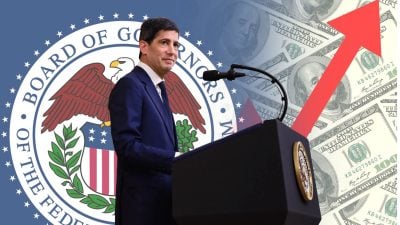
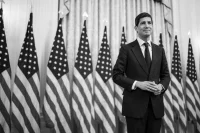
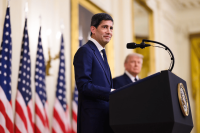
The Federal Reserve left interest rates unchanged at its latest meeting yesterday, but that decision shouldn’t be mistaken for the end of the inflation fight. Under new Fed Chair Kevin Warsh, the central bank is increasingly acknowledging that price pressures remain uncomfortable even after months of progress.
Today’s inflation data appeared encouraging on the surface, yet much of that improvement came from one place: cheaper gasoline during the brief ceasefire between Iran and Israel. With hostilities between the U.S. and Iran escalating again and oil climbing back above $90 per barrel, investors shouldn’t assume inflation’s recent cooling trend will last. The September Federal Open Market Committee (FOMC) meeting is suddenly becoming much more interesting.
Inflation Is Cooling, but Energy Is Telling a Different Story
The Commerce Department’s latest Personal Income and Outlays report showed inflation continued to moderate in June. Headline personal consumption expenditures (PCE) inflation slowed to 3.7% from 4.1% in May, while core PCE — the Fed’s preferred inflation gauge because it excludes volatile food and energy — eased to 3.3%.
Those numbers would normally strengthen the case for lower interest rates. Instead, they highlight just how dependent recent inflation progress has become on energy prices.
According to the Bureau of Economic Analysis, Americans spent $48.1 billion less on gasoline at seasonally adjusted annual rates during June as fuel prices retreated following the temporary pause in Middle East fighting. That single category exerted enormous downward pressure on overall inflation. Unfortunately, that relief may prove short-lived.
Since then, tensions involving the U.S. and Iran have intensified again, crude oil has moved back above $90 per barrel, and gasoline prices are above $4 a gallon. That means July’s inflation report could look very different if higher energy costs ripple through transportation, manufacturing, and consumer spending.
Let’s not forget that energy has repeatedly been the swing factor in inflation this year. When oil falls, inflation often follows. When oil rises, progress can disappear quickly.
The Economy Is Losing Momentum
Inflation isn’t the Fed’s only concern. Second-quarter U.S. gross domestic product expanded at just a 1.5% annualized rate, according to government data, slowing from 2.1% growth in the first quarter and missing economists’ expectations for 2%. Slower economic growth would ordinarily argue against tighter monetary policy.
Yet consumers continue spending at a healthy pace, while labor markets remain resilient enough to keep demand elevated. That combination creates a difficult balancing act. Growth is cooling, but inflation has not returned anywhere near the Fed’s 2% target.
Warsh acknowledged that divide after the meeting, describing the debate inside the FOMC as a “good family fight.” That wasn’t just colorful language.
September Could Be A Turning Point
Three of the Fed’s nine voting regional bank presidents favored raising interest rates at this meeting instead of standing pat. It shows support for tighter policy is no longer isolated, making September far more consequential than investors may appreciate.
There is no FOMC meeting in August, giving policymakers nearly two months of additional inflation, employment, and energy-price data before gathering again. If oil remains above $90, gasoline prices continue climbing, and consumer spending stays firm, convincing a few more policymakers to move into the hawkish camp to support another hike no longer looks like a remote possibility.
Granted, another favorable inflation report could change that calculus. But today’s data may ultimately prove to be a snapshot taken during an unusually favorable moment for energy prices rather than evidence inflation has been permanently defeated.
Key Takeaway
In short, the Fed held interest rates steady, but its message sounded more hawkish than the decision itself. Warsh made clear there is growing support within the central bank for tightening policy again, and it would take only a few more officials shifting toward that view to make future meetings far more closely divided.
For investors, the biggest variable isn’t the latest inflation report — it’s oil. June’s decline in PCE inflation owed much to the big drop in gasoline spending, but renewed conflict involving Iran has already begun reversing that trend. If higher energy costs feed back into inflation before September, the Fed’s “good family fight” could end with interest rates moving higher once again.
Contact [email protected] for any questions or corrections.
After two decades of patrolling the dark corners of suburbia as a police officer, Rich Duprey hung up his badge and gun to begin writing full time about stocks and investing. For the past 20 years, he’s been cruising the markets looking for companies to lock up as long-term holdings in a portfolio while writing extensively on the broad sectors of consumer goods, technology, and industrials. Because his experience isn’t from the typical financial analyst track, Rich is able to break down complex topics into understandable and useful action points for the average investor. His writings have appeared on The Motley Fool, InvestorPlace, Yahoo! Finance, Money Morning, and, of course, 24/7 Wall St. He has been featured in both U.S. and international publications, including MarketWatch, Financial Times, Forbes, Fast Company, and USA Today.