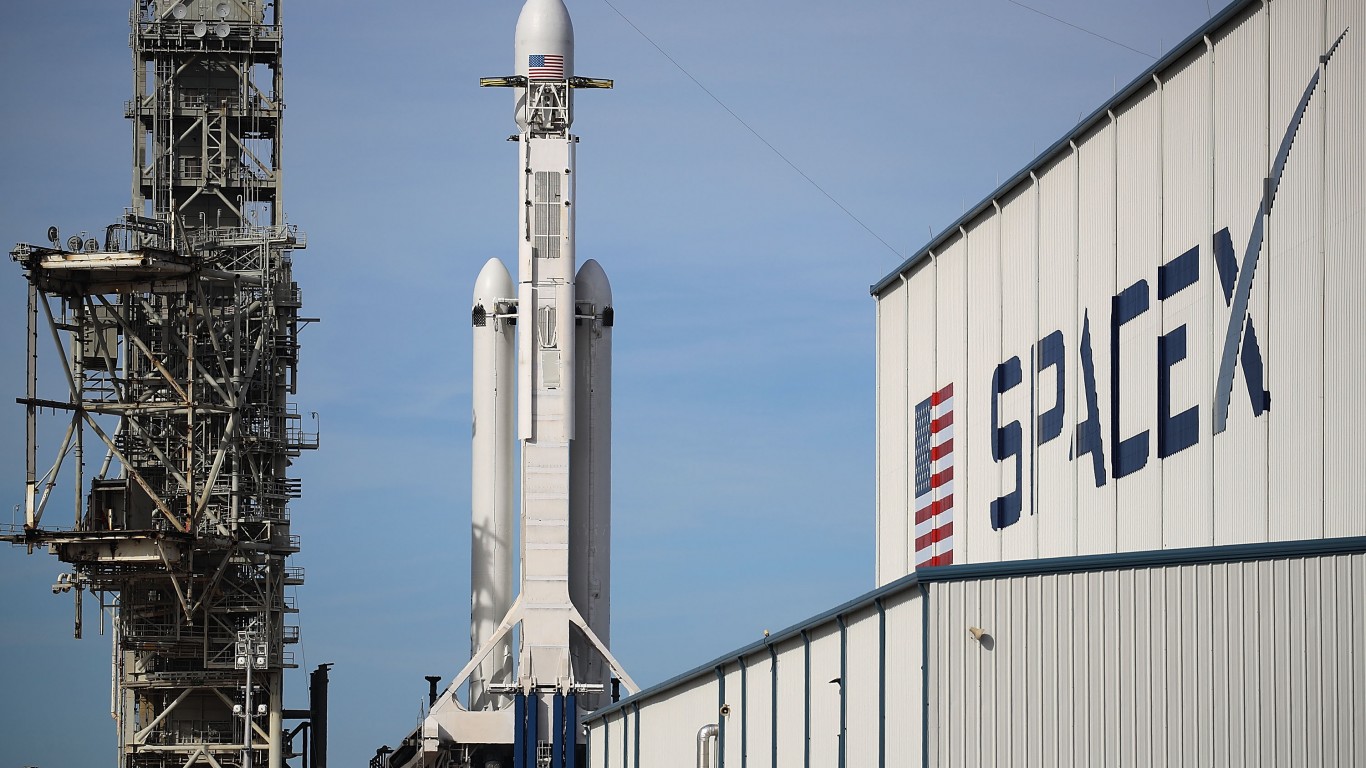
SpaceX Is Tumbling Hard This Morning — It Could Fall a Lot More Tomorrow
SpaceX just posted one of the most impressive earnings reports in recent memory, and the stock is getting crushed anyway. Two converging forces are threatening to swamp even the strongest bull case, and one of them hasn't even hit yet.


The AI infrastructure race has turned into an arms race where investors reward growth right up until the bill comes due. Across the sector, companies are reporting record revenue while simultaneously spending unprecedented sums to build data centers, buy chips, and secure long-term computing capacity.
The result is a market that has become far less forgiving of soaring capital expenditures, even when the underlying business is thriving. That helps explain why SpaceX (NASDAQ:SPCX | SPCX Price Prediction) is plunging this morning despite delivering an earnings report that, on the surface, looked difficult to criticize.
Outstanding Growth Wasn’t Enough
SpaceX generated $7.8 billion in second-quarter revenue, a 92% increase from a year ago and nearly $1 billion ahead of Wall Street’s expectations.
The biggest surprise came from AI cloud services. AI-specific revenue reached $2.6 billion, climbing 213% sequentially as enterprise demand accelerated. Management also disclosed $14.1 billion in contracted cloud services agreements, including major customers such as Anthropic and Google, giving investors fresh evidence that demand remains robust.
By almost every operating measure, the quarter looked like a success.
| Metric | Q2 Result |
| Revenue | $7.8 billion (+92%) |
| AI Revenue | $2.6 billion (+213% sequentially) |
| Contracted Cloud Services | $14.1 billion |
| Revenue Beat | Nearly $1 billion |
Yet SpaceX shares are down nearly 12% at the market open.
Wall Street Is Focusing on the Bill
Ironically, the market isn’t reacting to SpaceX’s revenue growth. It’s reacting to what management says it will cost to keep growing.
Capital expenditures reached $18.4 billion during the quarter, up from $10 billion in the first quarter. Nearly $16 billion of that spending went toward AI infrastructure, and executives told investors those spending levels will remain roughly unchanged through the next two quarters.
That’s a meaningful shift. Investors generally tolerate elevated spending when they believe it is temporary. When management signals that spending will remain elevated for months, however, concerns shift toward cash flow, future financing needs, and whether returns on those investments will justify the expense.
Granted, many AI leaders are making similar bets. Microsoft (NASDAQ:MSFT), Alphabet (NASDAQ:GOOG), Amazon (NASDAQ:AMZN), and Meta Platforms (NASDAQ:META) have all announced record capital spending this year to expand AI capacity. The difference is that those companies generate enormous cash flows from mature businesses that help fund those investments. SpaceX, by contrast, is still early in building that financial cushion.
Tomorrow Could Bring Another Headwind
Today’s sell-off may not be the only challenge shareholders face this week. Tomorrow marks the expiration of a major IPO lockup, allowing employees and early investors to begin selling shares for the first time.
According to SpaceX’s SEC filings:
- 911.5 million shares become eligible to trade.
- That’s roughly 43% more than the 638.9 million shares issued in the IPO.
- The company’s free float increases from 4.9% of outstanding shares to 11.8%.
Not every newly eligible share will be sold. Many employees and early investors may continue holding their positions because they believe in SpaceX’s long-term prospects.
Even so, markets trade on supply and demand. If even a modest percentage of those newly unlocked shares hits the market, it could create selling pressure that has nothing to do with the company’s operating performance. Additional lockup expirations scheduled for later this year could produce similar waves of volatility.
That helps explain why SpaceX has struggled since going public. Shares have already fallen about 50% from their post-IPO high and now trade near $112, roughly 25% below the $150 opening price and 17% below the $135 IPO offer.
Key Takeaway
In short, SpaceX’s first earnings report proved the business is growing at an extraordinary pace. Revenue nearly doubled, AI sales more than tripled sequentially, and the company locked in $14.1 billion of contracted cloud business. Those are exactly the metrics long-term investors wanted to see.
The near-term problem is that the market is focused elsewhere. An $18.4 billion quarterly capital spending bill and the release of 911.5 million previously locked-up shares create two powerful headwinds that could outweigh strong operating results for weeks or even months.
Ultimately, smart investors should separate the business from the stock. The business appears to be executing well. The stock, however, may continue facing pressure as higher spending and a growing share supply work their way through the market. Patience may prove just as valuable as optimism here.
Contact [email protected] for any questions or corrections.
After two decades of patrolling the dark corners of suburbia as a police officer, Rich Duprey hung up his badge and gun to begin writing full time about stocks and investing. For the past 20 years, he’s been cruising the markets looking for companies to lock up as long-term holdings in a portfolio while writing extensively on the broad sectors of consumer goods, technology, and industrials. Because his experience isn’t from the typical financial analyst track, Rich is able to break down complex topics into understandable and useful action points for the average investor. His writings have appeared on The Motley Fool, InvestorPlace, Yahoo! Finance, Money Morning, and, of course, 24/7 Wall St. He has been featured in both U.S. and international publications, including MarketWatch, Financial Times, Forbes, Fast Company, and USA Today.