Tesla And BYD Are Reframing An Age Old Stock Market Question
Tesla is betting billions that software eats the car business while BYD bets the factory floor never goes out of style. Which kind of investor are you, and does your answer actually match what you own?

This post may contain links from our sponsors and affiliates, and Flywheel Publishing may receive compensation for actions taken through them.
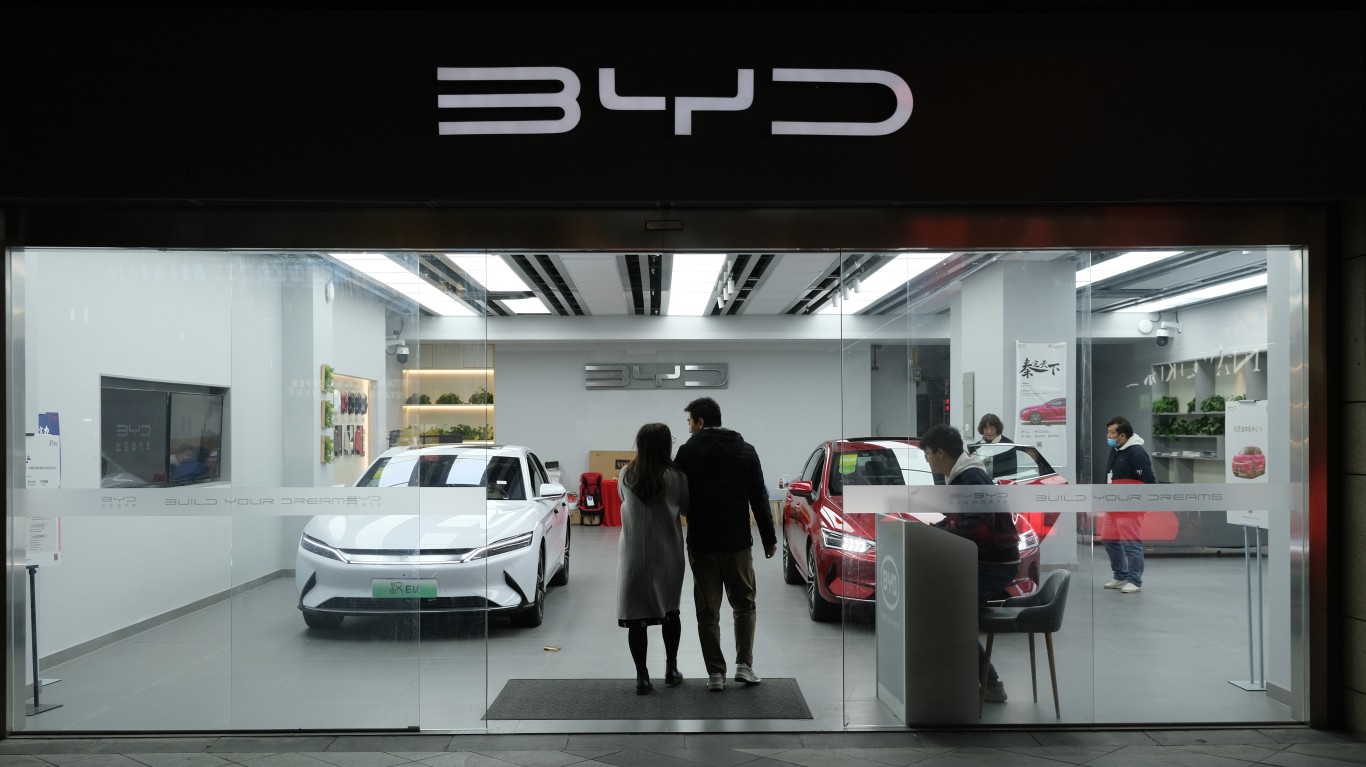
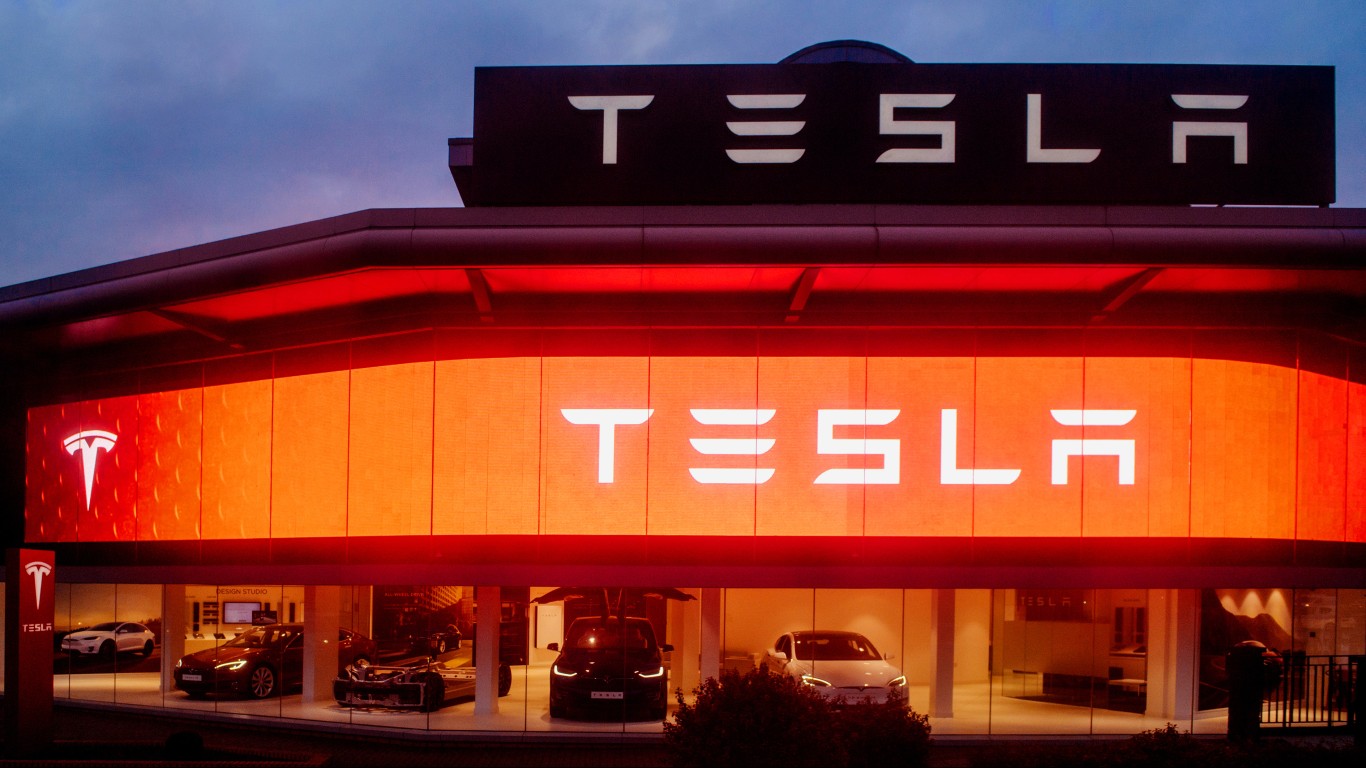
Tesla (NASDAQ: TSLA | TSLA Price Prediction) and BYD (OTC: BYDDF) just gave investors a fresh way to argue an old question. Tesla’s Q2 2026 report leaned harder into AI, robotaxis, and Optimus. BYD keeps compounding through vertical integration and vehicle volume. One asks you to pay for optionality. The other asks you to trust the factory floor.
Software Bets Squeeze Tesla. Scale Keeps BYD Steady.
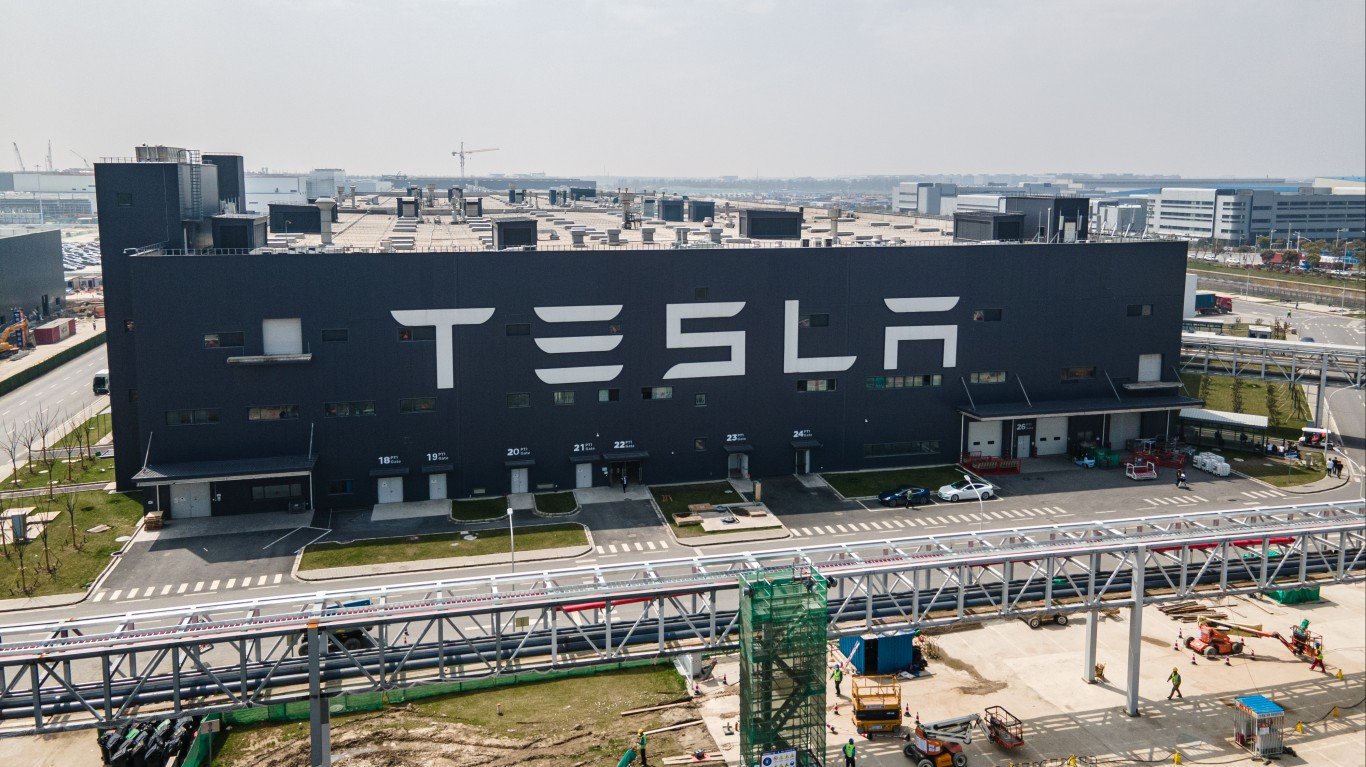
Tesla delivered 480,126 vehicles and posted revenue of $28.24B, up 25.5% year over year, beating consensus by 7.1%. That is a strong top line. The problem sits below it. Non-GAAP EPS of $0.33 missed the $0.5367 estimate, operating margin fell to 1.4%, and free cash flow flipped to negative $1.09B as capex ran to $5.79B. AI compute in Texas more than doubled during H1 2026, and Services revenue jumped 50% to $4.58B. The message: management is spending today to unlock software, energy, and robotaxi revenue tomorrow.
BYD does not file with the SEC, so quarterly disclosure is thin here. Its story is qualitatively different. Blade Battery integration, DM-i hybrid volume, and mass-market pricing anchor a hardware business built for cash-flow durability rather than valuation multiples.
Premium Optionality vs. Present-Day Manufacturing
| Lens | Tesla | BYD |
| Core Bet | AI, FSD, Optimus, Megapack | Vertical integration, hybrid volume |
| Valuation | P/E 347 | Traditional hardware multiple |
| 1-Year Price | -1.83% | -18.56% |
| YTD Price | -26% | -5.74% |
Tesla’s FSD attach rate above 55% of new North American deliveries and 1.48M active subscriptions hint at the recurring software layer bulls keep pointing to. BYD is the counter-argument. It sells more cars, in more places, with fewer bells and whistles, and it lets the balance sheet do the talking. The choice is between paying up for long-dated software optionality and buying present-day manufacturing dominance.
The Next Test Is Whether Capex Converts
I will keep an eye on Tesla’s robotaxi footprint, now live in 7 U.S. metros, and whether Cybercab production at Gigafactory Texas stays on schedule. Reddit sentiment turned bearish after the report, with r/stocks focused on capex inefficiency and margin pressure, while wallstreetbets swung bullish (70-75) into early August. Polymarket assigns just a 14.5% probability to an Optimus release by year-end. For BYD, the watch item is export share in Europe, LatAm, and Southeast Asia.
Why I Lean BYD for Patience and Tesla for Conviction
Personally, if I want compounding without needing a narrative to hold, I lean BYD. Manufacturing dominance is unglamorous, but it prints cash. If I already believe autonomy and Optimus are real, Tesla at $332.81 is the conviction trade, and the $43.5B cash pile buys time. Margin compression continuing into the next quarter would be the key signal to watch on both names.
Contact [email protected] for any questions or corrections.
Alex Sirois is a financial writer with experience spanning both retail and institutional investing. He has written for InvestorPlace and held roles at BNY Mellon and Bernstein, giving him a perspective that bridges Main Street portfolios and Wall Street analysis.
Alex holds an MBA from George Washington University and has built his career across multiple industries, including e-commerce, education, and translation — a breadth of experience that informs how he breaks down complex financial topics for everyday investors. His writing is conversational, actionable, and grounded in long-term, buy-and-hold investing principles.
At 247 Wall St., Alex focuses on delivering analysis that is both accessible and useful, with a clear emphasis on helping readers make more informed decisions with their money.