“Get Long And Buckle Up.” Jeff Currie Explains How To Play The “The Most Asymmetric Trade In Modern Financial History.”
Jeff Currie called two commodity supercycles before most investors believed him, and now the former Goldman Sachs commodities chief is pounding the table harder than ever on a trade he says markets are still ignoring.


Jeff Currie, the former Goldman Sachs commodities chief now running energy strategy at Carlyle, told clients this week to “Get long and buckle up: the next leg of the ride will see more vol with higher highs across more markets.” The note, dated Aug. 20, 2026, extends a call he first pressed in mid-May that markets are entering a structural commodity bull cycle. This is one strategist’s forecast, and Currie argues the market has yet to price it in.
Why This Voice Carries Weight
Currie spent 27 years at Goldman Sachs, from 1996 to 2023, and led commodities research from 2006, becoming a partner in 2008. He correctly forecast the 2000s commodity supercycle and oil crossing $100 a barrel, then reversed and correctly called “lower for longer” oil prices through the 2010s shale boom In late 2020 he turned again, coining “the revenge of the old economy” to describe structural underinvestment in mining and energy. He joined Carlyle Group as Chief Strategy Officer of Energy Pathways in February 2024. That track record is why the current call is getting attention.
May Thesis: Three Pillars and a Valuation Gap
On May 15, 2026, Currie wrote that the market “is at the start of the next commodity supercycle,” described it as “the most asymmetric trade in modern financial history,” and closed with “Get long. Buckle in. Hang on for the ride.”
He built the case on three pillars:
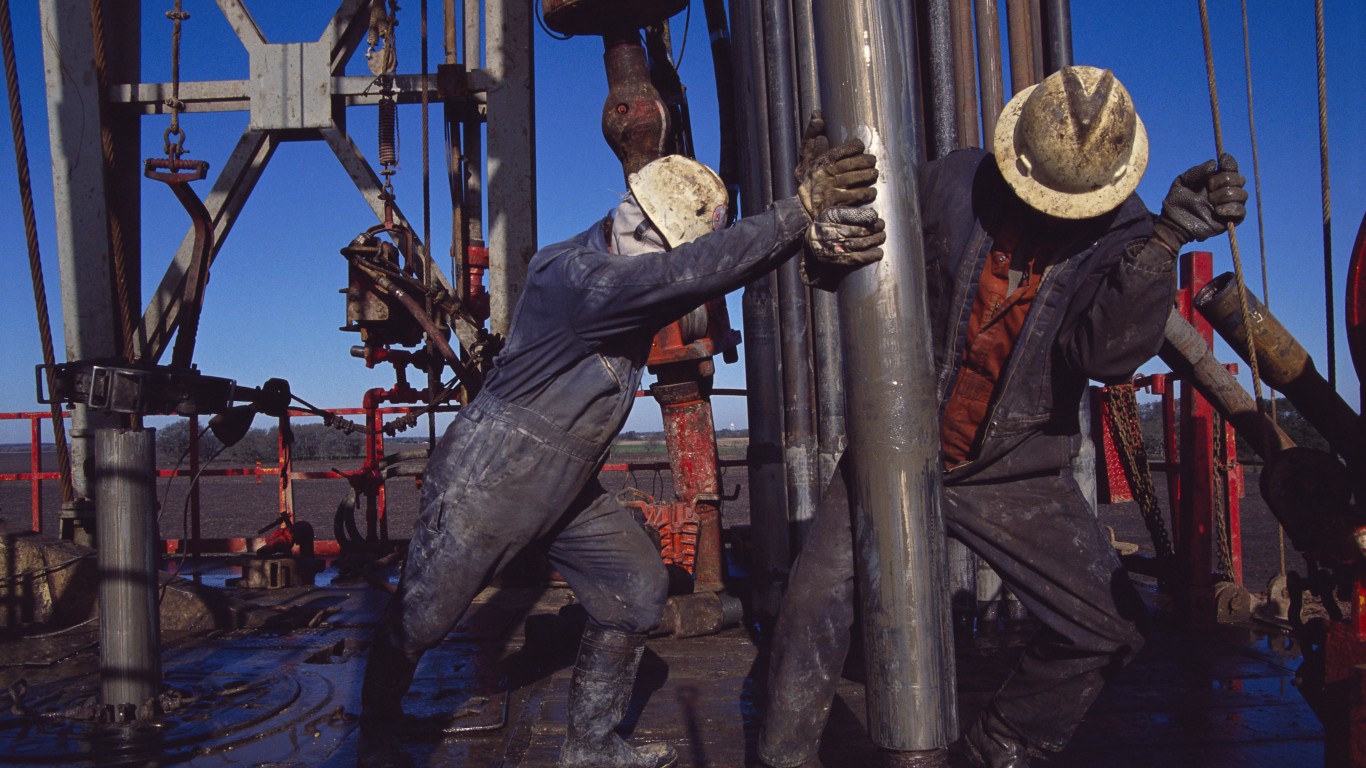
First, AI infrastructure demand Google, Meta, Microsoft and Amazon together plan roughly $700 billion in 2026 capex, colliding with hard limits on physical materials (we profiled seven of the power, cooling, and networking suppliers riding that buildout in a free report here). Second, a genuine supply shortage mining companies are spending 40% less than at the 2012 supercycle peak even as copper and aluminum demand surges. Third, deglobalization a shift from HAGO (Hard Assets, Global Operations) to HALO (Hard Assets, Local Operations), tightening supply chains and intensifying resource competition.
Currie also framed a “Munificent 7” of oil majors trading at a 15.5% free cash flow yield and 7x P/E against the “Magnificent 7” tech names at 1.5% and 28x, a gap he puts at roughly 1,000 basis points. His argument: after 15 years of underinvestment in refining, upstream production and mining, that spread cannot persist.
Gold as a Live Test Case
In May, Currie went short gold and forecast a pullback toward $4,000 an ounce, reasoning that central banks such as Turkey were forced to sell to cover elevated energy costs. He cited roughly 120 tonnes of Turkish gold selling and kept a long-term target of $10,000 an ounce once energy pressure eased. By Aug. 17, 2026, on CNBC, he turned bullish again, calling gold’s recovery “in its early innings.” Three days later he wrote, “I got long gold, silver and agriculture last week.” Spot gold sat near $4,387 an ounce, per USAGOLD on Aug. 18, 2026.
Diesel Argument: Refined Products Detach From Crude
Currie’s most detailed current evidence is in refined products. Brent settled at $95.29 a barrel on Aug. 18, 2026, after $92.43 on Aug. 17 and $92.02 on Aug. 14. The path this year has been volatile: $71.32 on Feb. 27 before the war, a peak of $138.21 on April 7, a low of $69.56 on July 6.
Reporting on Aug. 18 framed his argument using $91 as the illustrative crude figure. The verified Brent print that day was $95.29. Currie’s point holds either way. On CNBC he said, “Nobody on the planet earth consumes crude oil.” Consumers buy gasoline, diesel and jet fuel, and refined product prices have detached from crude. As reported on Aug. 18, European diesel traded near $170 a barrel, gasoline was up 30% year over year and diesel up 46%. Currie attributes the dislocation to roughly 100 to 120 million barrels of crude trapped at the Strait of Hormuz after a June and July supply surge, with China then cutting refinery runs and pushing the shortage downstream. A May estimate put conflict and chokepoint-related disruption at 13.7 million barrels per day.
August Reaffirmation and Policy Backdrop
In his Aug. 20 note Currie flagged a record diesel crack spread of $102.20 a barrel, continued refining capacity shortages, and widening global chokepoints. He also cited Treasury Secretary Scott Bessent’s bond buyback expansion, which he characterizes as financial repression that breaks the normal channel by which rising yields would cool commodity demand. The 30-year Treasury yield was 5.23% on Aug. 20, 2026, with the 10-year at 4.69%. For readers tracking that policy angle, see our Aug. 19 coverage: Bessent Just Doubled Treasury’s Bond-Buying Program. Currie’s practical framing: “Own the grains/softs. Own the metals. Own the molecules.” He added, “The illusion of abundance is likely behind us.”
Meanwhile, CPI stood at 332.813 in July 2026, and the EIA’s Short-Term Energy Outlook continues to model chokepoint-related shut-ins through year-end. Currie calls this “the most asymmetric trade in modern financial history.” By his own account, markets have not priced it in.
Contact [email protected] for any questions or corrections.
AJ spent 10 years writing about financial markets at The Motley Fool. His coverage centers on technology stocks and the broader macroeconomic trends, from interest rates to geopolitics, that shape where markets are headed next. AJ is drawn to the stories where big-picture economics and individual companies collide.