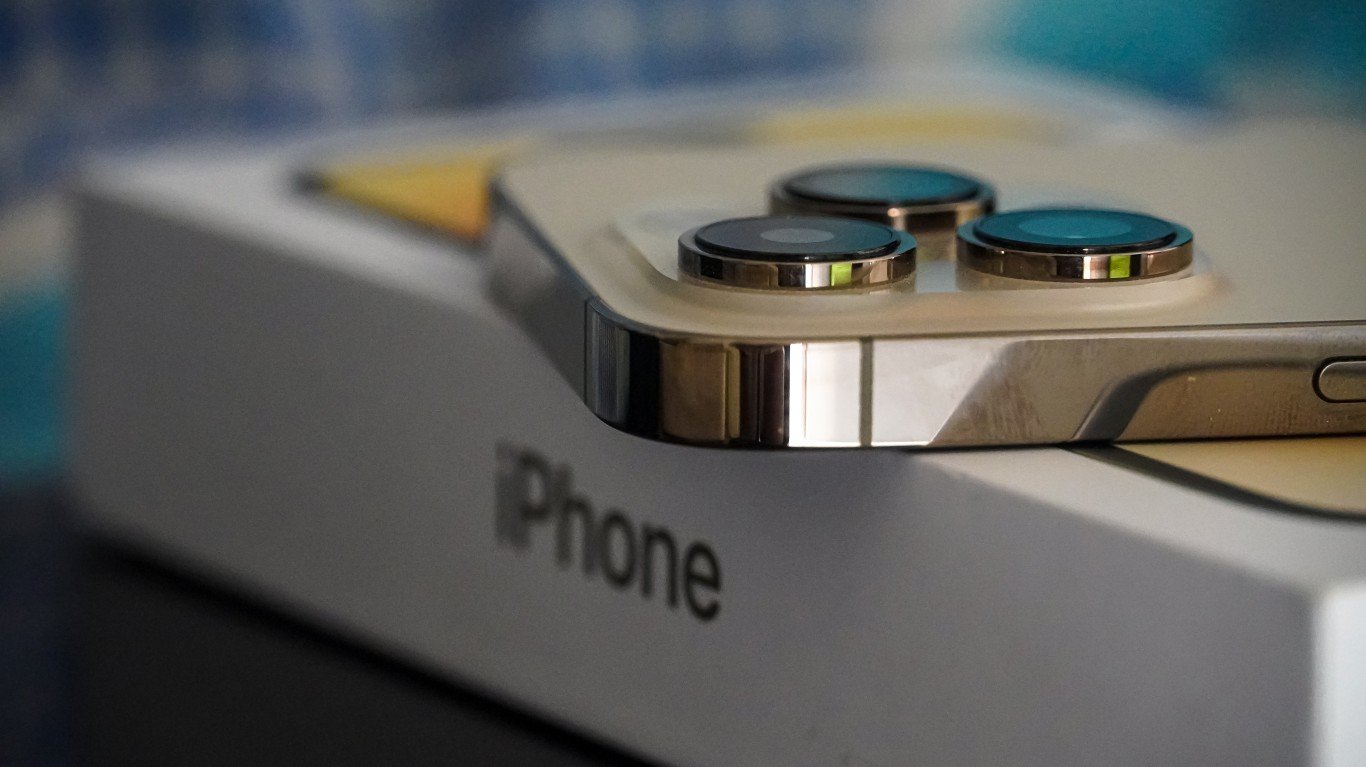
Apple’s $164 Billion Rally Hinges on iPhone Duo Adoption Among 6 Million Premium Buyers
Apple's first foldable iPhone triggered a market cap surge measured in hundreds of billions, but whether that single-session verdict survives contact with real consumer demand is a question Wall Street has not finished answering.


Apple (NASDAQ:AAPL | AAPL Price Prediction) held its September 9 product event, and by the next session, the stock closed at $326.57, up 3.56% from $315.34. That single session pushed market capitalization to roughly $4.77 trillion, following the debut of the iPhone Duo, the company’s first foldable.
Investors treated the unveil as validation of a premium reset. Wall Street was buying an idea, because a company this size does not add hundreds of billions of dollars in a day unless traders believe a new product line can move a needle that starts at more than $400 billion in annual revenue.
The question worth asking is whether the enthusiasm holds up when you compare what the market added to what a foldable can plausibly earn. That is the story below.

One Session, One Verdict on the Duo
The one-day pop is the anchor here. Apple’s shares moved 3.56% on September 10, 2026, the first full trading session after the launch. On a base that started the day near $315.34, that is a change in market value measured in hundreds of billions of dollars, not a rounding error.
The move needs a caveat before it does any work in your thinking. A company that trades at a 43 price-to-earnings multiple with a $4.77 trillion market cap moves on several forces at once, including index flows, macro headlines, and options positioning tied to the event itself. Attributing the whole session to the Duo overstates the case.
Market capitalization represents the aggregate price investors are willing to pay right now for future cash flows, and that price can retreat as quickly as it climbed. The seven-day sentiment change of -10.95 in the composite reading suggests some of the enthusiasm was already cooling before the launch even hit shelves.
Still, the direction of the move matters. Investors treated the Duo as the start of a new premium tier inside a lineup that just delivered a June quarter record for iPhone.
What the Move Tells You About the Business
Apple entered the launch in the strongest operating shape in years. Fiscal Q3 2026 revenue came in at $109.42 billion, up 16.36% year over year, with net income of $29.79 billion, up 27.12%. Diluted EPS reached $2.02, up 29%, and was the ninth straight quarterly beat.
iPhone revenue alone was $54.3 billion, up 22%, and Mac climbed 29% to $8.6 billion. Services set another June quarter record at $30.7 billion, up 12%. The installed base of active devices reached an all-time high across every major category and geography.
Those numbers are the reason the Duo lands with more weight than a typical accessory launch. Apple is layering a foldable onto a lineup already growing double digits and onto a base that surpassed 2.5 billion active devices earlier in the fiscal year. Even a small conversion rate among heavy upgraders would drive meaningful average selling price expansion.
Retail sales from a foldable, however you model unit volume, are not Apple’s profit. They flow through cost of goods, marketing, and a supply chain the company itself described as constrained. Management was blunt: supply issues stem from demand exceeding forecast, and constraints are expected to worsen sequentially in the September quarter.
Market Reaction and Where It Sits Now
The one-day rally is only part of the story. Year to date, Apple is up 20.45%, moving from $271.12 at the close of 2025 to $326.57 on September 10. Over the trailing year, the stock has gained 44.53%.
The prediction-market crowd is calmer than the stock action. Polymarket’s September 2026 pricing showed $320 as the highest-probability level at 0.73, with the week-of contract clustering around $328. That is not market pricing in a runaway leg from here.
Reddit’s tone mirrored that skepticism. The most-discussed thread asked directly whether a $2,500 foldable iPhone is enough to move the stock, and its aggregate sentiment score sat at 48, categorized as neutral. Individual investors have not fully bought the story yet.

The Bull Case for Apple
The bull case requires the Duo to pull the top of Apple’s premium ladder higher while iPhone, Mac, and Services keep compounding. So far, that is exactly what is happening.
Start with the operating baseline. Apple returned $33 billion to shareholders in the June quarter alone, including $25.8 billion in buybacks, and raised the dividend to $0.27 per share with a payment date of August 13, 2026. In the first nine months of fiscal 2026, buybacks totaled $62.094 billion.
Guidance for the September quarter calls for revenue growth of 9% to 11% and gross margin of 47% to 48%, even as memory costs climb and supply constraints tighten. The company also announced a Broadcom agreement expected to exceed $30 billion, part of a broader $600 billion U.S. investment commitment over four years.
The restraint is real and worth naming plainly. Foldables still represent less than 3% of the global smartphone market, and analysts left the launch without a clear picture of whether the Duo targets work, entertainment, or status-conscious early adopters. If Apple cannot convert the halo into upgrades across the standard iPhone line, the Duo becomes a one-cycle novelty rather than a durable tier.
Apple screens favorably here, with valuation in view. With the mega-cap hardware peer set, the combination of double-digit revenue growth, expanding services mix, and an aggressive capital-return program is uncommon. Analyst coverage tilts positive with 19 buy and 6 strong buy ratings against 3 sell and 2 strong sell calls, and the mean analyst target sits at $323.86, essentially at the current quote.

The straightforward read is that near-term upside from here depends on whether Duo demand, Siri AI adoption, and the standard iPhone 17 cycle keep the top line moving faster than the analyst community currently expects. Based on the June quarter and the guided September range, that outcome is more likely than not, and the long-term case remains intact.
Contact [email protected] for any questions or corrections.
Omor Ibne Ehsan is a writer at 24/7 Wall St. He is a self-taught investor with a focus on growth, cyclical, and dividend equities that have strong fundamentals, value, and long-term potential. He also has an interest in high-risk, high-reward investments such as penny stocks.