Lowe’s Keeps Raising Its Dividend. A Frozen Housing Market Could Test That Streak
Lowe's has doubled its quarterly dividend since 2021 and still outpaces Home Depot and Target on payout growth, but a frozen housing market and fresh acquisition debt are now squeezing the engine that makes those raises possible.

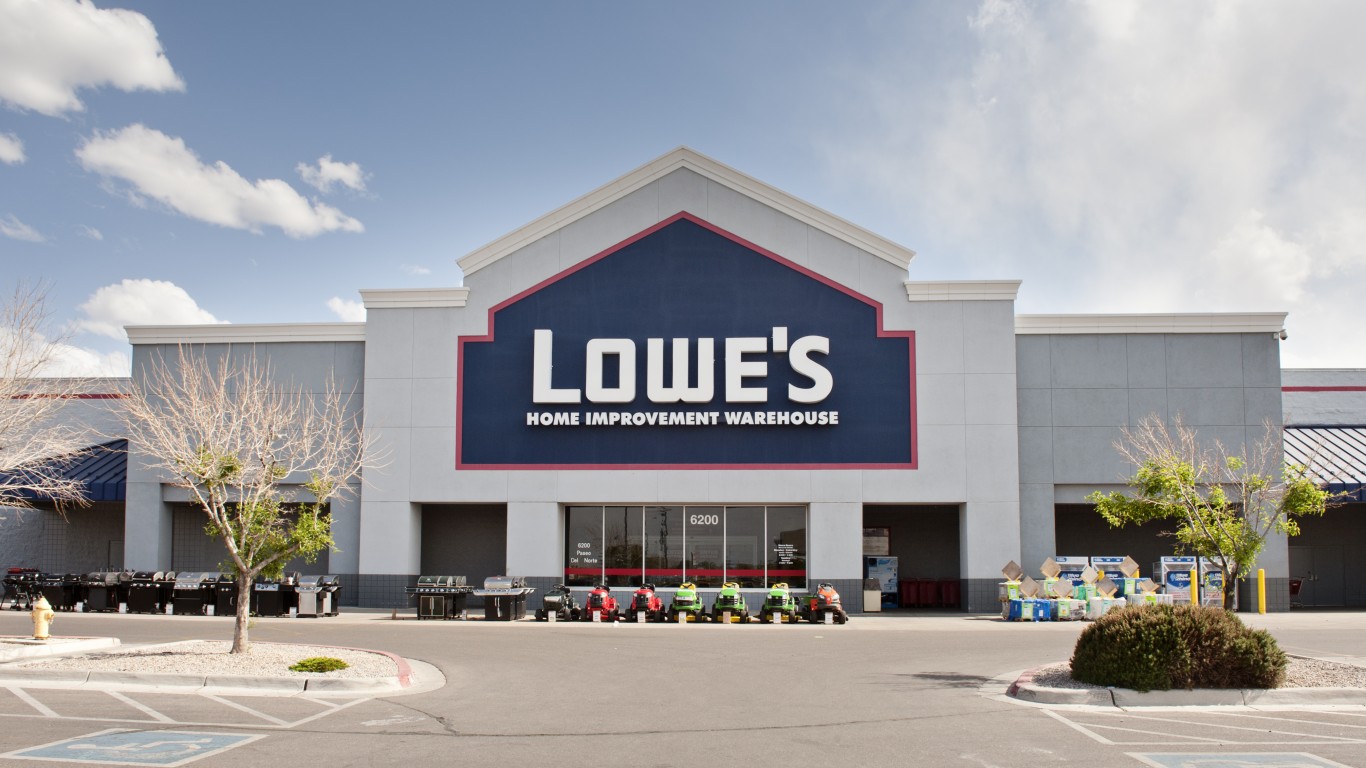
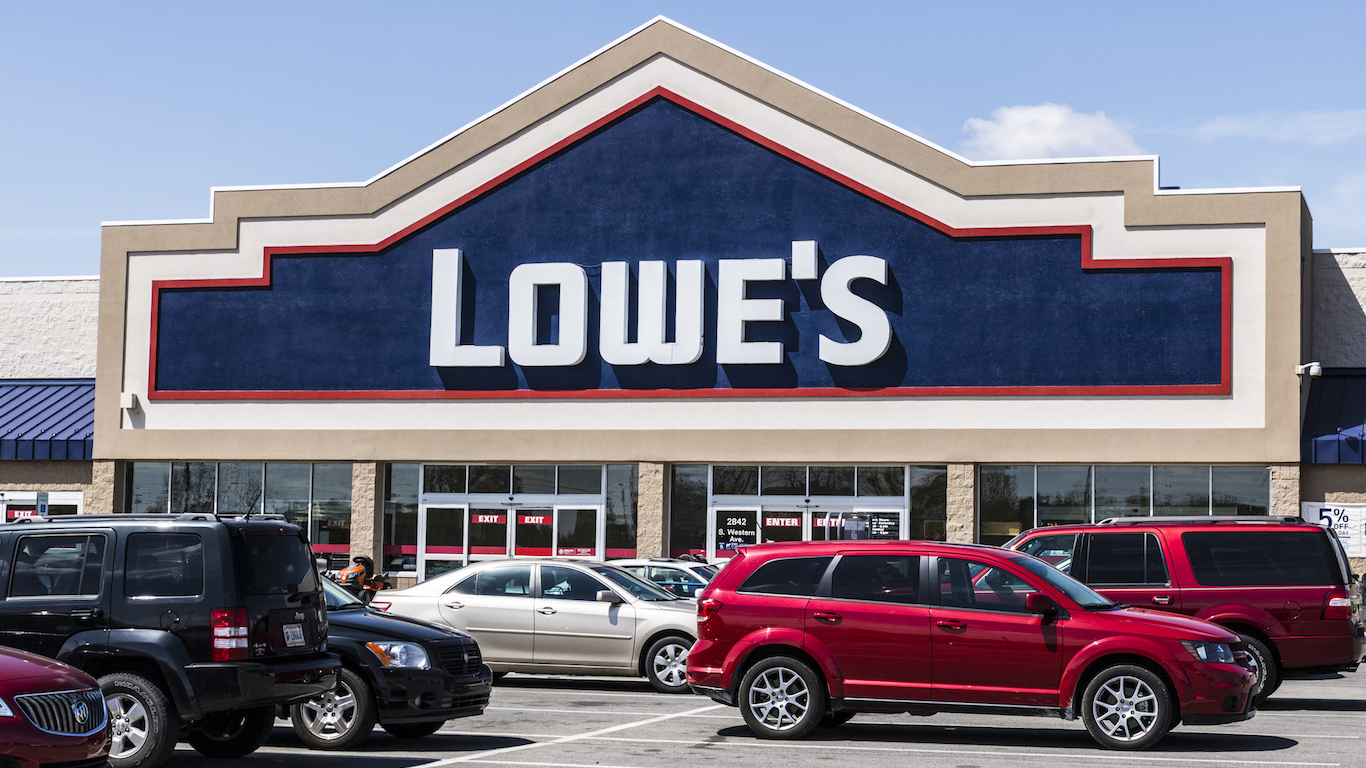
Lowe’s (NYSE:LOW | LOW Price Prediction) will send its next $1.25 quarterly dividend on November 4, 2026. The stock is down 21.86% year to date, which has lifted the yield to 2.53%. For retirees, the yield matters less than one question: can Lowe’s keep raising the payout while its biggest end market, housing, remains near a standstill?
Free Cash Flow Covers the Dividend Several Times Over
In fiscal 2025, Lowe’s produced $9.864 billion of operating cash flow and spent $2.213 billion on capex. That left about $7.65 billion of free cash flow. Dividends took $2.636 billion, roughly 34% of it. The forward dividend of $5 per share equals about 41% of management’s $12.25 adjusted EPS guidance.

The second quarter showed the same buffer. Brandon Sink put it simply during the August call:
“We generated $3.1 billion in free cash flow.”
Dividends paid in that quarter came to $673 million. The cash does come in unevenly through the year, though. In the quarter ending October 2025, operating cash flow was just $687 million against $673 million of dividends.

Lowe’s Is Raising Faster Than Home Depot and Target
In May, Lowe’s lifted its quarterly payout from $1.20 to $1.25, an increase of about 4.2%. Home Depot (NYSE:HD) raised its quarterly dividend just 1.3% to $2.33. Target (NYSE:TGT) managed 1.8%. Lowe’s quarterly payout has grown about 108% since the $0.60 it paid in early 2021. On the call, management tied the payout to its “commitment to returning capital to shareholders and our status as a dividend aristocrat.”
Housing Weakness Puts a Ceiling on Growth
Existing home sales slipped to 3.98 million in August, the low of the past year. Housing starts came in at 1.275 million. Lowe’s comparable sales rose only 0.2% last quarter, while transactions fell 2.1%. Marvin Ellison, the chief executive, was direct:
“Discretionary DIY demand remains under pressure.”
The push to win more professional contractors adds a second layer of housing risk. About 45% of the FBM acquisition’s business depends on residential construction, and the figure for ADG is 100%. Net interest expense is heading toward about $1.6 billion this year. Adjusted debt to EBITDA stands at 3.0 times, and management is aiming for 2.75 times by mid-2027. Big buybacks in past years, $14.124 billion in the fiscal year ending January 2023 alone, left shareholders’ equity at -$7.44 billion.
Our View: Lowe’s Keeps Growing the Payout, but More Slowly
Lowe’s remains a reliable dividend grower. Two things back that up. Buybacks fell to just $30 million in fiscal 2025, which leaves the dividend first in line for cash. And the payout uses only about a third of free cash flow.
The trade-off is speed. While the company pays down acquisition debt and housing stays soft, expect raises in the low-to-mid single digits rather than the big increases of 2021 and 2022 (we ranked ten long-streak dividend growers like Lowe’s by valuation in a free Dividend Kings report). Ellison is counting on a recovery:
“We know at some point we’re going to have to build houses in this country.”
The next hurdle is third-quarter results. Management expects adjusted EPS to come in about 7% below last year. Watch free cash flow and debt closely, because those two numbers will set the size of the next raise.
Contact [email protected] for any questions or corrections.
Chris Lange is a financial and geopolitical writer with more than a decade of experience covering a myriad of topics. He has published thousands of articles for 24/7 Wall St., with past coverage focused heavily on stocks, IPOs, healthcare, defense, global affairs, and technology.
His work has been quoted, or referenced by a number of outlets including Business Insider, USA Today, Yahoo Finance, MSN, The Motley Fool, and many other publications. A graduate of Southwestern University, he studied business with a focus on investments and has previous experience in banking and startups.
When not reading or writing the news, he is following his passion for Lacrosse, playing chess, or building solar projects with his dad.