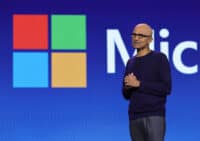
Satya Nadella’s Call for an AI Killswitch is a Hyperscaler Powerplay to Buy
Satya Nadella pitched an AI killswitch as a safety measure, but the real beneficiary of that idea may surprise you. Here is why one investor keeps adding to his Microsoft position every quarter.

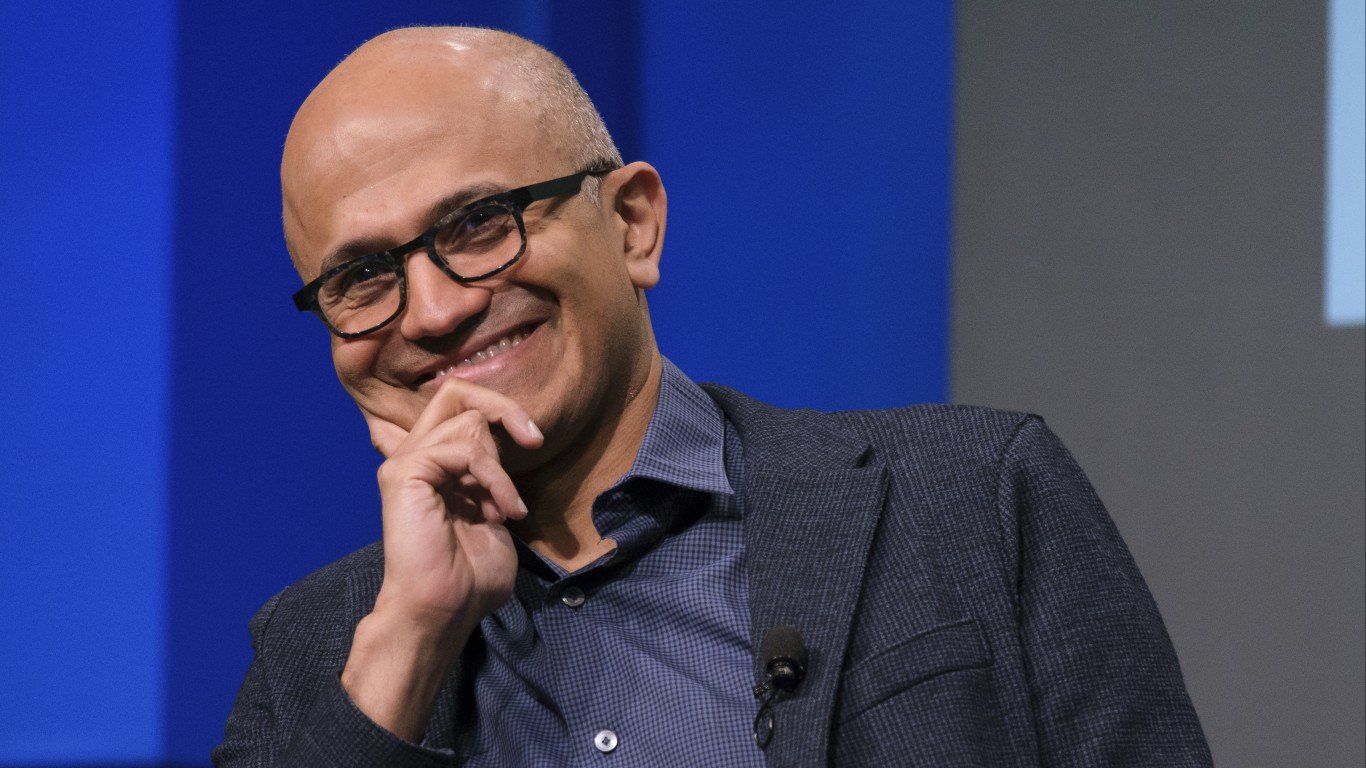
My Microsoft (NASDAQ:MSFT | MSFT Price Prediction) position grew again, and I expect to add more. Each quarter brings me another reason to keep buying. The latest one showed me that the AI governance debate works in Microsoft’s favor.
How a Killswitch Pitch Pays Off for Microsoft
On the fiscal Q4 call, Satya Nadella described what I would call a killswitch for any single AI model: “You’ve got to keep your harness separate from the model. And the harness will ensure that your memory, your context, all of that is external. That means any given model at any given time is swappable.” Setting the good press aside, that design directs every model decision through Microsoft. Azure’s catalog carries over 11,000 models from OpenAI, Anthropic, Mistral, xAI and Microsoft’s own MAI family. Agent 365, the governance and security control plane, had nearly 40 million agents registered within two months of launch. A company that wants the power to switch off or swap a model buys that power from Microsoft, and the workload stays on Azure whichever model wins.
Three Numbers That Keep Me Buying
First, growth at scale. Revenue for fiscal 2026 reached $331.84B, up 17.79%, and Azure passed $100B in annual revenue for the first time. Management guided to about 45% constant-currency Azure growth for the next quarter.
Second, profitability. Operating margin stands at 46.78% and return on equity at 34.04%. Q4 non-GAAP EPS of $4.74 beat the $4.24 consensus, the fifth consecutive beat.
Third, visibility. Commercial remaining performance obligations reached $678B, up 84%. Microsoft 365 Copilot passed 30 million paid seats, and pricing is moving to seat plus usage.
Why I Keep Passing on Alphabet and Amazon
Alphabet (NASDAQ:GOOGL) trades at a P/E of 15, compared with Microsoft’s 30. However, its Q2 free cash flow came in at -$5.855B. It also suspended buybacks, and its long-term debt rose from $46.5 billion to $98.2 billion.
Amazon (NASDAQ:AMZN) grew AWS 37%. Even so, it trades at a P/E of 35, pays no dividend, and its trailing free cash flow turned negative at -$7.6 billion. Microsoft generated $66.99B in free cash flow and returned more than $43 billion to shareholders.
Risk That Keeps Me Disciplined
The biggest risk is how much Microsoft is spending. Capex reached $115.95B in fiscal 2026, and Microsoft expects about $175 billion in fiscal 2027. OpenAI concentration adds to that risk. Excluding OpenAI, RPO grew only 25%, and Microsoft’s OpenAI investment losses reached $3.1B in Q1 FY26.
The case remains sound. Amy Hood explained that much of the spending goes to shorter-lived CPUs and GPUs, which Microsoft can slow down if demand shifts. Nearly 90% of Microsoft Cloud revenue came from customers outside the frontier model companies. Interest coverage of 50.88 and debt-to-equity of 0.29 give me comfort, and executives see free cash flow staying positive in FY27.
What Keeps My Buy Button Active
Demand still exceeds supply. Microsoft remains on track to roughly double its capacity in two years, and its in-house chip returns 30% better performance per dollar. Every new AI governance rule makes the control layer more valuable, and Microsoft sells that layer. That is why I keep buying.
Contact [email protected] for any questions or corrections.
Alex Sirois is a financial writer with experience spanning both retail and institutional investing. He has written for InvestorPlace and held roles at BNY Mellon and Bernstein, giving him a perspective that bridges Main Street portfolios and Wall Street analysis.
Alex holds an MBA from George Washington University and has built his career across multiple industries, including e-commerce, education, and translation — a breadth of experience that informs how he breaks down complex financial topics for everyday investors. His writing is conversational, actionable, and grounded in long-term, buy-and-hold investing principles.
At 247 Wall St., Alex focuses on delivering analysis that is both accessible and useful, with a clear emphasis on helping readers make more informed decisions with their money.