Nike’s Contrarian Strategy: Cut Volume, Restore Prestige
Nike is deliberately shrinking itself, slashing sales of its most iconic products and retreating from entire markets. Whether that painful gamble rebuilds the brand or just accelerates the decline is the question every shareholder now faces.

Per CFO Dave Denton, Nike (NYSE:NKE | NKE Price Prediction) reported first-quarter revenue of $11.2 billion, down 4%, with gross margin of 42.8%, up 60 basis points, and EPS of $0.48. Shares fell 5.8% to $33.10, down 47.7% year to date and 75.5% over five years. The decline reflects Nike’s plan to get smaller. Denton, new to the role, also delivered the full-year outlook.
Three Cuts Nike Chose to Make
Dunk
The Dunk is a low-top basketball shoe that became a lifestyle sneaker. CEO Elliott Hill said Nike reduced Dunk revenue by nearly 50% on purpose, creating a roughly $200 million drag in Sportswear. Pulling volume restores full prices because when popular shoes sit on every shelf, retailers discount them.
Jordan Retro
Hill said, “We’re going to get back to leading the scarcity model that we created. Simply put, we’ve been oversupplying our iconic retro product, asking it to do too much.”
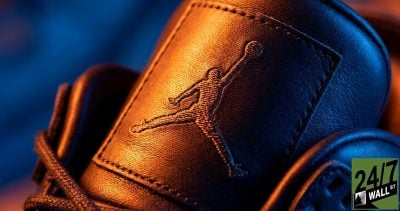
He also said Jordan made up 13% of Nike’s global business, with revenue down by the mid-teens. Rare shoes command premium prices. “When consumers see the Jumpman, it should feel special. It should feel earned,” said Hill.
Greater China
Greater China revenue fell 26%, according to Nike. Hill called the digital marketplace “too broad. It wasn’t differentiated, and it had become promotional.” Nike is cutting back to official stores on Tmall, JD, and Douyin and its own app, expecting continued pressure on revenue and profitability in the near term.
Why the Growing Business Can’t Cover the Gap Yet
Hill said Nike’s performance business grew by high single digits on a $16 billion base, with gains across running, football, training, basketball, tennis, and golf. Yet he acknowledged the limit: “Our Nike performance business is not yet large enough to offset the pressure we’re seeing in Nike Sportswear, Jordan brand, and Greater China.”
Sportswear made up just under half of revenue and fell by low double digits, Hill said. Running demand is strong: On Holding (NYSE:ONON) grew quarterly revenue 13.5% year over year. Softness is spreading across the category. A CNBC Fast Money panelist noted “Lululemon is going through the same thing” as Lululemon (NASDAQ:LULU) works through its own slowdown.
What Shareholders Are Being Asked to Accept
“While these decisions can dampen near-term top line results, our focus is on improving the quality of revenue and creating a more sustainable foundation for long-term growth,” said Hill.
Denton guided fiscal 2027 revenue to decline in the high single-digit range, with operating profit falling by a greater percentage than revenue. Adjusted EPS is set at $1.15 to $1.35 versus GAAP EPS of $2.10 in fiscal 2026. Pain may extend into fiscal 2028. Most of the Pace program’s $2.5 billion in savings arrives in fiscal years 29 and 30.
Verdict: A Credible Plan That Still Needs a Floor
The strategy is credible because Nike’s results back it up. Where management restored discipline, products responded: Air Force One is a “stable, full-price business,” and the Shanghai House of Innovation has posted 10 consecutive months of growth. The risk is that cutting revenue has no natural stopping point, and the timeline already extends into fiscal 2028.
The test is Nike’s November investor day. A five-year framework with a specific, dated return to growth for Sportswear, Jordan, and China would strengthen the recovery case. Longer timelines would suggest a strategy of demolition without a clear rebuilding endpoint.


Contact [email protected] for any questions or corrections.
Trey has been an editor and author at 24/7 Wall St. for more than a decade, where he has published thousands of articles analyzing corporate earnings, dividend stocks, short interest, insider buying, private equity, and market trends. His comprehensive coverage spans the full spectrum of financial markets, from blue-chip stalwarts to emerging growth companies.
Beyond 24/7 Wall St., Trey has created and edited financial content for Benzinga and AOL's BloggingStocks, contributing additional hundreds of articles to the investment community.
Trey's editorial expertise extends across multiple publishing environments. He served as production editor at Dearborn Financial Publishing and development editor at Kaplan, where he helped shape financial education materials. Earlier in his career, he worked as a writer-producer at SVE. His freelance editing portfolio includes work for prestigious clients such as Sage Publications, Rand McNally, the Institute for Supply Management, the American Library Association, Eggplant Literary Productions, and Spiegel.
Outside of financial journalism, Trey writes fiction and has been an active member of the writing community for years, moderating workshop sessions at regional conventions.