D-Wave Just Crashed 43% in a Month. Can QBTS Stock Realistically Get Back to $10?

This post may contain links from our sponsors and affiliates, and Flywheel Publishing may receive compensation for actions taken through them.

Quantum computing stocks are extending their losses as a broad technology selloff pulls speculative names lower. D-Wave Quantum (NASDAQ:QBTS) stock is at $6.45 in afternoon trading. Measured year to date (YTD), QBTS stock is down 75%, the steepest drop among the four pure-play quantum names we’re looking at today.
Getting D-Wave stock back to $10 would require a 55% gain from here. That’s possible but challenging, and cautious traders should consider how much speculative premium was already priced into quantum stocks when QBTS was above $30.
Hot Inflation and Tariff Proposals Weigh on Tech
Technology stocks led the broader market lower on November 25. NVIDIA (NASDAQ:NVDA | NVDA Price Prediction) led a resumption of the selloff in AI-linked shares. With tech stocks declining rapidly, pre-profit growth names such as D-Wave are under heavy pressure.
October core Personal Consumption Expenditures (PCE) inflation, released November 25, came in at 3.3% year over year (YoY), above the 3.2% consensus estimate. That reading all but locks in a December Federal Reserve rate hike, and higher rates tend to weigh on pre-profit, long-duration stories such as D-Wave.
Adding to the pressure, the Office of the U.S. Trade Representative proposed fresh tariff measures targeting 14[1] trading partners on November 25. Sentiment toward D-Wave and its peers was already weak after a November 23 report quoted an investor calling quantum “one of the most overhyped technologies of our time.” A sharp bounce for the group that day reversed on November 24, and the selling is now extending (riding a speculative theme is fine if you plan the exit, which is the whole point of our free bubble survivor’s handbook).
IonQ Holds Up Best as Rigetti and Quantum Computing Inc. Slip
Rigetti Computing (NASDAQ:RGTI) stock is at $7.40; year to date, RGTI is down 67%. When Rigetti reported on November 10[2], the company posted Q3 2026 revenue of $1.41 million, missing expectations as on-premises system deliveries slipped, and it kept its full-year revenue guidance of approximately $20 million, which hinges on customer acceptance from C-DAC in Q4.
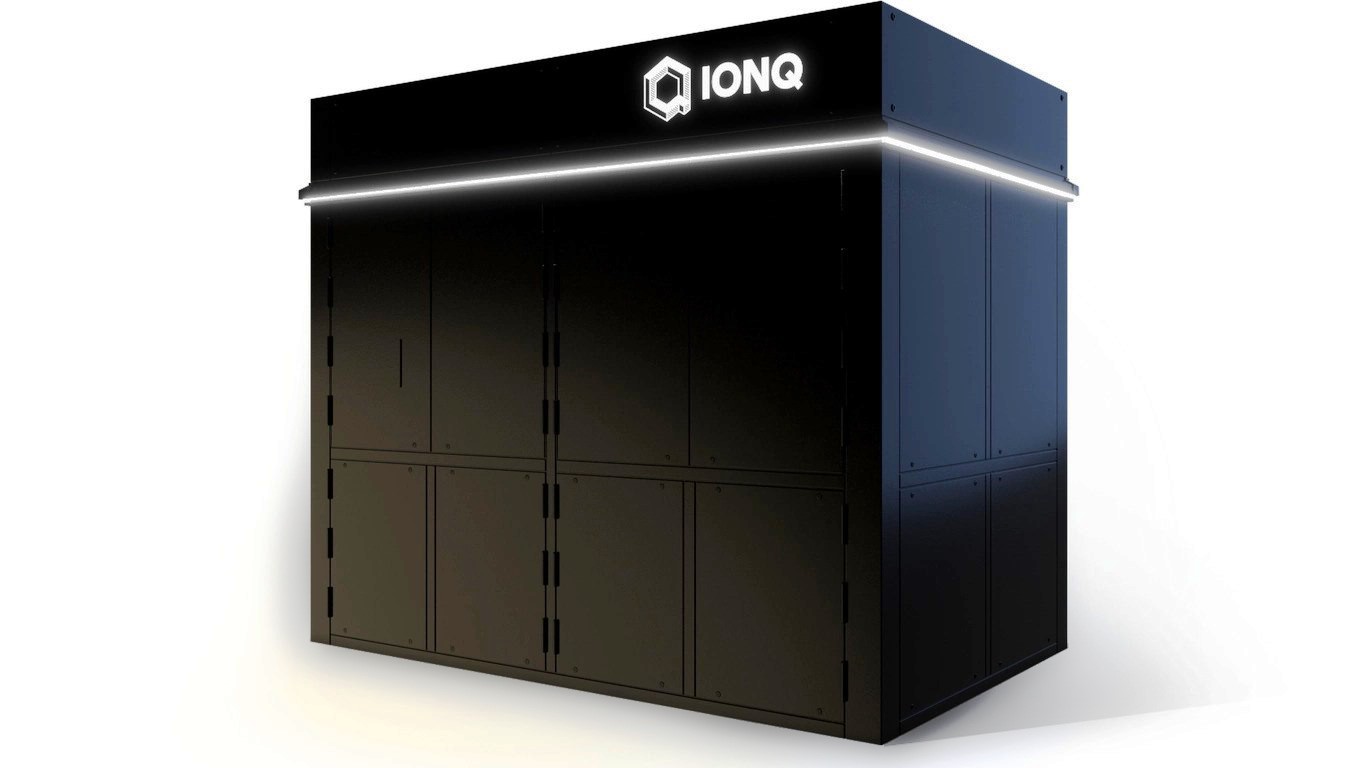
IonQ (NYSE:IONQ) stock is trading at $22.02, down 51% YTD. As the most established name in the group, IonQ reported Q3 revenue of $173.8 million[3] on November 5 and raised its full-year 2026 revenue guidance to $505 million to $515 million.
Quantum Computing Inc. (NASDAQ:QUBT) stock is at $4.22%. Shares of Quantum Computing Inc. are down 59% YTD, even though the company disclosed on November 9 that its Q3 revenue rose to $9.5 million, driven almost entirely by acquisitions.
D-Wave’s balance sheet stands out among the smaller names. The company revealed on November 10[4] that its Q3 revenue rose 20.7% YoY to $4.51 million, and it ended the quarter with $503.4 million in cash and investments.
How D-Wave’s Business Model Differs From Its Rivals
Among the four, D-Wave describes itself as the only company offering both annealing and gate-model quantum computers. Annealing systems from D-Wave are already production-ready for optimization work such as scheduling and logistics, while its gate-model machines remain years from production.
Rigetti builds superconducting, chiplet-based gate-model systems, so its commercial case depends on raising gate fidelity and qubit counts. IonQ relies on trapped-ion technology and is now vertically integrated through its SkyWater foundry, which also handles manufacturing for D-Wave.
Quantum Computing Inc. uses a room-temperature photonic architecture that does without the deep cooling superconducting systems need. Revenue at Quantum Computing Inc. now comes almost entirely from acquired photonics, quantum communications and packaging businesses.
Rate Hike Risk Puts D-Wave’s Rebound Case to the Test
D-Wave’s next test is whether its bookings convert into revenue fast enough to matter in a higher-rate market. The bulls can point to D-Wave’s nine-month bookings of $37.4 million[4], up 611%, plus up to $100 million in milestone-based CHIPS Act funding.
On the other side, D-Wave’s Q3 loss of $0.13[4] per share missed expectations, and the bears note that its gross margin fell to 52.9% from 71.4%. Higher rates could also keep pressure on the company if traders continue preferring profitable businesses over long-dated growth stories.
Rate-sensitive shareholders may watch for the Federal Reserve’s December decision as the next signal for D-Wave and its peers. Some QBTS holders may prefer a conservative investment approach until the Fed’s December rate decision.
Contact [email protected] for any questions or corrections.
David Moadel is financial writer specializing in stocks, ETFs, options, precious metals, and Bitcoin. David has written well over 1,000 articles for leading online publications, helping investors understand markets, income strategies, and risk. His work has appeared in 24/7 Wall St., The Motley Fool, InvestorPlace, U.S. News & World Report, TipRanks, ValueWalk, Benzinga, Market Realist, MarketScreener, TalkMarkets, Finmasters, and others. With a master’s degree in education, David has taught at the elementary, high school, and college levels. That teaching background shapes his writing style: clear, educational, and practical. David has also built a loyal social-media audience by providing trustworthy financial content on YouTube, X/Twitter, and StockTwits.