IonQ Revenue Surges 336%. Has The Quantum Computing Revolution Arrived?

This post may contain links from our sponsors and affiliates, and Flywheel Publishing may receive compensation for actions taken through them.
IonQ (NYSE:IONQ | IONQ Price Prediction) trades at $24.99. A record quarter has revived the debate over whether quantum computing has become a real business, and a steep slide in the share price makes that question urgent.

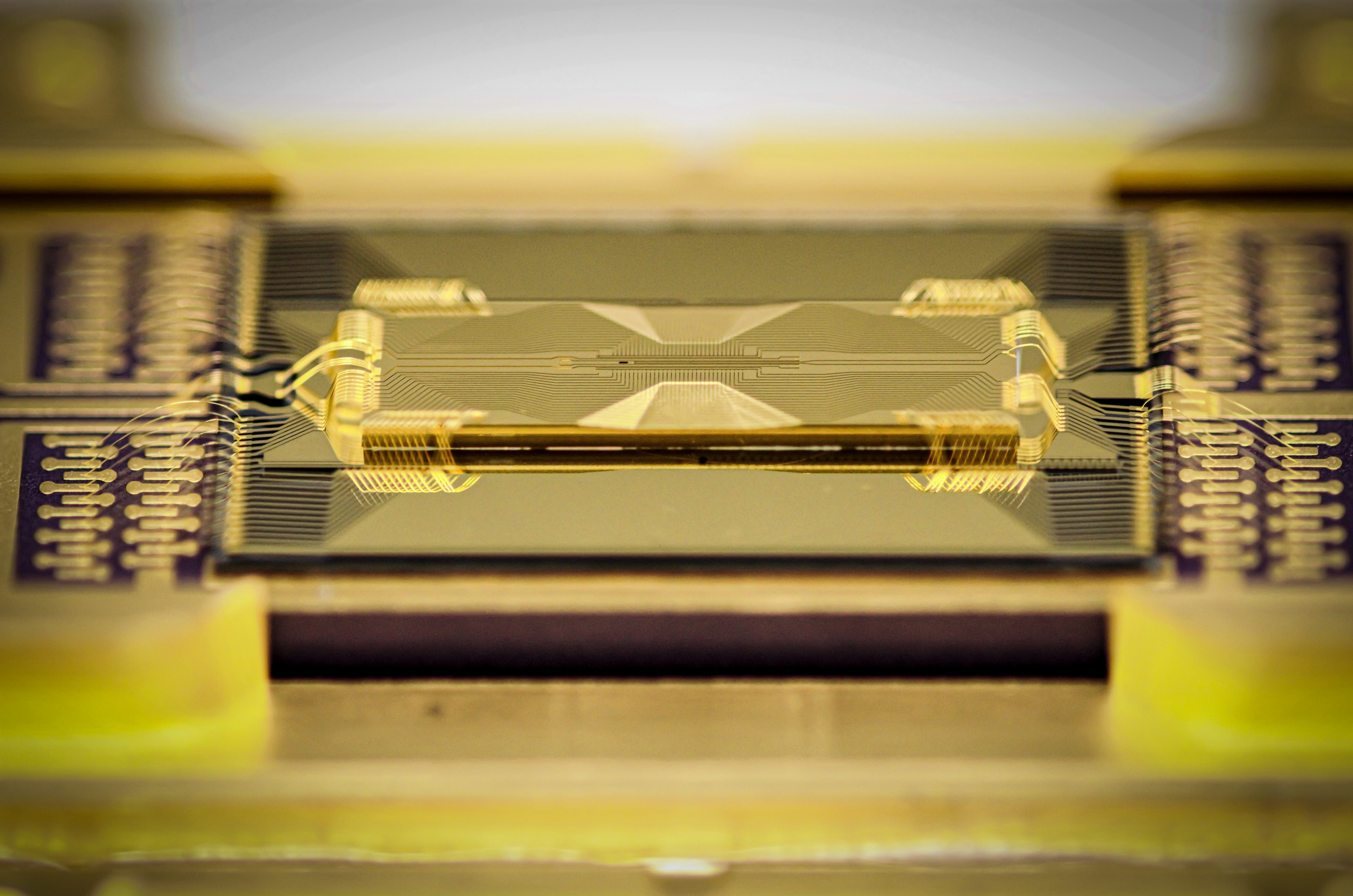
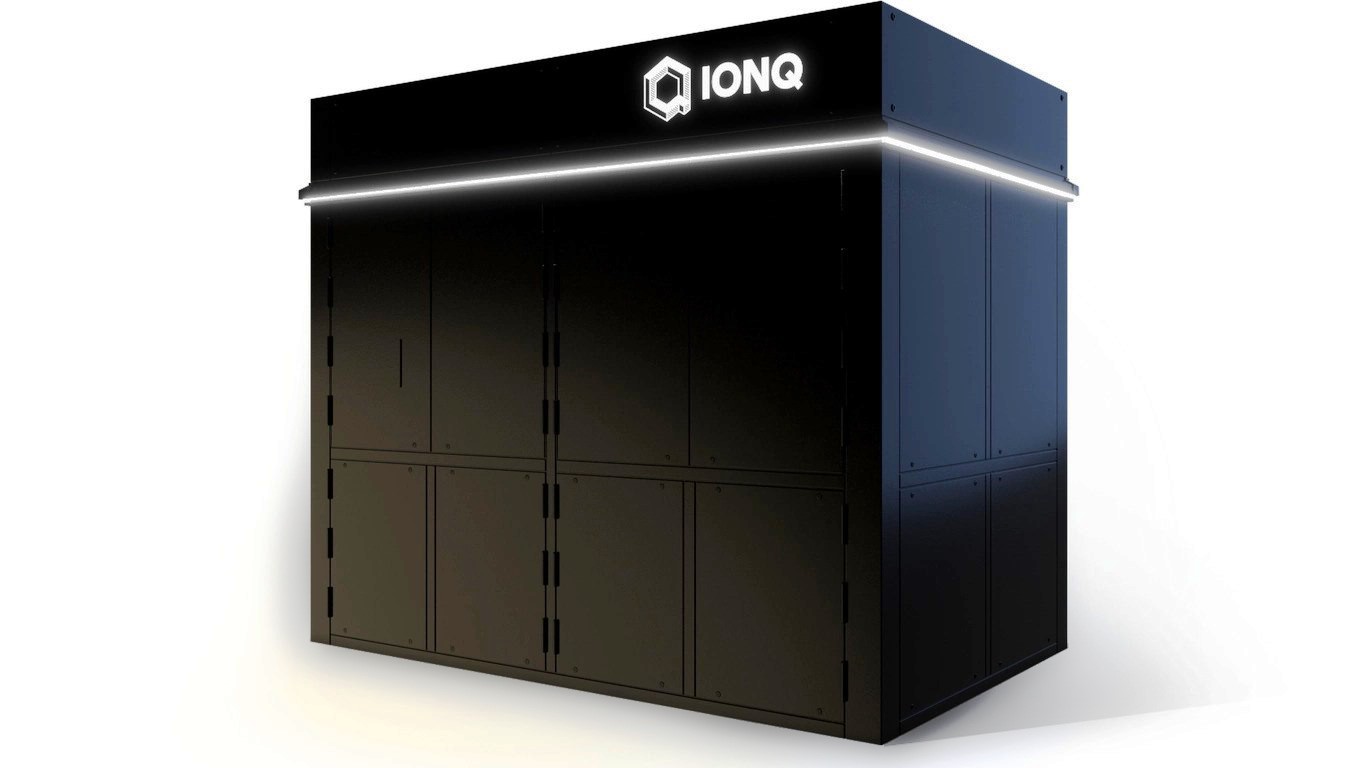
IonQ builds trapped-ion quantum computers such as Tempo and Superion, sells access through all major cloud providers, and offers networking, sensing and post-quantum security products. Its SkyWater acquisition added a foundry that also makes chips for rivals like D-Wave Quantum (NYSE:QBTS). Despite that, the stock trades far below its 52-week high of $73.65.
Record Revenue and a $1.2 Billion Backlog Power the Bull Case
Third-quarter revenue rose 336%[1] year over year to $173.83 million, beating the $141.20 million consensus. Remaining performance obligations, meaning contracted revenue not yet recognized, more than doubled to $1.2 billion[1]. Management raised full-year guidance to $505 million to $515 million[1] and expects 110% growth in quantum computing revenue.
NVIDIA (NASDAQ:NVDA) will deploy a Superion 256 at its Accelerated Quantum Research Center. IonQ also advanced to Stage C of DARPA’s Quantum Benchmarking Initiative, worth up to $300 million, as the only trapped-ion company to do so. Pro forma cash of $3.7 billion[1] limits near-term financing risk.
Warrant Gains Mask a Widening Cash Drain
Third-quarter GAAP net income of $563.96 million[1] leaned on an $896.16 million noncash warrant gain. Adjusted EBITDA loss grew to $133.61 million[1] from $48.91 million. Operating cash burn hit $570.3 million through nine months versus $208.7 million a year earlier, and stock-based compensation beating $417 million.
The $2.0 billion equity offering reduces holders, and the Elisity deal adds $1.15 billion in stock plus up to $150 million in earnouts. SkyWater supplied $83.5 million[1] of third-quarter revenue, so acquisitions boost the growth rate. IBM (NYSE:IBM), Quantinuum and D-Wave compete for the same customers. Millennium, D.E. Shaw and Two Sigma trimmed stakes last quarter, while Tudor and Brevan Howard exited.
Organic Platform Growth Will Settle the Debate
The IonQ Platform segment, which excludes the foundry, grew 127%[1] to $90.3 million, extending a run of six straight record quarters. That momentum and the cash cushion give the bulls plenty to point to.
Valuation moderates that case. At roughly 21 to 23 times projected 2026 revenue, the stock prices in years of hypergrowth, while analysts expect per-share losses to deepen in 2027. Over the next two to four quarters, backlog conversion, organic platform growth and cash burn trends will shape the outlook.

Analysts See 117% Upside While Shares Lag the S&P 500
IonQ trades at $24.99 against a consensus target of $54.27, meaning about 117% upside across 14 analysts. Targets are one data point and carry no guarantee. The breakdown:
- Strong Buy: 1
- Buy: 11
- Hold: 2
- Sell or Strong Sell: 0

Market cap stands at $11.56 billion, with a price-to-sales ratio of 30.38. The trailing P/E of 14 reflects warrant gains, and analysts project EPS of -$2.2291 for 2026 and -$3.1421 for 2027. Shares fell 44.35% year to date versus a 6.8% gain for the S&P 500, and dropped 46.76% over one year against the index’s 7.16% rise.
IonQ Must Prove Organic Growth Can Outrun the Burn
At $24.99, IonQ’s valuation hinges on execution.
IonQ could emerge as a dominant quantum computing company, but investors are paying tomorrow’s prices for a business losing money today. The optimists’ argument tones up if platform revenue keeps growing at triple-digit rates without acquisitions, backlog converts on schedule and adjusted EBITDA losses narrow (we reverse-engineered what the earliest monster tech winners looked like before their runs in a free playbook here). Early signs are mixed but improving: the 2026 EPS estimate drew two upward revisions in the past 30 days.
The risks grow if IonQ taps equity markets again, goes after more stock-funded deals or misses the $191.92 million fourth-quarter revenue consensus.
Volatility runs high in a stock that just rose 20.51% in a single week, while shareholders continue absorbing dilution before the margins improve. Fourth-quarter results will test guidance, and 2027 updates will show whether the $874.13 million revenue estimate is reachable. IonQ has proven its demand but has yet to prove its economics.
Contact [email protected] for any questions or corrections.
After two decades of patrolling the dark corners of suburbia as a police officer, Rich Duprey hung up his badge and gun to begin writing full time about stocks and investing. For the past 20 years, he’s been cruising the markets looking for companies to lock up as long-term holdings in a portfolio while writing extensively on the broad sectors of consumer goods, technology, and industrials. Because his experience isn’t from the typical financial analyst track, Rich is able to break down complex topics into understandable and useful action points for the average investor. His writings have appeared on The Motley Fool, InvestorPlace, Yahoo! Finance, Money Morning, and, of course, 24/7 Wall St. He has been featured in both U.S. and international publications, including MarketWatch, Financial Times, Forbes, Fast Company, and USA Today.