Let’s Be Real. Most Retirees Can Only Afford One Corner of California.
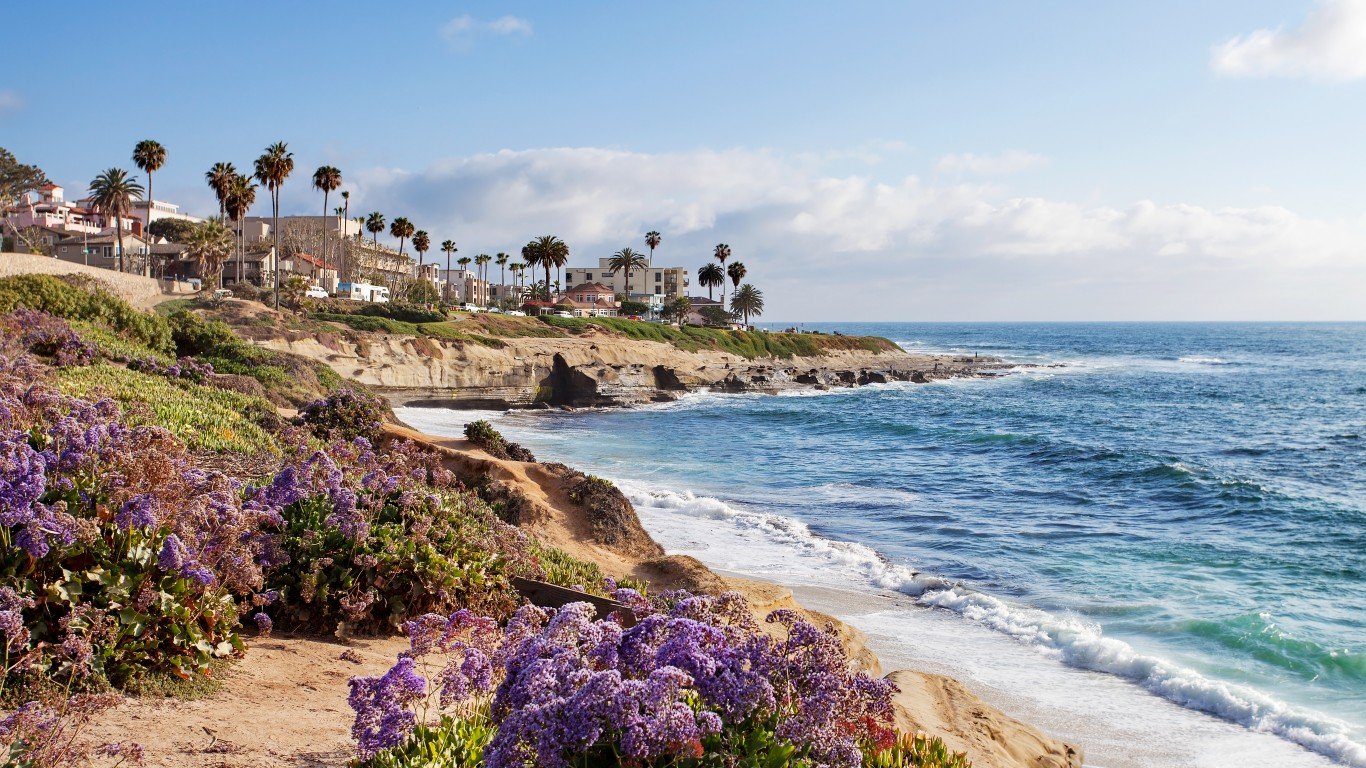
Retiring in California on a middle-class portfolio is still possible, but it usually means giving up the postcard version of the state. The coast, Palm Springs, and the higher-priced suburbs near Sacramento can quickly overwhelm the math. The more realistic…

This post may contain links from our sponsors and affiliates, and Flywheel Publishing may receive compensation for actions taken through them.

Retiring in California on a middle-class portfolio is still possible, but it usually means giving up the postcard version of the state. The coast, Palm Springs, and the higher-priced suburbs near Sacramento can quickly overwhelm the math. The more realistic option is inland and north, where home prices are lower, Social Security is not taxed by the state, and a paid-off house can still make the budget work. The catch is that the cheaper geography often comes with wildfire insurance risk.
Beating California’s Cost of Living
California’s cost of living is not merely a little above average. MERIC’s first-quarter 2026 index put California at 140.5 against a national baseline of 100, behind Hawaii and Massachusetts. The state also ranks near the bottom of the Tax Foundation’s 2026 State Tax Competitiveness Index. For a middle-class retiree, the coast is usually not the realistic target. The better math is inland and north: Shasta County, Tehama County, and the stretch running toward Siskiyou.
Redding is the anchor. It has major medical care, an airport, and a median home price around $400,000, compared with a statewide median near $782,000 in May 2026. That does not make Redding cheap in a national sense, but it is a different calculation from Palm Springs, the Central Coast, or the higher-priced foothill communities near Sacramento. For a California retiree trying to stay in-state, the far north is where the numbers have a chance.
The Budget Heavyweight: Housing
Assume a couple, both 65, Medicare-eligible, owning a modest home in the Redding area. In current dollars, the working budget looks roughly like this:
Property tax on a $400,000 California home is a little more complicated than a simple effective-rate estimate because Proposition 13 limits assessed-value growth after purchase, while local assessments and parcel taxes vary. As a planning figure, $4,400 is reasonable. Utilities, with summer air conditioning in a valley that can hit triple digits, may land near $3,600. Home maintenance and a sinking fund for roof and HVAC replacement can add $6,000. Food for a 65-plus couple can run roughly $10,800, and transportation, including a replacement-vehicle reserve, about $7,000.
Where the Rest of the Money Goes
Healthcare is where people underestimate. Medicare Part B for a couple runs about $4,870 a year in 2026 before any IRMAA surcharge. Add Medigap or Medicare Advantage premiums, Part D coverage, dental, vision, and out-of-pocket costs, and a $13,000 to $15,000 annual healthcare budget for the couple is a reasonable planning range before a serious diagnosis.
Miscellaneous items (gifts, travel, hobbies, a grandchild’s birthday, reserves for the unexpected, and California income tax on retirement account withdrawals): budget $12,000. All in, you need $65,000 to $72,000 a year to live modestly and comfortably in the affordable corner of California with a paid-off house.
Turning That Into a Portfolio Number
Social Security does most of the heavy lifting. The average retired-worker benefit in 2026 is about $2,071 per month after the 2.8% COLA, so a two-earner couple with roughly average earnings histories collects about $49,700 a year before federal tax. California does not tax Social Security benefits, but it does tax IRA, 401(k), and pension withdrawals as ordinary income. The state’s personal income tax rates run from 1% to 12.3%, with an additional 1% tax on taxable income above $1 million, creating a top rate of 13.3%.
Subtract $49,700 from a $68,000 budget and the gap is roughly $18,300 a year. At a 4% withdrawal rate, that requires a portfolio of about $460,000. At a more conservative 3.5% rate, the target is closer to $525,000. Add a paid-off house worth about $400,000 and the total net worth needed sits near $900,000 to $950,000. If the mortgage is not paid off, the annual carrying cost can add $24,000 to $30,000, and the portfolio requirement can roughly double.
The Wildfire Insurance Problem Nobody Prices In
The affordable corner of California is affordable partly because wildfire risk changes the housing equation. Many homeowners who cannot find standard coverage end up using the California FAIR Plan for basic fire coverage, often paired with a difference-in-conditions policy for other risks. The FAIR Plan reported $2.02 billion in total written premium as of March 2026, up 208% since September 2022, and policyholders face an approved average rate increase of about 29% beginning in October 2026.
A FAIR Plan policy plus companion coverage can run thousands of dollars a year, and the bill can be materially higher in high-fire-risk areas. That is not a line item you can amortize down like a mortgage. It can compound over a 30-year retirement, and it can force a sale if coverage becomes too expensive or inadequate after a rebuild-cost increase. The cheaper part of California is not necessarily low-risk California.
Fold a realistic $5,500 homeowners-insurance figure into the earlier budget and total annual spending climbs closer to $73,000. After roughly $49,700 of Social Security, the portfolio gap is about $23,300 a year. That points to roughly $585,000 at a 4% withdrawal rate, or about $665,000 at 3.5%. That is still achievable, but it is the number that reflects the geography.
It Can Work, Within These Parameters
On average Social Security plus roughly $600,000 to $675,000 in invested assets and a paid-off home in the far north, with withdrawals held near 3.5% to 4% and wildfire insurance priced honestly, retirement in California can still work. That does not make the whole state affordable on those numbers. It means one version of California remains possible: inland, paid off, carefully insured, and built around Social Security doing most of the work.
Contact [email protected] for any questions or corrections.
Drew Wood has edited or ghostwritten nine books and published more than 1,500 articles on investing, business, politics, travel, world cultures, wildlife, and earth science. He holds a doctorate and four master's degrees and has nearly 30 years of college teaching experience. His travels have taken him to 25 countries, including three years living in Ukraine.