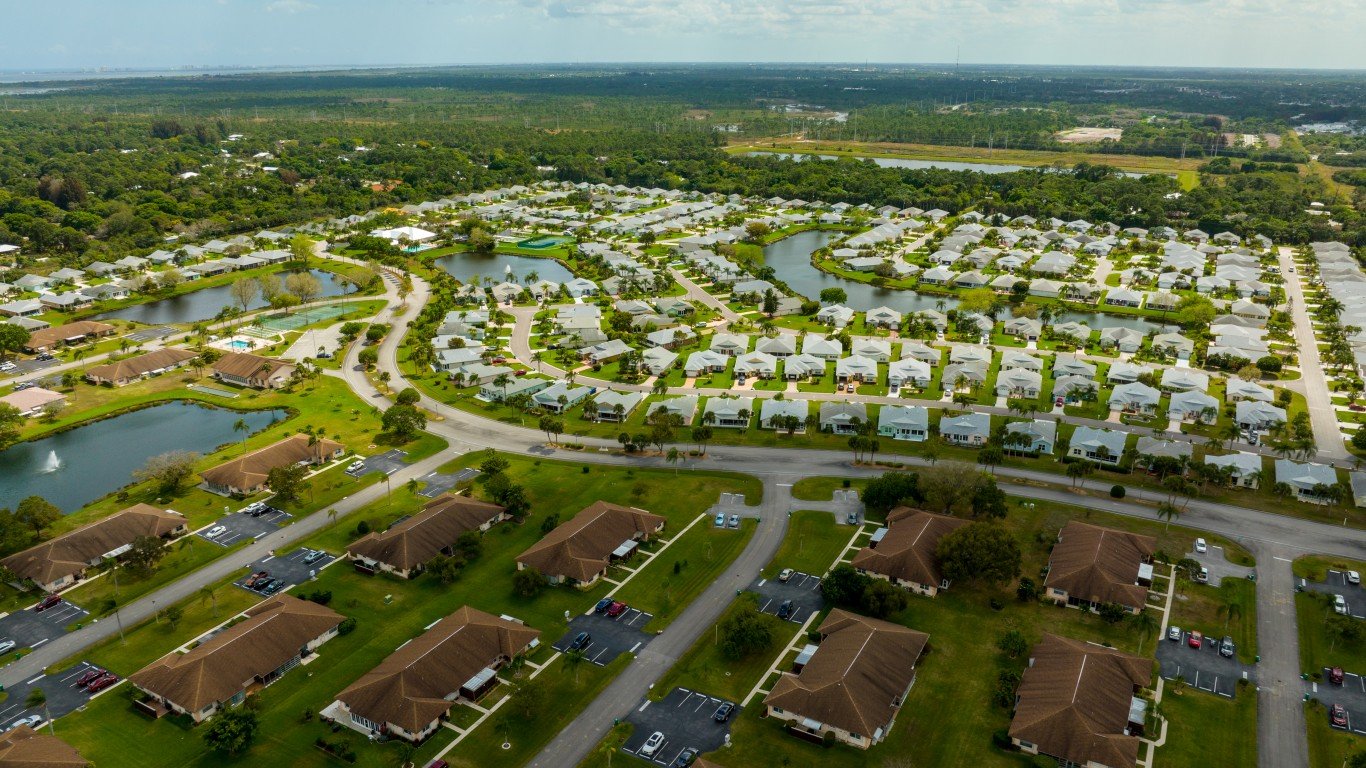
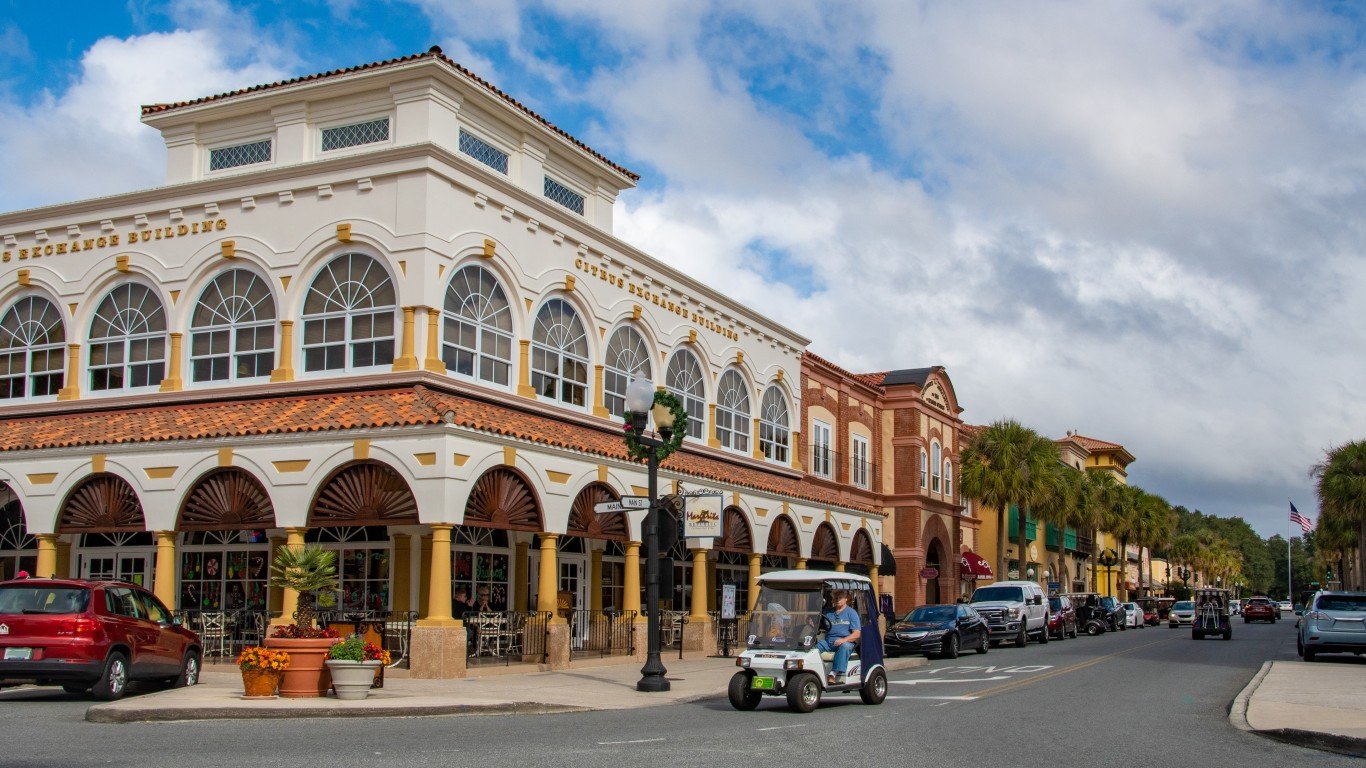
The Real Cost of Retiring in The Villages, Florida, on Social Security Alone
The golf carts and live music look affordable until you price the fee stack the sales office glosses over, and the numbers hiding inside a Villages retirement budget tell a very different story than the brochure.

This post may contain links from our sponsors and affiliates, and Flywheel Publishing may receive compensation for actions taken through them.

Someone in their late fifties or early sixties asks us almost every week: can Social Security alone carry a retirement in The Villages? The pitch is easy to sell: golf carts, pickleball, live music on the square, and a paid-off patio villa under the Florida sun. The math is harder, because the answer lives in the details the sales office tends to gloss over.
What The Villages Actually Costs in Current Dollars
Florida overall runs about 3.4% above the national cost-of-living average, and The Villages sits in the middle of that range once you layer in the community’s fee structure. A modest patio villa or courtyard villa today trades in the mid-$300s. National home prices remain elevated, with the Case-Shiller national index at 335.1 as of May 2026, though appreciation has slowed sharply, running less than 1% year-over-year. A buyer entering today is buying at a historically high nominal basis even as the market cools.
Assume a paid-off villa. A workable single-person annual budget looks roughly like this:
- Property taxes and homeowners insurance: $5,500
- CDD bond assessment and monthly amenity fee: $4,200
- Utilities, internet, phone: $3,600
- Food at home, USDA Low-Cost plan for one: $4,500
- Medicare Part B, Medigap Plan G, Part D, dental: $4,800
- Out-of-pocket medical, Rx, hearing, vision: $2,000
- Gas, car insurance, registration, maintenance (gas around $4.15 nationally as of September 2026): $4,200
- Golf cart, batteries, and cart insurance: $900
- Home maintenance reserve, appliance replacement, pest and lawn: $3,500
- Dining, entertainment, clubs, gifts, travel: $4,500
- Federal tax on provisional income: $500
That lands around $38,200 a year for one person living carefully but not miserably. A couple in the same villa runs closer to $49,000, because housing and the amenity fee stay fixed while food, healthcare, and lifestyle spending largely double.
Where Social Security Actually Lands
The 2026 COLA came in at 2.8%, and the SSA’s July 2026 monthly statistical snapshot puts the average retired-worker benefit at roughly $2,086 a month, or about $25,000 a year. Claim at 62 and that drops to roughly $1,500. Wait until 70 and a higher earner can reach $3,200 or more per month, with the maximum at $5,181 for those with a full maximum-taxable-earnings history. For a two-earner couple, both at full retirement age and each drawing their own benefit at the average level, combined income lands near $50,000 a year.
A single retiree on the average benefit is short by roughly $13,000 a year in The Villages. A couple with two average individual benefits essentially breaks even, with almost no cushion for a new roof or a bad medical year. That math works only for couples with above-average earnings histories or singles who delayed to 70 and had a high-earning career.
The Fee Stack Nobody Prices Correctly
The Villages purchase extends well beyond the home price. Every home carries a Community Development District bond (often $15,000 to $28,000 depending on the district and home age, paid down annually on the tax bill), a monthly amenity fee that adjusts each year with CPI, and a fire district assessment. New buyers in 2026 pay a monthly amenity fee of roughly $204, and because the fee is contractually tied to inflation, it compounds steadily over time. With Social Security’s COLA tied to the same CPI-W index, that particular line item tracks reasonably well. What does not track reliably is Florida property insurance.
Florida remains among the most expensive states for homeowners coverage, with average annual premiums ranging from $4,200 to $5,700 for standard dwelling coverage, still more than double the national norm. The market is improving: the Florida Office of Insurance Regulation approved an 8.7% average rate cut for Citizens Property Insurance, effective at Spring 2026 renewals, and multiple private carriers have filed their own decreases as tort reform filters through litigation costs. Even so, a Villages resident who budgeted $2,400 for insurance in 2020 is often writing checks for $4,500 or more today. The insurance line is what quietly breaks the Villages-on-Social-Security plan a decade in.
There is also the golf-cart-as-second-vehicle reality. A replacement lithium battery pack, a new cart every eight to ten years, and the fact that a cart cannot substitute for a conventional car all compound the cost well beyond what a quick budget sketch suggests.
What It Actually Takes
To retire in The Villages on Social Security alone over a 25-year horizon, you realistically need one of three profiles: a couple with combined benefits of at least $4,000 a month, both claiming at or after full retirement age; a single filer with a benefit above $2,800 a month, meaning a high-earning career and a claim delayed to 70; or a resident willing to rent a smaller unit rather than own.
Assume roughly $38,000 a year for a solo owner and $49,000 for a couple, with property insurance inflating faster than CPI and everything else tracking the index. If your combined Social Security clears those numbers with a small buffer, the scenario holds. If it falls short, the practical fix is a portfolio supplement of $150,000 to $300,000 in a conservative bucket, sized to absorb the insurance line and the roof-and-HVAC decade that every homeowner eventually faces. That is what the brochures leave out.
Editor’s note: This pass updated the Case-Shiller national home price index figure from 332.7 (April 2026) to 335.1 (May 2026, the most recent available reading) and added context on the slowdown in annual home price appreciation to under 1%. The average SSA retired-worker benefit was refreshed to roughly $2,086 per month, reflecting the SSA’s July 2026 monthly statistical data. The national gas price reference was updated from approximately $4.00 to approximately $4.15 per gallon based on AAA September 2026 data. The Citizens Property Insurance rate cut description was clarified to reflect that the 8.7% reduction has been approved by the Florida Office of Insurance Regulation and took effect at Spring 2026 renewals, and the Florida average annual homeowners premium range of $4,200 to $5,700 was added for context.
Contact [email protected] for any questions or corrections.
I am a long time investor and student of business, and believe finding good companies that can become great investments is the best game on earth. After 20 years of writing and researching the public markets it is clear that individuals have never had more tools and information to take control of their financial lives. From ETFs and $0 commissions to cryptos and prediction markets there has never been a greater democratization of access to investing.
I write to help people understand the investments available to them so they can make the best choice for their portfolio, whether they're starting out or looking for income in retirement.