The Retirees Who Left Florida for Good Say the Insurance Bill Was Only the Beginning
Retirees who sold their Florida homes and headed for the exits all cite the same turning point, and it was not the hurricane season or the politics. The insurance bill arrived first, but it was never the biggest number.

This post may contain links from our sponsors and affiliates, and Flywheel Publishing may receive compensation for actions taken through them.

Every few weeks, someone in a personal finance forum will undoubtedly make the same comment someone else made the week before: they plan to retire in Florida, but a friend who made the move calls to say they are leaving. The reason is the annual cost of keeping the house, rather than weather or politics. The claim you see in headlines that insurance is eating everyone alive is also true, but somewhat incomplete, as retirees who left describe the insurance bill as the first envelope they opened, not the last.
A Tax Advantage That Remains
Florida still has no state income tax. Florida ranks fourth overall in the 2025 State Tax Competitiveness Index and ties for the best possible rank on the individual income tax. For a retiree drawing large sums from taxable accounts or realizing a business sale, this advantage is worth serious money every year for the rest of their life.
What changed is everything stacked on top of it. Florida recovers revenue through property insurance, property taxes, association dues, and a cost of living now measurably above the national average. Florida’s regional price parity sits above the national benchmark of 100, meaning the informal assumption that Florida is cheap no longer holds in desirable areas. For a specific retiree profile, the tax savings are now smaller than what replaced them.
Why Insurance Is Only the Trigger
A peninsula in a warming hurricane basin is expensive to insure. Reinsurance costs flow through to homeowners, private carriers have pulled back, and the state-backed insurer of last resort has absorbed more of the market than intended. Standard policies often exclude windstorm and flood, so the true annual carrying cost is scattered across separate bills. Availability became as much of a problem as price. A house that cannot be insured cannot easily be sold or mortgaged.
The hurricane deductible is misunderstood in a way that matters. It is usually stated as a share of the insured value rather than a flat dollar figure, meaning out-of-pocket exposure in a storm is denominated in a fraction of the house, not a fraction of the claim. A retiree reading their policy carefully after a landfall tends to have a very bad afternoon.
Condo Assessments and Unsellable Units
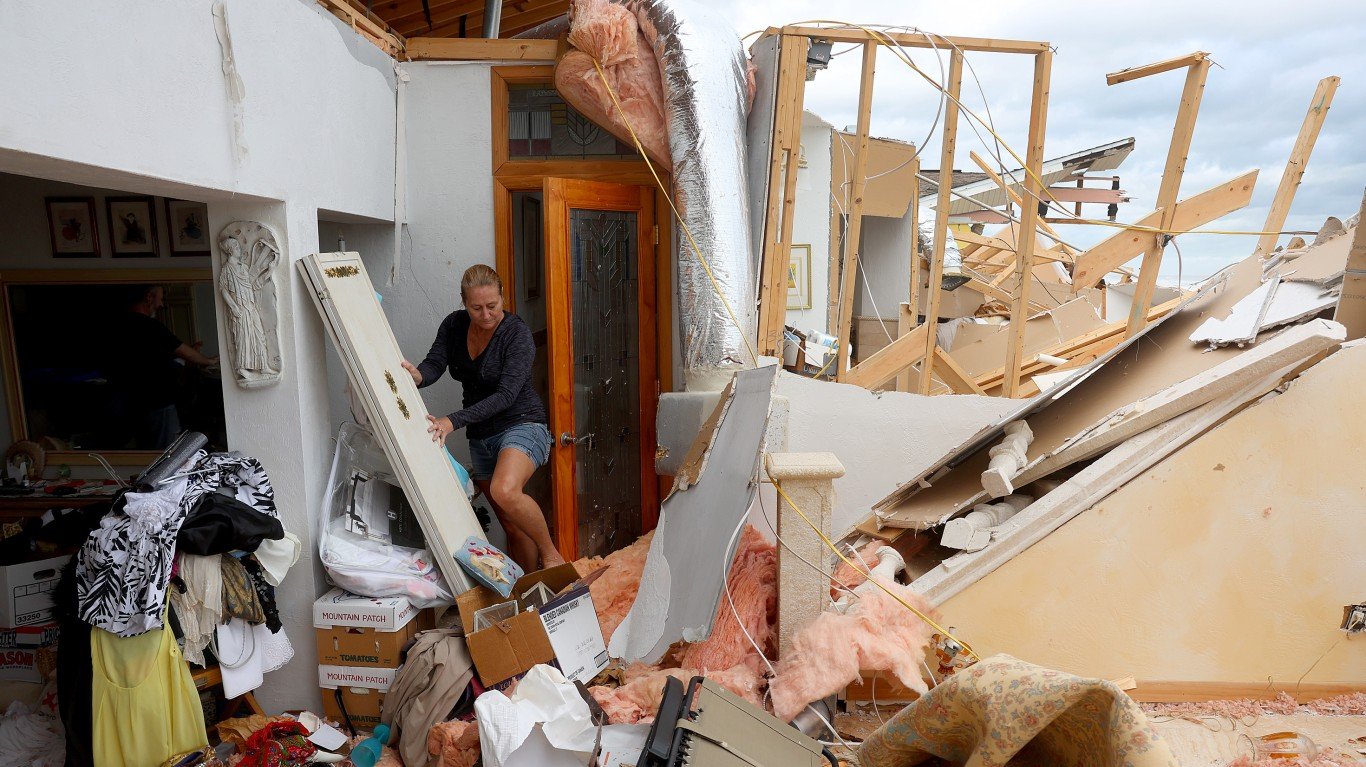
The bill that broke most retirees was the condominium special assessment. After the structural collapse that prompted state reforms, older buildings became subject to mandatory structural inspections and requirements that associations fund reserves deferred for decades. The result is a wave of one-time assessments that can be very large, plus monthly dues increases that do not go back down. Retirees own a disproportionate share of older coastal condominium stock and live on fixed income that cannot absorb a surprise capital call. Buyers vanish from buildings facing known assessments, trapping owners who wanted to leave. They can’t sell without accepting a price that makes the assessment moot.
Property Tax, Utilities, and Healthcare Access
Property tax is the next quiet compounder. Florida’s homestead system caps annual assessment increases for long-time owners but punishes the retiree who bought last year. Two identical houses on the same street can carry very different tax bills. A recent arrival is on the wrong side of the gap.
Housing prices rose sharply in desirable metros and have stayed elevated. The Case-Shiller national index reached 336.7 in its most recent reading, near the top of its trailing year range. Utility bills run high because cooling runs almost year-round. Healthcare access has become a genuine quality-of-life cost. A large retiree population competes for the same specialists, and waits for a cardiologist or orthopedist are measured in months.
Who Should Still Choose Florida
The absence of state income tax matters more the higher a retiree’s income is. For someone with large withdrawals, a sizable pension, or a lump sum event, the annual savings can still overwhelm added costs by a wide margin. Renters sidestep the insurance and assessment problem entirely. Owners in newer inland construction pay a fraction of what coastal condominium owners pay. Anyone who values the climate enough to pay for it is making a defensible trade.
Where They Went
Retirees who left did not all go to the same place. Some traded for another no-income-tax state with lower catastrophe exposure. Tennessee’s cost-of-living index sits well below Florida’s, and Texas is lower as well. Others accepted a modest state income tax in exchange for far cheaper insurance and housing and concluded they came out ahead on total annual cost. A meaningful group moved inland within Florida, out of the wind zone and older condominium stock. The common thread is that movers compared the full annual cost of staying against the full annual cost of going, rather than comparing tax rates in isolation.
Insurance was the visible number. The invisible ones were the special assessments, the reset property tax base, and the slow creep of a cost of living that no longer subsidizes the retiree the way it once did. The people who did the full arithmetic are the ones who left.
Contact [email protected] for any questions or corrections.
David Beren has been a Flywheel Publishing contributor since 2022. Writing for 24/7 Wall St. since 2023, David loves to write about topics of all shapes and sizes. As a technology expert, David focuses heavily on consumer electronics brands, automobiles, and general technology. He has previously written for LifeWire, formerly About.com. As a part-time freelance writer, David’s “day job” has been working on and leading social media for multiple Fortune 100 brands. David loves the flexibility of this field and its ability to reach customers exactly where they like to spend their time. Additionally, David previously published his own blog, TmoNews.com, which reached 3 million readers in its first year. In addition to freelance and social media work, David loves to spend time with his family and children and relive the glory days of video game consoles by playing any retro game console he can get his hands on.