What It Will Cost to Retire in Margaritaville on Nothing but a Single Pension
A single pension check sounds dependable until you stack it against HOA dues, Florida insurance premiums, and the moment one spouse dies and the benefit shrinks overnight. Here is where the math quietly falls apart.

This post may contain links from our sponsors and affiliates, and Flywheel Publishing may receive compensation for actions taken through them.
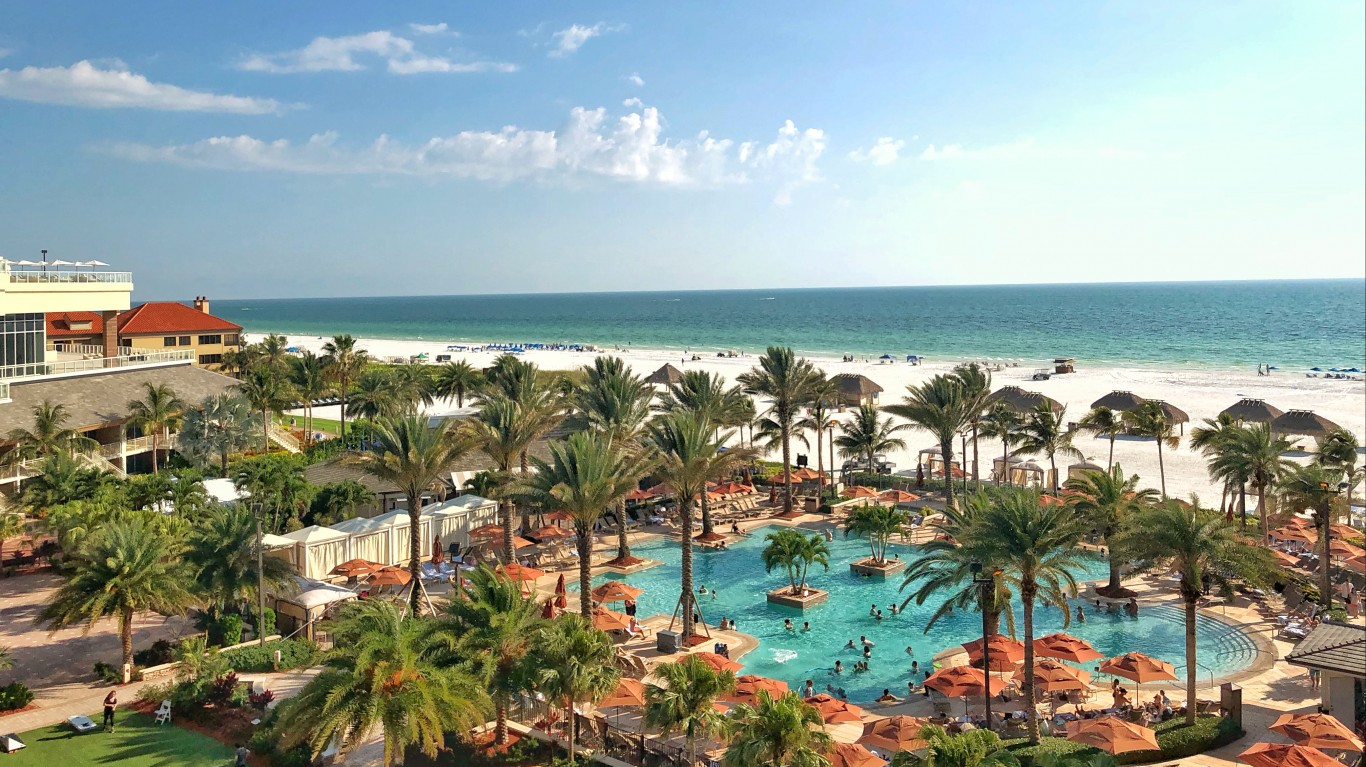
Picture a couple who just closed on a two-bedroom villa at Latitude Margaritaville in Daytona Beach. Their only income is a single monthly pension check. They aren’t drawing from a 401(k), neither of them works part-time, and Social Security hasn’t started.
That setup is more common than you might think among retired teachers, police officers, and union workers. So can one predictable check really keep up with an amenity-heavy, branded 55+ community where the costs only seem to climb? It comes down to four things: dues, insurance, taxes, and what happens to the pension if one spouse passes away.
What Owning a Margaritaville Home Costs Before the First Drink
The brand runs communities in Daytona Beach, Florida, and Hilton Head, South Carolina. Daytona is officially sold out for new-home sales, so buyers shop resale. Current listings run from $355,000 for a 1,160-square-foot two-bedroom to $899,900. Monthly association dues range from $343.54 to $381.66, depending on the home collection, with optional additional fees.
Here’s the fixed cost of owning a $374,900 two-bedroom outright, using the top dues level:
- Association dues: about $382/month.
- Insurance: about $731 a month, based on a Florida average of $8,772 annually for a $250,000 home.
- Property tax: about $558 a month, assuming a 2% (20 mils) rate after Florida’s homestead exemption, which provides roughly $40,000 in relief. Some counties add up to $25,000 more for owners 65 and older.
That totals roughly $1,670 a month before power, water, food, or healthcare. The property tax bill’s non-ad valorem lines are worth looking at, where community development district bond payments appear in Florida master-planned communities.
Why a Flat Pension and Rising Fees Drift Apart
A pension is predictable but doesn’t grow with markets. Whether it keeps pace with prices depends on an annual inflation-linked raise, known as a COLA. Many public pension plans include one. Most private-sector plans pay a flat amount for life. Social Security’s COLA for 2027 is tracking toward 3.6%, a useful benchmark for cost growth.
At 3.3% annually over ten years, the $1,670 bill grows to about $2,310. A flat $3,500 pension shrinks to about $2,530 in today’s buying power. Florida insurance premiums rose 75% from 2021 to 2025, versus 38% nationally.
Florida has no state income tax. At the federal level, a pension your employer paid for entirely is fully taxable. If Social Security comes into play, the IRS adds one-half of your benefits to your other income and compares the total to a base amount. Public workers whose jobs never paid into Social Security got relief. With the Social Security Fairness Act, signed January 5, 2025, the Windfall Elimination Provision and Government Pension Offset were ended. A fresh benefit estimate could change the entire premise.
What Happens to the Surviving Spouse
Buyers can overlook this question. Private plans offer married retirees a joint-and-survivor annuity that keeps paying the spouse at least 50% unless the spouse signs a waiver, and that choice locks in at retirement. Under a single-life election, payments stop when the pensioner dies.
Take a $3,500 pension with a 50% survivor benefit. The surviving spouse gets $1,750, and the same housing bill takes about 95% of it. Florida’s $500 widow’s and widower’s exemption provides limited relief. Dues and insurance cost exactly the same for one resident as for two.
Where the Line Falls, and Why Renting Deserves a Look
On a $2,500 pension, fixed ownership costs take about 67% of every check. At $3,500, that falls to about 48%, and at $4,500 to about 37%. A 50% survivor on a $4,500 pension gets $2,250, and the bill takes about 74%. Keeping housing costs fixed at about 40% of income requires about $4,180 monthly today. On a flat pension, holding that buffer ten years out requires about $5,780.
Renting is an option worth comparing against ownership. Recent listings showed two-bedroom homes for $2,200 and $2,650 per month. That tops the ownership bill, but the purchase price can fund Treasury ladders or an inflation-adjusted annuity to cover the missing COLA. A widowed renter can leave without selling.
Run This Number Before Touring a Model Home
A pension-only household can make this work if several conditions line up: the home has no mortgage, the pension is around $4,200 monthly or more, a COLA or separate asset covers rising fees and insurance, a survivor benefit of roughly $3,340 is locked in (usually a 100% joint-and-survivor election or life insurance), there’s a cash reserve for special assessments, and the couple skips pay-per-use extras. On a flat pension under about $3,500, the math becomes difficult to sustain over two decades.
A useful test is to divide known fixed monthly costs by the benefit a surviving spouse would receive. If that ratio tops about 50%, the plan only works while both are alive.
Contact [email protected] for any questions or corrections.
David Beren has been a Flywheel Publishing contributor since 2022. Writing for 24/7 Wall St. since 2023, David loves to write about topics of all shapes and sizes. As a technology expert, David focuses heavily on consumer electronics brands, automobiles, and general technology. He has previously written for LifeWire, formerly About.com. As a part-time freelance writer, David’s “day job” has been working on and leading social media for multiple Fortune 100 brands. David loves the flexibility of this field and its ability to reach customers exactly where they like to spend their time. Additionally, David previously published his own blog, TmoNews.com, which reached 3 million readers in its first year. In addition to freelance and social media work, David loves to spend time with his family and children and relive the glory days of video game consoles by playing any retro game console he can get his hands on.