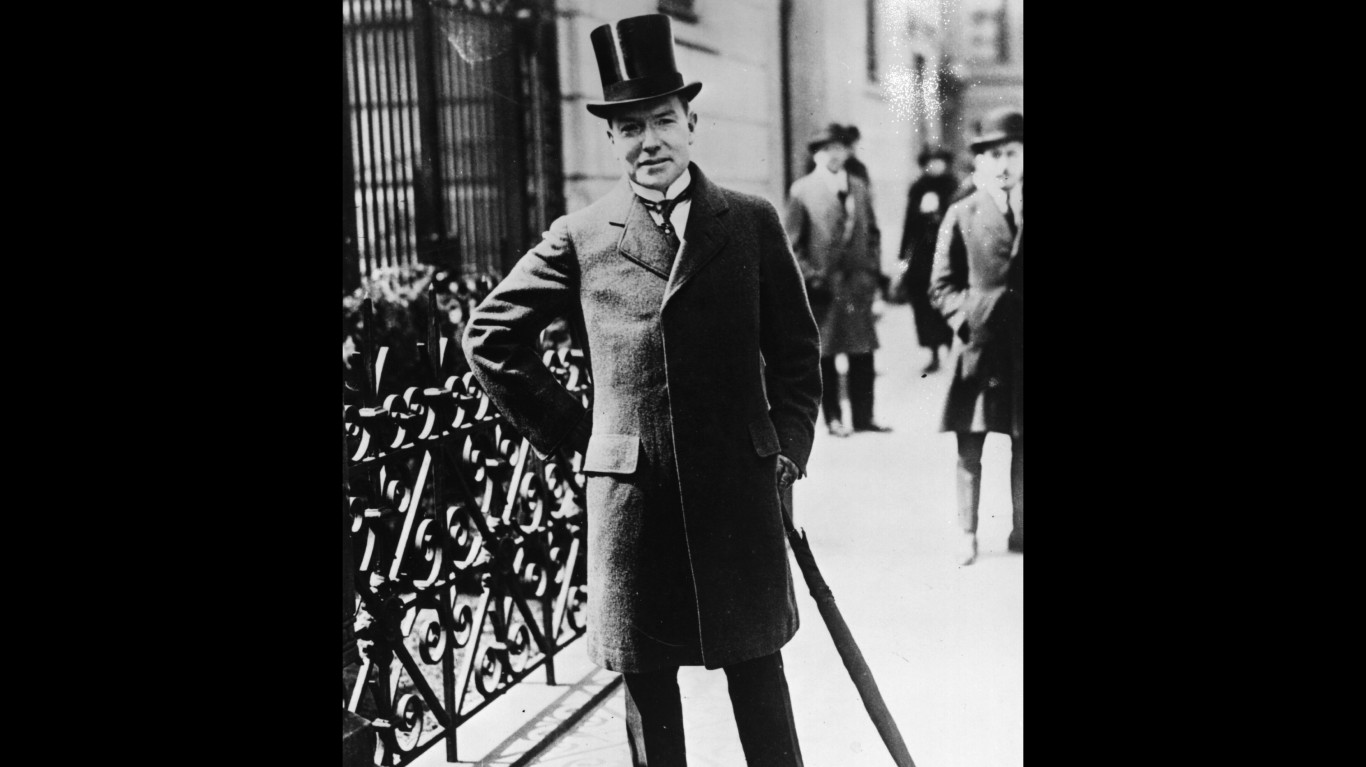
The Rockefellers Will Pay No Estate Tax Again This Generation Because Nobody Technically Owns the Money. In 2026 One Couple Will Be Able to Seed the Same Trust With $30 Million.
A retired founder asked his estate attorney one question about protecting the family fortune, and the answer involved a legal structure the Rockefellers have quietly used since 1934 to move billions through six generations without triggering a single estate tax…

This post may contain links from our sponsors and affiliates, and Flywheel Publishing may receive compensation for actions taken through them.

Consider a recently retired founder and his wife sitting across from their estate attorney with a simple question: how much of the business sale would reach the grandchildren. The attorney’s answer: every dollar the children inherited outright would land in the children’s own taxable estates, and the IRS would take another cut when the grandchildren’s turn came.
Then the attorney slid over a draft dynasty trust. The couple would move $30 million into it this year. Their children and grandchildren would live off it for decades. None of them would own it.
Benefit without ownership is the whole plan, and the Rockefellers have run it since 1934.
How Rockefeller Money Stays Out of Every Estate
In 1934, John D. Rockefeller Jr. locked much of the family wealth into irrevocable trusts. The 1934 family trust holds the bulk of the fortune and matures on the death of the fourth generation.
Estate tax reaches property a person owns or controls at death. A beneficiary with a lifetime interest in a trust holds a right to distributions, while the trustee holds title. When that beneficiary dies, the principal stays outside her taxable estate and the next generation steps in. The cousins now living off the 1934 trust hold interests, and the trust holds the money.
Congress answered with the generation-skipping transfer (GST) tax, first for transfers after June 11, 1976, then in its modern form in 1986. The 1986 rules carved out trusts that were already irrevocable as of September 25, 1985. The Rockefeller trusts sit inside that grandfather date. Every new family has to buy its protection with exemption.
2026 Exemption Doubles for Married Couples
Under 26 U.S.C. § 2010(c)(3), the basic exclusion amount is $15,000,000. The IRS confirms estates of deceased people dying in 2026 get $15,000,000, up from $13,990,000 in 2025. Under § 2631(c), each person’s GST exemption equals that same basic exclusion amount, or $15,000,000 for calendar year 2026.
Spouses combine theirs. Section 2513 treats a gift by one spouse as made one-half by each when both consent, and § 2652(a)(2) carries that split into the GST rules.
Running the $30 Million Math
- Husband’s gift and GST exemption: $15,000,000
- Wife’s gift and GST exemption: $15,000,000
- Combined transfer into the trust: $30,000,000
- Gift tax owed: zero, because the full gift is covered by exemption.
- GST rate on the trust: zero. Section 2641(a) sets the rate as the maximum estate tax rate times the inclusion ratio, and § 2642(a) drives that ratio to zero when exemption allocated equals the value transferred.
A zero inclusion ratio sticks to the trust. Growth inside it stays exempt at every generational transfer.
Outright Inheritance Costs $19.2 Million Over Two Generations
Take the other path: the couple leaves the same $30 million to the children outright. Assume each child’s own wealth already uses his or her exemption and the money earns nothing. Above $1,000,000, the federal estate tax rate is 40%.
At the children’s deaths, the estate tax takes $12 million, leaving $18 million. When the grandchildren pass it on, another 40% bite leaves $10.8 million. Two generations of outright ownership eliminate $19.2 million. Inside the trust, the full amount and every dollar of growth moves through both deaths untouched.
The trade-off is basis. Assets gifted during life keep the couple’s original cost basis and give up the step-up they would have received at death, so low-basis stock belongs in the estate and high-basis or fast-growing assets belong in the trust.
Five Moves That Lock In the Exemption
- Pick the trust’s home state. South Dakota, Nevada, Delaware, Alaska and Wyoming have repealed or dramatically extended the Rule Against Perpetuities, letting a trust run for generations.
- Name an independent trustee, typically a trust company in that state, and keep every beneficiary’s interest discretionary, with a spendthrift clause and no general power of appointment that would pull assets back into a beneficiary’s estate.
- File Form 709 for both spouses by the 15th day of April following the gift year, agreeing to gift splitting and explicitly allocating GST exemption. A missed allocation leaves the trust exposed to the 40% GST rate.
- Keep annual exclusion gifts separate. The $19,000 per-recipient exclusion sits on top of the lifetime amount and does not reduce it.
- Value first. The $15,000,000 base indexes for inflation only for deceased people dying after 2026, so the amount may rise later; get appraisals done before funding.
Because a trust is a legal document, it should be drafted by an experienced estate tax attorney licensed in the state where the trust is being established. The attorney can also coordinate with the couple’s CPA to help ensure the required Form 709 filings are completed correctly. The paperwork around beneficiary forms, ownership, and trust funding is where most estate plans quietly fail, which is why we put the full checklist in a free guide here.
One Number Decides the Family’s Next Century
Remember $30 million. Placed in a dynasty trust with GST exemption properly allocated in 2026, it faces a 0% transfer tax rate at every generation. Left outright, it shrinks to $10.8 million within two.
Contact [email protected] for any questions or corrections.
Vilma Rios is a tax professional and tax content contributor with more than 15 years of experience in tax and accounting. She specializes in federal tax research, tax education, and translating complex tax rules into clear, practical information for individuals, families, and small-business owners.
Vilma is a Content Tax Contributor II with the National Association of Tax Professionals (NATP), where she contributes to tax education and professional content. She has also presented tax information through webinars, including Spanish-language tax education, and has appeared on Telemundo 47 discussing tax topics and helping viewers understand important tax-filing requirements.
Her experience also includes tax and accounting work, tax research, IRS-related matters, and public tax education. While in college, Vilma volunteered in an IRS-sponsored tax assistance program and was recognized for her community service by local and state officials.
Known as “Your Tax Geek,” Vilma is passionate about making taxes easier to understand and helping people navigate an increasingly complex tax system.