The Cattle Herd Hit a 75-Year Low. USDA Will Now Insure Ranchers for Keeping Heifers, but at 63 the Payout Can Reach Social Security.
When cattle prices sit at generational highs and a rancher starts loading animals onto the trailer, one overlooked distinction between two types of livestock can determine whether Social Security keeps sending checks or quietly starts holding them back.

This post may contain links from our sponsors and affiliates, and Flywheel Publishing may receive compensation for actions taken through them.
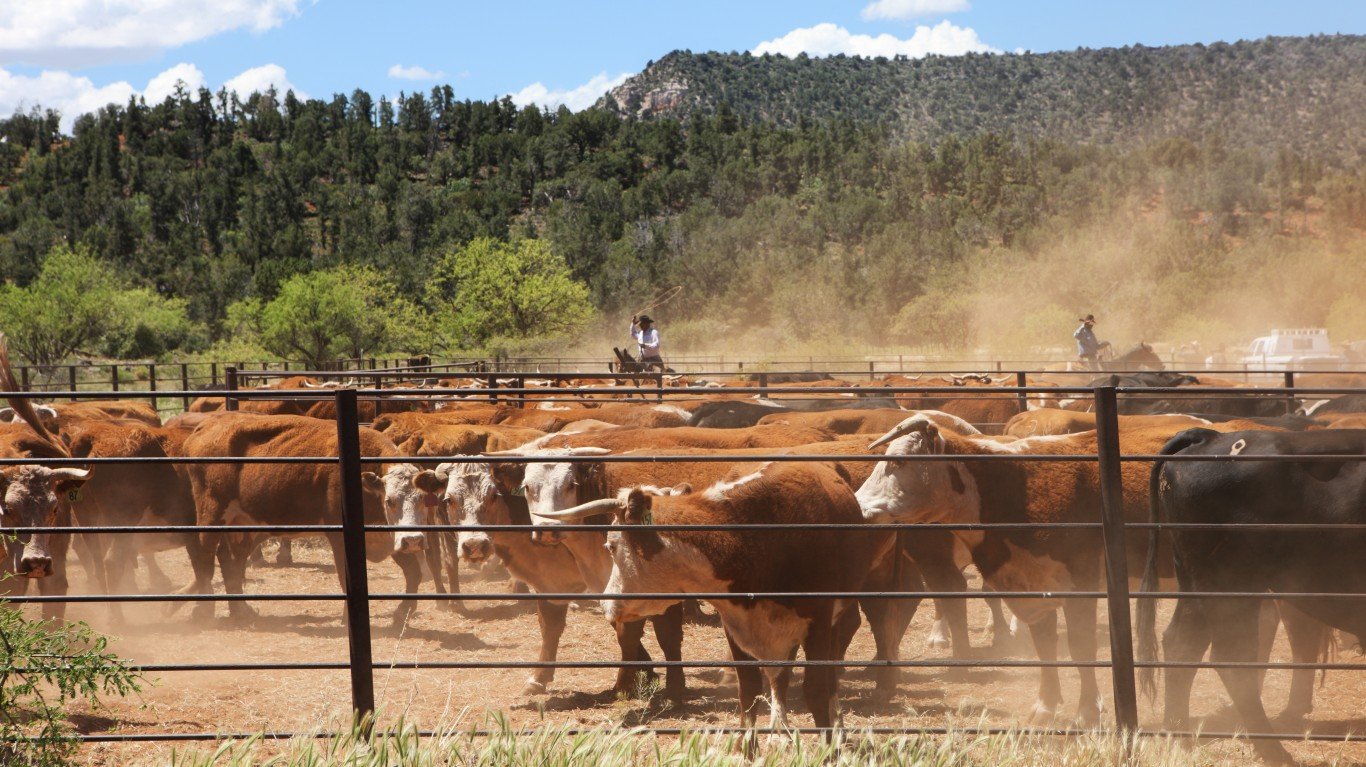
Ranchers are stuck between a rock and a hard place. The U.S. cattle herd has shrunk to its smallest size in 75 years, while beef prices have climbed to record highs. For a 63-year-old rancher watching pasture rents climb and hay costs bite, the math on holding another calf crop is getting harder to justify. USDA now wants to make one part of that decision easier.
Its new Beef Retention and National Development, or BRAND, endorsement will let ranchers insure the economic value of keeping a heifer for breeding for two years. If the heifer becomes worth more for slaughter than for staying in the breeding herd, the coverage is designed to pay the difference. For a rancher already collecting Social Security, however, that insurance check introduces a wrinkle. Selling a qualifying breeding cow can generally stay outside net self-employment earnings. Keeping the heifer and later collecting a livestock-insurance payout can land somewhere very different.
USDA Is Putting Insurance Behind the Decision to Keep Her
The new BRAND coverage is being added to Livestock Risk Protection, or LRP. A rancher deciding whether to retain a heifer gives up the opportunity to sell her into a strong cattle market today. BRAND is designed to protect some of that economic value if the slaughter market later makes keeping her look like the worse financial choice. But the tax treatment of an insurance payment does not necessarily follow the treatment of the animal itself.
The IRS treats LRP proceeds as crop-insurance income, generally reported through Schedule F. For an operating ranch, Schedule F profit feeds the calculation of net earnings from self-employment. That is precisely the income Social Security watches before full retirement age (FRA), which is 67 for someone born in 1960 or later. The contrast looks like this:
- Sell a qualifying breeding cow: Livestock held for breeding is generally treated as a farm business asset. The sale can create taxable gain, but the qualifying proceeds generally do not become net self-employment earnings.
- Keep the heifer and receive a BRAND/LRP payout: The insurance proceeds generally enter farm income and, after expenses, can contribute to net self-employment earnings that Social Security counts.
The government may be paying him to make keeping the heifer financially safer. Social Security can still see the resulting farm income.
The Insurance Check Is Not Earnings Dollar for Dollar
In 2026, someone under FRA all year can earn $24,480 before Social Security begins withholding $1 in benefits for every $2 above the limit. Suppose a 63-year-old is receiving $2,000 a month from Social Security. He retains heifers, later receives an LRP indemnity and ends the year with $60,000 of net self-employment earnings after the ranch’s deductible expenses and other income are figured.
That puts $35,520 above the earnings limit. Under the $1-for-$2 rule, Social Security could withhold about $17,760 of benefits. The insurance payment alone does not produce that number. Feed, veterinary bills, pasture costs and other deductible expenses still matter. What counts is the rancher’s total net self-employment earnings for the year.
The Withheld Checks Are Not Simply Gone Forever
Benefit withholding before FRA is not the same thing as permanently losing those benefits. At FRA, Social Security recalculates the monthly benefit to account for months in which checks were withheld because of excess earnings. Still, cash flow matters. A rancher expecting $2,000 from Social Security every month may care a great deal if several checks disappear during a year when he was trying to strengthen the breeding herd.
Covered self-employment earnings can also help his eventual benefit if a strong year replaces a weaker one among the 35 years Social Security uses in its calculation. If his existing top 35 are already higher, they may change nothing.
Selling the Cow and Insuring Her Create Different Tax Bills Too
Neither route is automatically tax-free. A qualifying breeding-cattle sale can receive Section 1231 treatment, while depreciation previously claimed on purchased livestock may affect how part of the gain is taxed.
LRP insurance proceeds take another path through farm income and can contribute to self-employment tax as part of the ranch’s overall net profit. That makes this more than an earnings-test decision. Phasing out of full-time ranching sits right in the middle of a handful of tax traps most people never see coming, which is why we put together a free semi-retirement playbook on exactly that here.
Before Deciding Whether to Keep the Heifer
Three details deserve attention before counting an eventual insurance payment as retirement cash:
- Check how the new BRAND coverage actually applies. The endorsement is new, and the coverage period, protected value and circumstances that produce a payment matter.
- Run the Social Security math on net earnings. The ranch’s total income and deductible expenses determine the eventual self-employment figure.
- Put the insurance year beside the claiming date. Before FRA, net self-employment earnings can cause benefit withholding. At FRA, that earnings test is gone.
USDA is trying to make it easier for ranchers to keep the heifers that could rebuild a 75-year-low cattle herd. At 63, the surprising part is that keeping the cow can produce the very check that complicates his Social Security year.
Contact [email protected] for any questions or corrections.
Gerelyn Terzo is the author of dividend investing handbook "Dividend Investing Strategies: How to Have Your Cake & Eat It Too." A veteran financial journalist, she covers agri-finance for outlets like Global AgInvesting and the broader stock market and personal finance for 24/7 Wall Street. She began at CNBC and later helped launch Fox Business in New York. Gerelyn currently resides in Woodland Park, Colorado and dabbles in nature photography as a hobby.