Tesla US Market Share Surges 30%
Though Tesla sales declined sharply in November, its market share increased. It may be poised to benefit if EV sales bounce back.

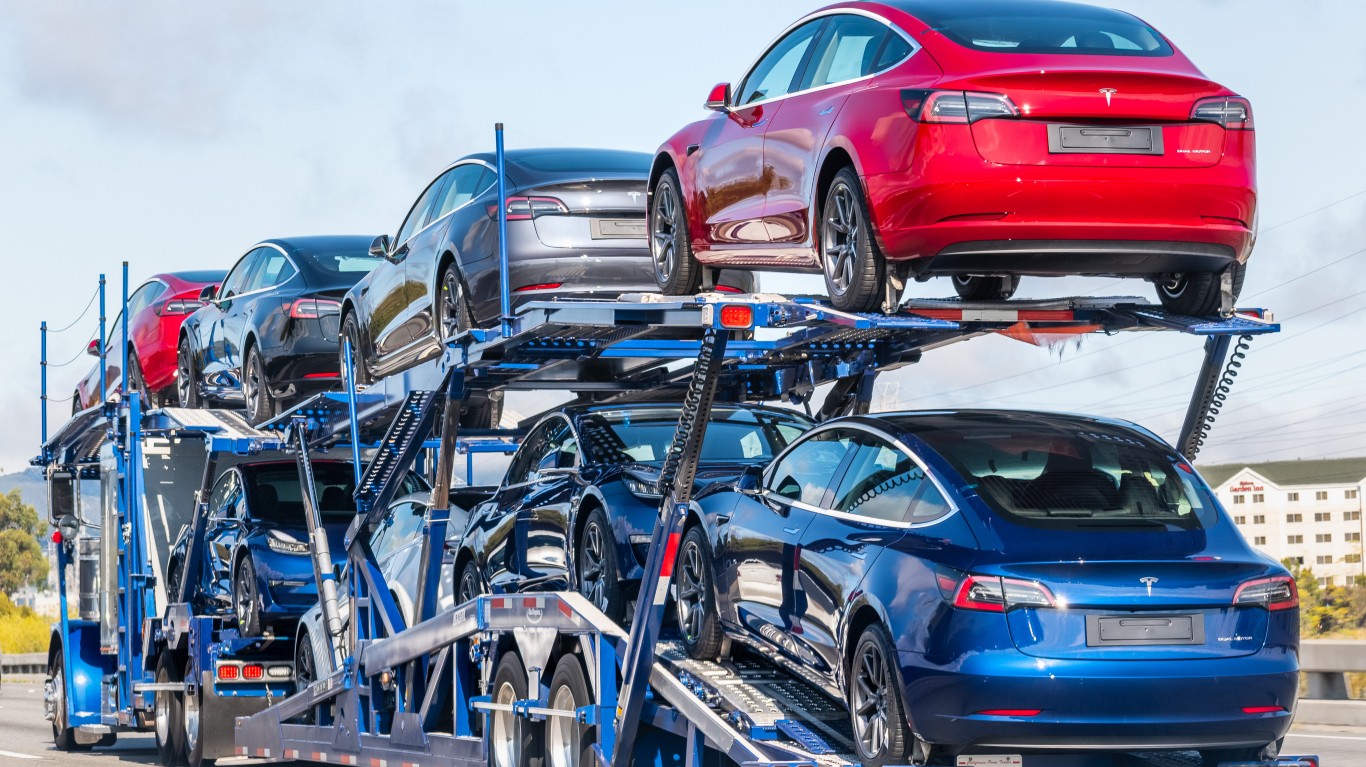
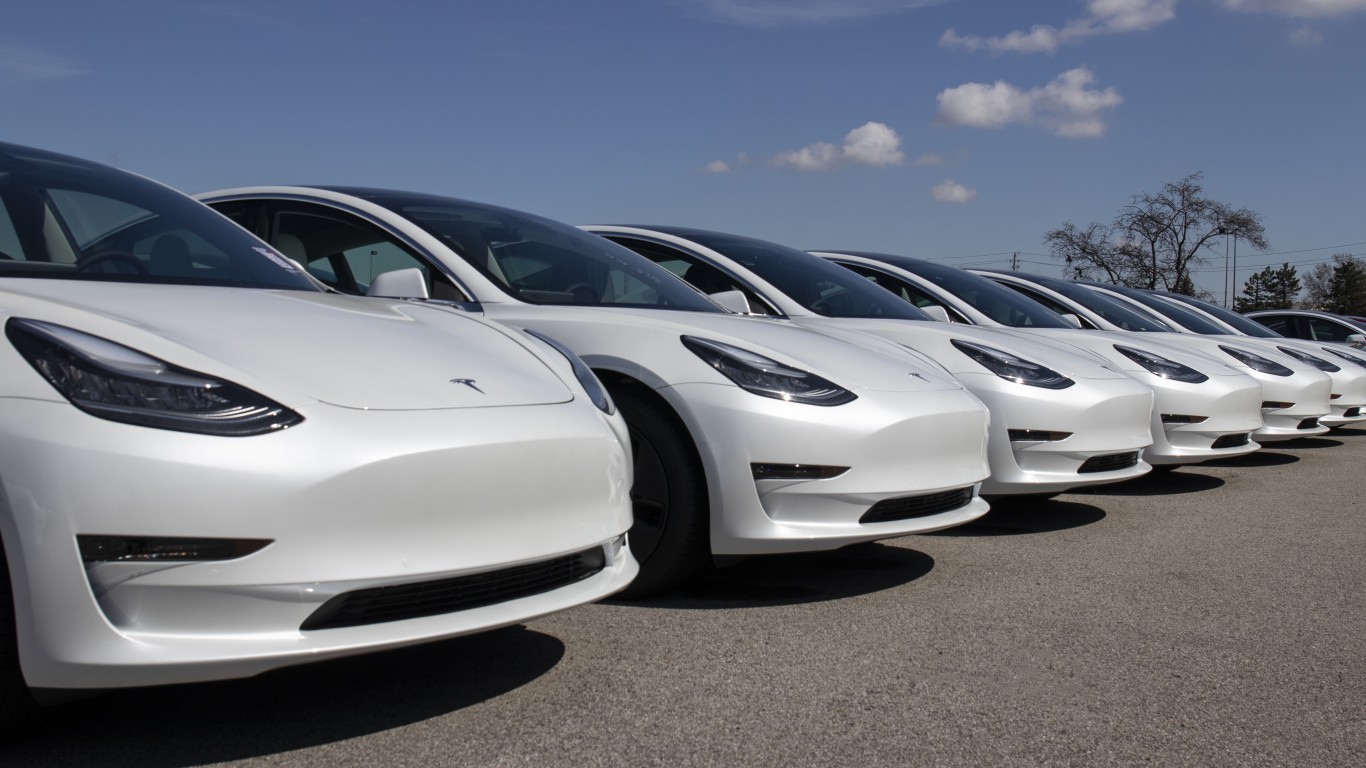
Cox Automotive data shows that Tesla Inc. (NASDAQ: TSLA | TSLA Price Prediction) sales dropped 23% year over year to 39,800 in November. The research firm said this was the worst quarter Tesla has had in terms of unit sales since 2022. The Tesla news is not as bad as it first seems. Overall electric vehicle (EV) industry sales fell 41%. So, Tesla’s market share rose from 43% to 56%.
The sales decline was attributed to the end of an EV tax credit of up to $7,500 on September 30. The trend shows that the core demand for EVs in the United States is shaky. It also suggests there is no reason to think that demand will improve.
Tesla has been losing U.S. market share for some time. That share was 80% in 2019. Since then, many U.S. and international car companies that sell vehicles in the U.S. have captured some EV market share. In the process, these manufacturers, which include Ford and GM, lost billions of dollars. Each got a market share of less than 10% for its investment. Ford says it will lose $5 billion on its EV business this year.
Another apparent reason for the Tesla sales decline was CEO Elon Musk’s relationship with President Trump and his role in slashing federal government expenses. While these cuts were not as large as first presented, the relationship between the president and Musk was cemented until they had a falling out in early June.
Tesla’s November U.S. market share shows that the advances competition made against it are over, for now. If Tesla can hold this level, and if and when EV sales return, it may be the largest beneficiary. Notably, iSeeCars predicts that EVs will make up only 4% of new car sales next year.
Musk’s challenge remains that he wants investors to look at Tesla as primarily an artificial intelligence and robotics company. Yet, for those who still view Tesla as a car manufacturer, the November data is partially good news.
Tesla Stock Price Prediction and Forecast 2025–2030
Contact [email protected] for any questions or corrections.
Douglas A. McIntyre is the co-founder, chief executive officer and editor in chief of 24/7 Wall St. and 24/7 Tempo. He has held these jobs since 2006.
McIntyre has written thousands of articles for 24/7 Wall St. He is an expert on corporate finance, the automotive industry, media companies and international finance. He has edited articles on national demographics, sports, personal income and travel.
His work has been quoted or mentioned in The New York Times, The Wall Street Journal, Los Angeles Times, The Washington Post, NBC News, Time, The New Yorker, HuffPost USA Today, Business Insider, Yahoo, AOL, MarketWatch, The Atlantic, Bloomberg, New York Post, Chicago Tribune, Forbes, The Guardian and many other major publications. McIntyre has been a guest on CNBC, the BBC and television and radio stations across the country.
A magna cum laude graduate of Harvard College, McIntyre also was president of The Harvard Advocate. Founded in 1866, the Advocate is the oldest college publication in the United States.
TheStreet.com, Comps.com and Edgar Online are some of the public companies for which McIntyre served on the board of directors. He was a Vicinity Corporation board member when the company was sold to Microsoft in 2002. He served on the audit committees of some of these companies.
McIntyre has been the CEO of FutureSource, a provider of trading terminals and news to commodities and futures traders. He was president of Switchboard, the online phone directory company. He served as chairman and CEO of On2 Technologies, the video compression company that provided video compression software for Adobe’s Flash. Google bought On2 in 2009.