The Buyout Case for Salesforce Is Real, but Marc Benioff Stands in the Way
Salesforce (NYSE: CRM | CRM Price Prediction) stock has shed almost 30% year-to-date, closing at $184.29 on February 17, 2026, down sharply from the $264.91 year-end close. That discount raises a question investors rarely ask about dominant software franchises: could…

Salesforce (NYSE: CRM | CRM Price Prediction) stock has shed almost 30% year-to-date, closing at $184.29 on February 17, 2026, down sharply from the $264.91 year-end close. That discount raises a question investors rarely ask about dominant software franchises: could Salesforce go private?
The Financial Profile That Attracts Buyout Firms
Salesforce fits a classic leveraged buyout profile. The company generated $2.18 billion in free cash flow in Q3 FY2026 alone, with non-GAAP operating margins of 34.1%. Annual revenue stands at $40.3 billion, driven by predictable subscription income and 8.6% quarterly revenue growth.
At a market cap of $175 billion, the stock trades at a forward P/E of 14x, well below the analyst consensus price target of $323. That gap creates opportunity for financial buyers. Private equity firms like Vista Equity Partners and Thoma Bravo have built empires on this exact playbook: acquire undervalued software assets, optimize operations, then exit at higher multiples.
Management’s own actions signal that shares are cheap. Salesforce repurchased $3.8 billion in stock during Q3 alone, returning $4.2 billion total to shareholders, including dividends.
Why Marc Benioff Makes a Deal Unlikely
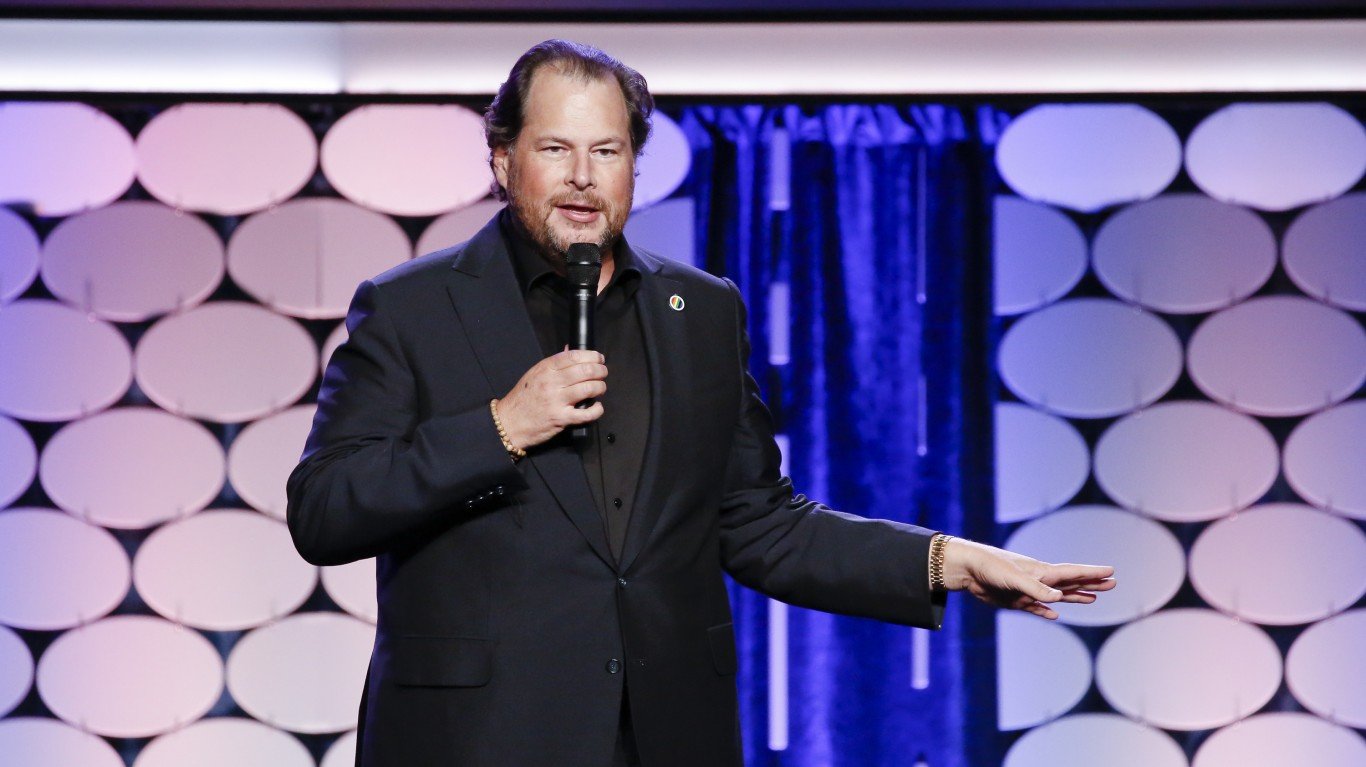
The primary obstacle to any go-private scenario is the CEO. Marc Benioff co-founded Salesforce and maintains significant influence. On the Q3 earnings call, he framed the company’s AI strategy in generational terms: “We are witnessing the emergence of digital labor. For the last 25 years, Salesforce has assisted companies in managing and sharing information… Recently, we’ve created a brand-new market – the market for digital labor.”
That’s not the language of a founder preparing to sell. Benioff is betting on Agentforce, the company’s AI platform that closed over 200 deals shortly after its October 24, 2025, launch, with 1,400 account executives being hired globally to capture demand.
Institutional ownership stands at 84.0%, but there’s no visible activist pressure. Director G. Mason Morfit purchased 96,000 shares at $260.58 on December 5, 2025, a $25 million vote of confidence at prices well above current levels.
What Investors Should Monitor
The Q4 FY2026 earnings report on February 25, 2026, is the next inflection point. Analysts expect $3.03 EPS and $11.17 billion in revenue, with prediction markets assigning an 83% probability of a beat.
If results disappoint, activists may surface demanding board seats, cost cuts, or strategic reviews. Watch for 13D filings above 5%, board changes, or public shareholder letters as signals that outside pressure is building.
For now, Salesforce remains too large, too founder-controlled, and too focused on AI transformation for a near-term buyout. The ingredients exist: depressed valuation, strong cash generation, and a consolidating software market. The question isn’t whether Salesforce fits the profile. It’s whether anyone can convince Marc Benioff to consider it.
Contact [email protected] for any questions or corrections.
Trey has been an editor and author at 24/7 Wall St. for more than a decade, where he has published thousands of articles analyzing corporate earnings, dividend stocks, short interest, insider buying, private equity, and market trends. His comprehensive coverage spans the full spectrum of financial markets, from blue-chip stalwarts to emerging growth companies.
Beyond 24/7 Wall St., Trey has created and edited financial content for Benzinga and AOL's BloggingStocks, contributing additional hundreds of articles to the investment community.
Trey's editorial expertise extends across multiple publishing environments. He served as production editor at Dearborn Financial Publishing and development editor at Kaplan, where he helped shape financial education materials. Earlier in his career, he worked as a writer-producer at SVE. His freelance editing portfolio includes work for prestigious clients such as Sage Publications, Rand McNally, the Institute for Supply Management, the American Library Association, Eggplant Literary Productions, and Spiegel.
Outside of financial journalism, Trey writes fiction and has been an active member of the writing community for years, moderating workshop sessions at regional conventions.