Will ASML, Lilly, or TransDigm Be the Next Big Stock Split?
Wall Street has rediscovered the stock-split playbook. KLA (NASDAQ: KLAC | KLAC Price Prediction) announced a 10-for-1 forward stock split in May 2026 alongside a fiscal Q3 earnings beat and a roughly 21% dividend hike, with the stock trading in the…


Wall Street has rediscovered the stock-split playbook. KLA (NASDAQ: KLAC | KLAC Price Prediction) announced a 10-for-1 forward stock split in May 2026 alongside a fiscal Q3 earnings beat and a roughly 21% dividend hike, with the stock trading in the $1,800 range. Earlier in the year, Booking Holdings (NASDAQ: BKNG) completed a 25-for-1 split announced in February 2026, taking shares from north of $4,000 down to roughly $155.
This has investors hunting for the next high-priced megacap to follow suit. Three names keep surfacing: semiconductor equipment monopoly ASML (NASDAQ: ASML), pharma giant Eli Lilly (NYSE: LLY), and aerospace parts maker TransDigm Group (NYSE: TDG). All three trade at eye-watering nominal prices, all three have monster long-term charts, and none of them has announced a split. To be clear, this is a ranking of likelihood only; no board action or timeline is currently on the table for any of these three companies.
Here is the countdown from least likely to most likely.
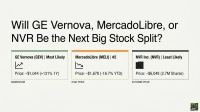
3. Least Likely: TransDigm
The stock trades at $1,198.09 with a market cap of about $67 billion. The Cleveland-based maker of proprietary aerospace components just posted adjusted Q2 FY26 EPS of $9.85 on revenue of $2.54 billion, up 18.3% year over year.

The bull case for a split is simple: TransDigm carries the highest nominal price of the three, options chains are expensive, and the stock is 98.6% institutionally owned, suggesting management could court retail interest. The bear case is overwhelming. TransDigm returns cash through massive special dividends and aggressive buybacks ($723 million repurchased in Q2 at an average of $1,201) and has never split. Management openly prefers leveraged equity returns to cosmetic financial engineering.

2. Lilly
Shares closed at $1,018.87, with a market cap of roughly $908 billion, knocking on the door of the trillion-dollar club. Q1 FY26 was a blowout: EPS of $8.55 on revenue of $19.80 billion, with Mounjaro at $8.66 billion and Zepbound at $4.16 billion.

The bull case for a split has merit. Lilly is the most retail-watched name in pharma thanks to GLP-1 mania, sentiment spiked to a very bullish score of 85 around the April 30 earnings report, and the company last split in 1997 (2-for-1), so a precedent exists. The bear case: Lilly has telegraphed a clear capital-return philosophy through dividends, hiking the quarterly payout from $1.50 in 2025 to $1.73 in 2026. Management has shown no public appetite for a split despite the run.

1. Most Likely: ASML
ASML (NASDAQ: ASML) closed at $1,550.13, the highest of the three, with a market cap of roughly $597 billion. The Dutch lithography monopoly is on a tear, up 44.6% year to date and 107.0% over the past year. Q1 FY26 delivered EPS of €7.15 ($8.37) on €8.8 billion ($10.3 billion) in revenue, with a 2025 year-end backlog of €38.8 billion ($45.06 billion).

The bull case: ASML now trades above where KLA split, peer optics matter in semicap, and CEO Christophe Fouquet told investors: “The semiconductor industry’s growth outlook continues to solidify, driven by ongoing AI-related infrastructure investments. Demand for chips is outpacing supply.” A lower nominal price could broaden the U.S. retail base for the ADR. The bear case is structural: ASML is a foreign issuer, capital returns flow through a €12 billion buyback program and a euro-denominated dividend, and Dutch-listed parents rarely engineer ADR splits unilaterally. Still, on share price alone, ASML is the most obvious split candidate of the three.

What This Means for Investors
A stock split is cosmetic. It reshapes retail accessibility, options affordability, and short-term sentiment while leaving market cap, earnings, and intrinsic value untouched, which is exactly why KLA and Booking drew so much attention this year. TransDigm ranks at the bottom of this countdown because management’s capital playbook leans on buybacks and special dividends. Lilly has the retail audience but a strong dividend-growth bias. ASML carries the highest nominal price and the clearest peer precedent. None of the three has announced anything. Investors watching for the next splits headline should keep an eye on the stock prices but trade the fundamentals.
Contact [email protected] for any questions or corrections.
Trey has been an editor and author at 24/7 Wall St. for more than a decade, where he has published thousands of articles analyzing corporate earnings, dividend stocks, short interest, insider buying, private equity, and market trends. His comprehensive coverage spans the full spectrum of financial markets, from blue-chip stalwarts to emerging growth companies.
Beyond 24/7 Wall St., Trey has created and edited financial content for Benzinga and AOL's BloggingStocks, contributing additional hundreds of articles to the investment community.
Trey's editorial expertise extends across multiple publishing environments. He served as production editor at Dearborn Financial Publishing and development editor at Kaplan, where he helped shape financial education materials. Earlier in his career, he worked as a writer-producer at SVE. His freelance editing portfolio includes work for prestigious clients such as Sage Publications, Rand McNally, the Institute for Supply Management, the American Library Association, Eggplant Literary Productions, and Spiegel.
Outside of financial journalism, Trey writes fiction and has been an active member of the writing community for years, moderating workshop sessions at regional conventions.