Nvidia’s China Comeback Finally Begins — But Here’s Why Investors Should Keep Expectations in Check
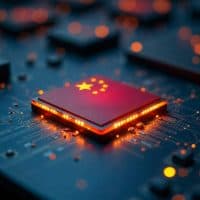
China just reopened its doors to Nvidia's most advanced AI chips, and Wall Street is buzzing. But the real question is whether this long-awaited comeback actually changes anything for a company that already rewrote its growth story without China.


For much of the AI boom, Nvidia (NASDAQ:NVDA | NVDA Price Prediction) has enjoyed an enviable problem: demand has consistently outpaced supply. Even after Washington tightened export restrictions on advanced AI chips headed to China, the company’s revenue continued climbing as hyperscalers across the U.S., Europe, and the Middle East rushed to build AI infrastructure. That strength helped Nvidia overcome what once looked like a major setback.
Now, after months of waiting, another piece of the growth puzzle is finally falling into place. China is reopening — albeit cautiously — and that gives investors one more reason to believe Nvidia’s growth story still has room to run.
China Is Back — But It’s Not the Same Market Nvidia Left
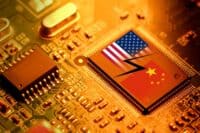
According to Reuters, shipments of Nvidia’s H200 AI accelerators to China have finally begun after receiving U.S. approval earlier this year. Commerce Department official Jeffrey Kessler told Congress that only a limited number of chips have shipped so far, underscoring that this remains a tightly controlled process rather than a full reopening. That alone matters.
Before U.S. export restrictions began in 2022, China represented roughly 20% of Nvidia’s revenue and about 95% of the country’s advanced AI accelerator market. Losing that business initially looked like it could derail Nvidia’s AI ambitions. Instead, the opposite happened. Exploding demand from Microsoft (NASDAQ:MSFT), Amazon (NASDAQ:AMZN), Meta Platforms (NASDAQ:META), Alphabet (NASDAQ:GOOG), Oracle (NASDAQ:ORCL), and sovereign AI projects more than offset the lost sales.
Nvidia transformed what looked like a major headwind into one of the strongest growth stories the semiconductor industry has ever seen. Now, every incremental sale into China becomes upside rather than a necessity.
Demand Remains Strong Even As Competition Has Grown
Previously, the Trump administration approved roughly 10 Chinese companies to purchase H200 chips, including Alibaba (NASDAQ:BABA), Tencent, ByteDance, and JD.com (NASDAQ:JD). The approvals also extend to Advanced Micro Devices‘ (NASDAQ:AMD) competing AI accelerators, though both companies remain subject to shipment limits designed to prevent massive exports.
Granted, reopening the market doesn’t mean Nvidia simply picks up where it left off. Chinese companies spent the past several years investing aggressively in domestic alternatives. Huawei and a growing ecosystem of local accelerator developers have captured business that once automatically flowed to Nvidia. That market share is unlikely to come back quickly, even if export restrictions continue easing.
Ironically, that may not matter as much as investors think. Chinese cloud providers are still seeking Nvidia hardware because it remains the benchmark for training and deploying leading-edge AI models. Alibaba and JD.com, for example, continue pursuing H200 purchases despite the growth of domestic suppliers.
The Stock Doesn’t Need China to Win
Nvidia’s business today is fundamentally different than it was before export restrictions. China once represented a meaningful slice of revenue. Today, the company’s largest customers are hyperscalers investing hundreds of billions of dollars into AI infrastructure. That spending wave has become Nvidia’s primary growth engine.
That said, reopening China provides something investors have wanted for more than a year: another source of incremental demand instead of another regulatory headwind.
In short, China is unlikely to become a major growth driver again anytime soon. Export limits remain in place, domestic competitors are stronger, and Washington appears committed to keeping advanced AI chip sales tightly controlled. Still, limited shipments are far better than no shipments.
Key Takeaway
Nvidia doesn’t need China to justify its valuation anymore — that opportunity has largely been replaced by global AI spending. But every H200 shipment into China adds revenue, reinforces Nvidia’s technology leadership, and reminds investors that its addressable market is expanding rather than shrinking.
Ultimately, this isn’t the catalyst that changes Nvidia’s long-term investment thesis. The AI boom already accomplished that. But it could be exactly the kind of positive development that helps lift Nvidia’s stock out of its recent doldrums as investors look for the company’s next leg of growth.
Contact [email protected] for any questions or corrections.
After two decades of patrolling the dark corners of suburbia as a police officer, Rich Duprey hung up his badge and gun to begin writing full time about stocks and investing. For the past 20 years, he’s been cruising the markets looking for companies to lock up as long-term holdings in a portfolio while writing extensively on the broad sectors of consumer goods, technology, and industrials. Because his experience isn’t from the typical financial analyst track, Rich is able to break down complex topics into understandable and useful action points for the average investor. His writings have appeared on The Motley Fool, InvestorPlace, Yahoo! Finance, Money Morning, and, of course, 24/7 Wall St. He has been featured in both U.S. and international publications, including MarketWatch, Financial Times, Forbes, Fast Company, and USA Today.