As Oil Races Toward $100, the Federal Reserve’s Next Move Gets Cloudier
Brent crude is surging and the Fed's next move depends far less on Kevin Warsh's speeches than on a single commodity threshold that most investors are not watching closely enough.

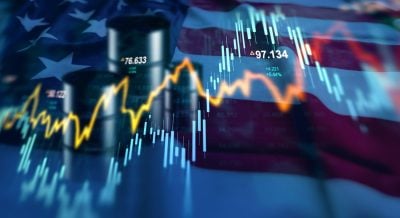
Energy markets don’t care about your economic forecast. Brent crude briefly touched above $95 a barrel this week as the Iran conflict shows no sign of resolving itself, and that single fact does more to shape Federal Reserve policy than any speech from chairman Kevin Warsh.
Oil has been the primary driver of inflation since the war began, and its recent swings are now the biggest variable standing between investors and a clearer rate picture heading into next week’s Federal Open Market Committee (FOMC) meeting.
Why Oil, Not Warsh, Is Setting the Agenda
Energy costs ripple through everything — freight, plastics, fertilizer, airfares — which is why they’ve dictated the inflation story for months. When a brief ceasefire took hold, oil prices tumbled, and the relief showed up almost immediately in the data. Core CPI and core PPI both broke their relentless upward climb, giving the Fed room to breathe after a stretch where another rate hike looked increasingly plausible.
That room has narrowed fast. With tensions flaring anew, energy prices are racing higher once more, and inflation readings are set to feel that pressure again. Still, the Fed now has enough cover to hold rates steady rather than resume hiking for the time being — not a great outcome given rates remain elevated, but a far better one than the alternative investors were pricing in a few months ago.
WTI, Not Brent, Is the Number That Matters
However, here is what investors should actually track: West Texas Intermediate crude. WTI, not Brent, drives U.S. economic outcomes, since it’s the benchmark tied most directly to domestic refining and consumer fuel costs. WTI currently sits at $86.25 a barrel — well above the post-ceasefire lows, but still comfortably under the $100 threshold hit when the Iran war first escalated. That gap matters. It’s the difference between a Fed that stays cautious and one that gets forced back into hawkish territory.
China is the wildcard keeping that gap intact. Chinese oil imports plunged more than 41% in June, according to customs data, and that pullback has helped contain the broader rise in prices even as Brent pushes back toward $95. Gulf producers have responded by cutting official selling prices, and Goldman Sachs now expects China could ramp up buying again as soon as this month. If that demand returns, Brent easily surpasses the threshold and WTI’s cushion narrows quickly.
Why Investors May Prefer This Outcome Anyway
Granted, “higher for longer” isn’t the headline anyone wants. But conversely, markets have historically tolerated elevated rates holding steady far better than the uncertainty of a renewed hiking cycle. A Fed on pause is a Fed investors can plan around; a Fed reacting to an oil shock is not.
Key Takeaway
Watch WTI, not Brent, and watch China’s import data more than the FOMC statement itself. As long as WTI holds below $90, the Fed will likely be able to retain its hands-off policy next week and through its September meeting. A break above that level — especially if Chinese demand snaps back — is what would turn this cloudy setup into a genuinely stormy one for rate-sensitive portfolios.
Contact [email protected] for any questions or corrections.
After two decades of patrolling the dark corners of suburbia as a police officer, Rich Duprey hung up his badge and gun to begin writing full time about stocks and investing. For the past 20 years, he’s been cruising the markets looking for companies to lock up as long-term holdings in a portfolio while writing extensively on the broad sectors of consumer goods, technology, and industrials. Because his experience isn’t from the typical financial analyst track, Rich is able to break down complex topics into understandable and useful action points for the average investor. His writings have appeared on The Motley Fool, InvestorPlace, Yahoo! Finance, Money Morning, and, of course, 24/7 Wall St. He has been featured in both U.S. and international publications, including MarketWatch, Financial Times, Forbes, Fast Company, and USA Today.