Apple and Samsung Are Nearly Tied as Global Phone Shipments Collapse
A memory shortage has sent smartphone shipments into historic freefall, but Apple and Samsung are locked in a near-dead heat at the top while smaller rivals collapse. The question is whether Apple's premium armor can hold as costs keep climbing…

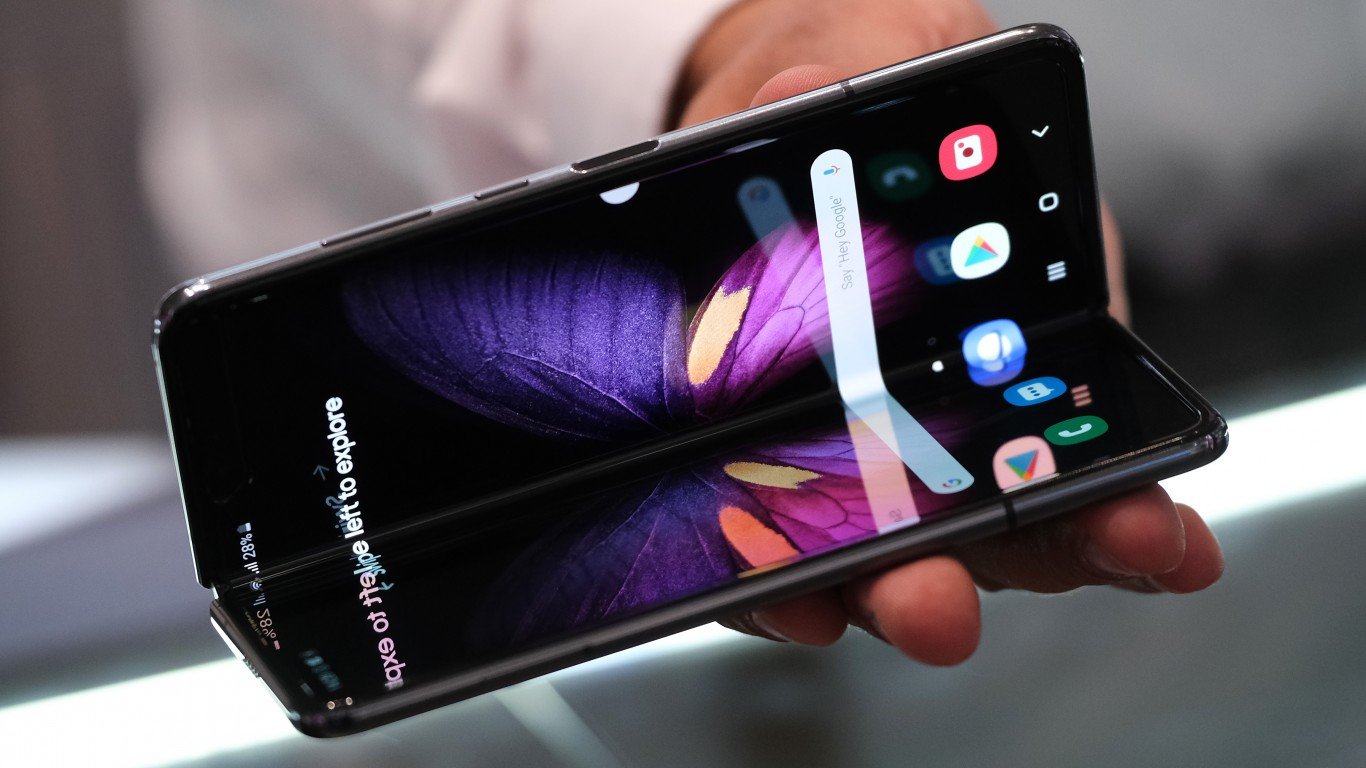
Phone makers shipped 255.3 million smartphones worldwide in the third quarter of 2026. That is a 22.0% year-over-year drop, and IDC called it the largest it has recorded for any quarter in preliminary data released on October 15, 2026.
Samsung Electronics and Apple (NASDAQ:AAPL | AAPL Price Prediction) both gained share and finished nearly even at the top. Apple stock barely moved, closing October 15 at $342, down 0.28%, valuing it at $4.99 trillion.
That calm makes sense, because Apple is taking share from weaker rivals. Fewer phones still means fewer iPhones, though, and with the stock up 26.15% this year, investors are paying for a resilience that the industry data now tests.

What These Shipment Numbers Measure, and What They Only Forecast
These figures count phones shipped into sales channels such as carriers and retailers. They differ from consumer sales, and as preliminary numbers, they can be revised.
Samsung shipped 57.8 million units for a 22.6% share, while Apple shipped 57.3 million for 22.4%. Declines got worse at Xiaomi (30.7 million, 12.0%), OPPO (25.6 million, 10.0%) and vivo (19.1 million, 7.5%).
Memory is the cause: AI data centers are buying up DRAM, the working-memory chips phones also need, so memory costs are up about 350% from last year (the same AI expansion is raising a whole set of non-chipmaker suppliers we covered in a free report on seven of them). Higher retail prices then push buyers to keep their old phones longer.
“The third quarter shows the full impact and damage of the memory crisis,” said Francisco Jeronimo, the firm’s vice president for worldwide devices. Senior research director Nabila Popal said “the worst is yet to come,” and expects growth to stay constrained through 2027. That outlook is a forecast, while the shipment counts are measured.
Why Apple Absorbs This Better Than Android Rivals
Wealthier buyers care less about price, and a memory cost spike raises a cheap phone’s price by a larger share than an expensive one’s. Apple’s buying power also helps it lock in supply that smaller brands cannot.
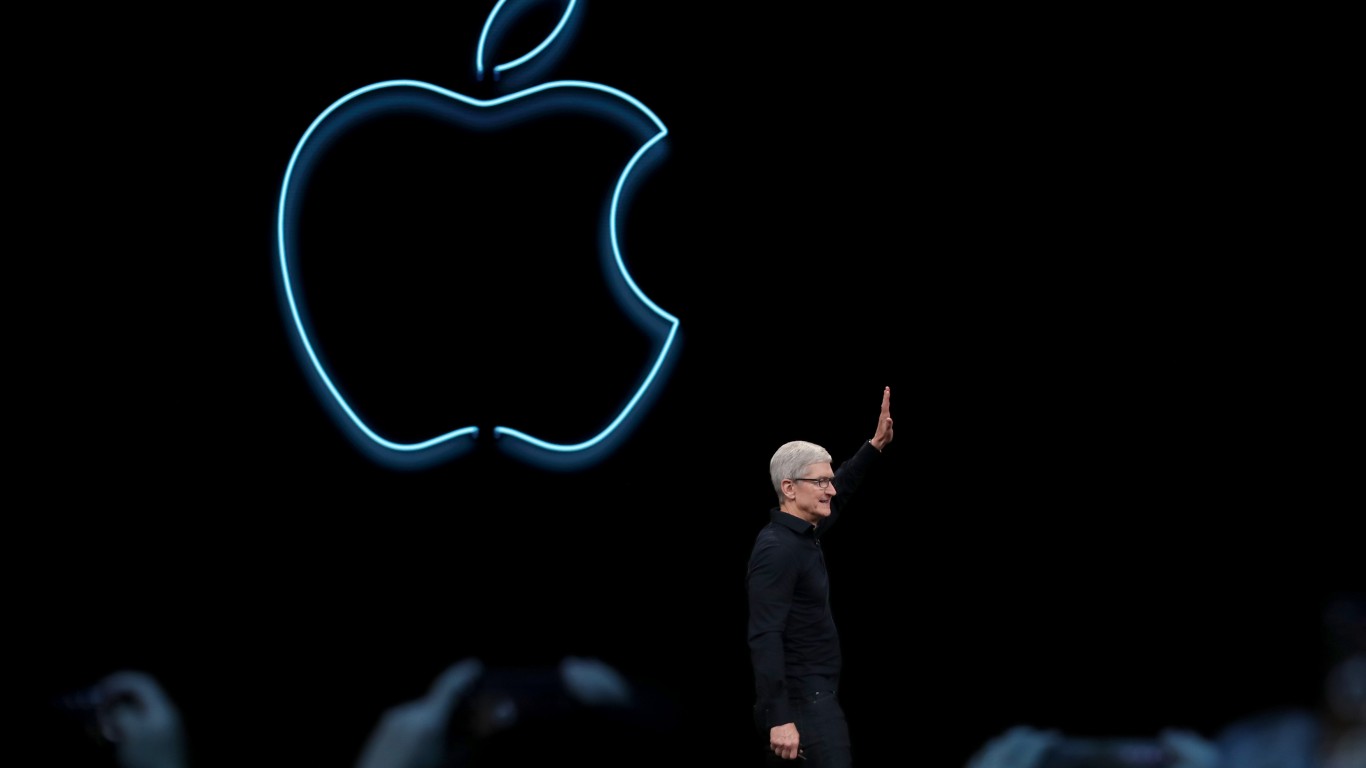
The cost shows up in margins. On the July 30, 2026 earnings call, Tim Cook said Apple “reluctantly raised prices” during “a 100-year flood on the memory pricing.” Gross margin guidance for the September quarter was 47% to 48%, and that range included about one percentage point of tariff-refund help.
Longer upgrade cycles mean fewer iPhone sales. The installed base still pays for services, which brought in $30.74 billion last quarter.

Gaining Share Can Still Mean Shipping Less
Share is relative, so a company can gain it while shipping fewer phones if its rivals fall faster. iPhone revenue of $54.25 billion in the June quarter shows how strong demand was before this quarter’s drop.
Worse may follow. Cook warned that “beyond September, we see the market pricing for memory continuing to increase, which could drive an increasing impact on our business.”
The stock trades at about 45 times earnings. A slump through 2027 would test that multiple over several earnings reports.
Where Apple Stock Stands After a Record Shipment Drop
In my view, the stock’s risks now outweigh its upside. Apple is the strongest phone maker in a shrinking market, but the valuation already gives it credit for that, and its memory costs are still rising.
Micron Technology (NASDAQ:MU) is more directly exposed to this story because it is the company absorbing higher memory prices. Its fiscal fourth-quarter revenue was $54.23 billion, up 379.3%, with a non-GAAP gross margin of 87.0%.
The trade-off is the memory cycle. Prices that rise this fast usually fall once new factory capacity comes online, and Micron’s results swing much harder than Apple’s in both directions.
You can check this call against Apple’s next earnings report. If its December-quarter gross margin guidance comes in below the 47% to 48% range it gave for September, memory costs are still pressuring Apple and the bearish case holds. Guidance at or above that range would weaken it.

Contact [email protected] for any questions or corrections.
Omor Ibne Ehsan is a writer at 24/7 Wall St. He is a self-taught investor with a focus on growth, cyclical, and dividend equities that have strong fundamentals, value, and long-term potential. He also has an interest in high-risk, high-reward investments such as penny stocks.