Campbell’s Just Cut Its Dividend. What Income Investors Should Do Now
Campbell's just slashed its dividend for the first time in over two decades, and income investors now face a decision that hinges on whether the smaller payout signals a genuine reset or the start of something worse.

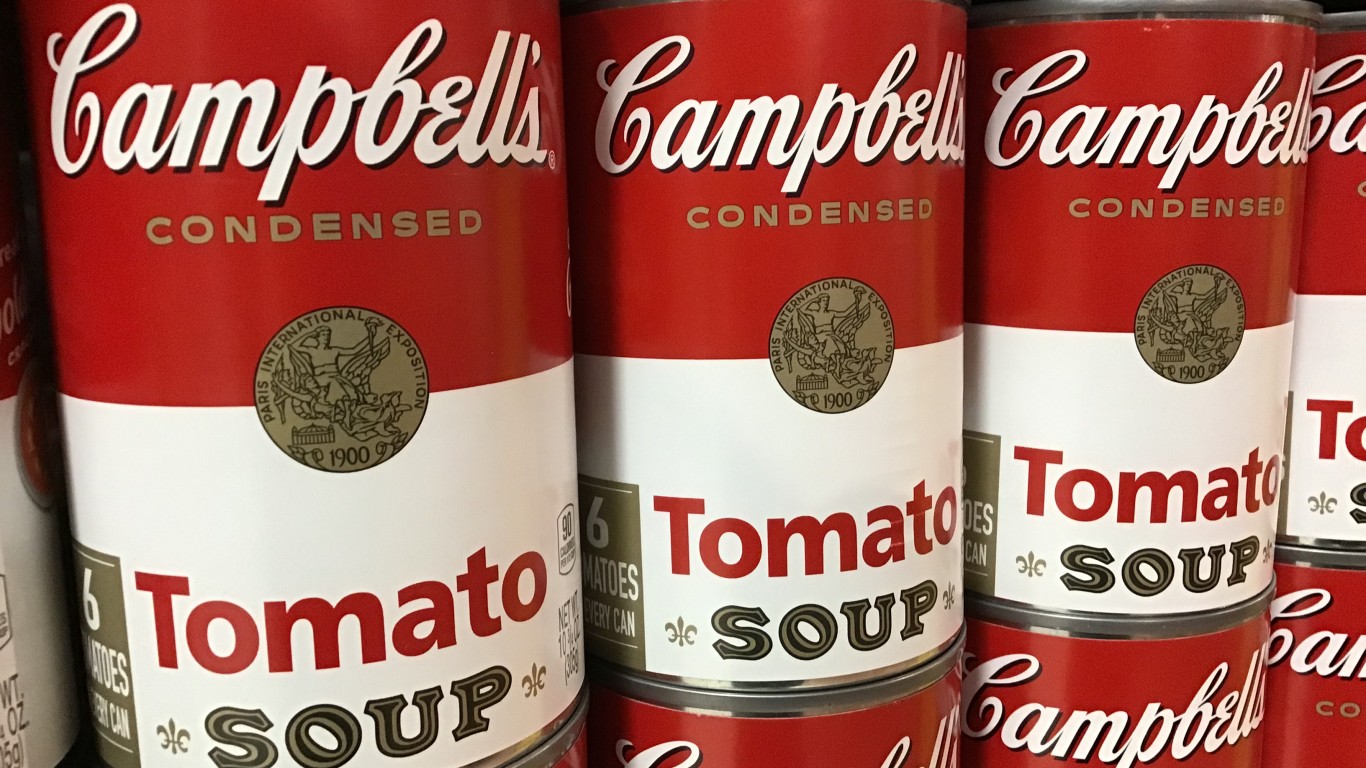
Campbell’s (NASDAQ:CPB | CPB Price Prediction) cut its quarterly dividend to $0.25 per share from $0.39. That is a 36% reduction, effective with the October 1, 2026 ex-dividend date. The smaller check pays on November 2, 2026. The company says it will use the savings to pay down debt faster. Retirees now need to judge whether this lower dividend rests on steadier ground than the old one did.
Why Campbell’s Had to Cut
Results in the fiscal fourth quarter fell apart. Net sales dropped 7.9% to $2.137B, and operating income came in at just $4M. In Snacks, segment operating earnings fell 34%. For the full year, operating cash flow was $1,039,000,000, and capital spending was $361,000,000. That left about $678 million in free cash flow, meaning the cash left after keeping the plants running. Dividends of $470,000,000 used up roughly 69% of it. The company also carried $11.492B in total liabilities against $394M in cash.

“Our performance is not where it needs to be, and we are taking decisive action to improve it.”
On the earnings call, CEO Mick Beekhuizen described the cut as “obviously a difficult decision, but it is unfortunately a necessary decision that we needed to take.”
Can the New $0.25 Dividend Hold Up?
The payout ratio is the share of profit a company sends out as dividends. Under the old rate, Campbell’s was paying out about 72% of fiscal 2026 adjusted EPS of $2.17. The new annual rate is $1. Against fiscal 2027 guidance of $1.65 to $1.80, that works out to between 56% and 61%.
Earnings are still falling, though. CFO Todd Cunfer projects interest expense to rise about $25 million, and a $500 million bond comes due in March. He also noted inflation of plus 5% to 6%:
“From an EPS perspective, obviously, a fairly sharp decline in Q1. We will get sequentially better, and we think we will be positive EPS by the fourth quarter.”
How Campbell’s Compares With General Mills and Kraft Heinz
General Mills (NYSE:GIS) pays $0.61 per share per quarter and is in its 127th consecutive year of dividends. Annually, that rate equals about 81% of the low end of its $3.00 to $3.20 EPS outlook. Kraft Heinz (NASDAQ:KHC) paid $1.60 per share in fiscal 2025. That is about 79% of the bottom of its $2.03 to $2.09 guidance, and Kraft Heinz projects free cash flow conversion of about 110%. After the cut, Campbell’s has the lowest payout ratio of the three. It is also the smallest, with a market value of about $6.19 billion, leaving it with less buffer.
What the Share Price Says

The stock trades near $20.78. It is down 20.71% this year and 44.46% over ten years. At that price, the forward yield is about 4.8%. Back in May, Jim Cramer pointed to Campbell’s 7.56% yield as a warning sign: “You don’t get those kinds of deals unless people are worried that the dividend will need to be cut.”
Cramer’s warning that a double-digit yield usually means the market is already pricing in a cut played out exactly as expected here. We listed the other six red flags that tend to show up before a payout gets slashed in a free report: Dividend Traps.
What Income Investors Should Weigh Now
- Turnaround case: Meals & Beverages organic sales rose 3%, and Rao’s has passed $1B in trailing sales. A $500M cost program supports the turnaround case.
- Income math: Compare how much income the position produces now with what your budget needs.
- Peer comparison: Peers with longer payout records and stronger cash conversion offer a benchmark for judging Campbell’s adjustment.
Key dates and data to track: the fiscal first-quarter report, signs that Snacks has found a bottom, and how Campbell’s refinances the March bond.
Contact [email protected] for any questions or corrections.
Chris Lange is a financial and geopolitical writer with more than a decade of experience covering a myriad of topics. He has published thousands of articles for 24/7 Wall St., with past coverage focused heavily on stocks, IPOs, healthcare, defense, global affairs, and technology.
His work has been quoted, or referenced by a number of outlets including Business Insider, USA Today, Yahoo Finance, MSN, The Motley Fool, and many other publications. A graduate of Southwestern University, he studied business with a focus on investments and has previous experience in banking and startups.
When not reading or writing the news, he is following his passion for Lacrosse, playing chess, or building solar projects with his dad.