Tech Stocks Just Had Their Worst Day Since 2020
Nobody announced bad news, yet $2.3 trillion vanished from the Nasdaq-100 in a single session. The real story is what one fund's heavy bet on a few chipmakers means for retirement savers, and what NVIDIA's next report could reveal.

This post may contain links from our sponsors and affiliates, and Flywheel Publishing may receive compensation for actions taken through them.

Invesco QQQ Trust (NASDAQ:QQQ) closed at $647.05 on November 5, 2026, its low for the session. The fund lost $44.90, or 6.49%, while the Nasdaq-100 fell 6.36%. That was the index’s worst day since March 16, 2020.
The Nasdaq-100 dropped 1,807.36 points to 26,629.81, down from 28,437.17 the day before, and about $2.3 trillion in market value disappeared. On November 5, ETF analyst Eric Balchunas posted on X: “Record volume today for $QQQ which is 27yrs old, about $80b traded.”
For a retirement saver, that volume matters because big institutions used QQQ to quickly cut exposure. The fund is now up only 5.33% for the year after a 14.82% drop in one month.
Why Tech Stocks Crashed
The price decline is confirmed, but its cause remains interpretive, because no company filed or announced anything to explain a drop this large.
Analysts linked the selloff to fear that the Democratic midterm win could slow AI data center construction, on top of local fights over power grids and water. A UBS estimate puts about 30% of expected 2028 U.S. data center capacity additions at risk from construction pauses. No hyperscaler (one of the giant cloud operators) has cut its spending plan.
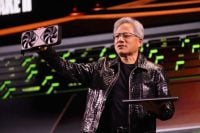
NVIDIA (NASDAQ:NVDA | NVDA Price Prediction) fell 9.26% to $181.60, which erased about $450 billion. Tesla (NASDAQ:TSLA) dropped 10.77% to $343.69.
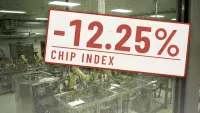
Apple (NASDAQ:AAPL) slid just 1.53% and ended with a $5.00 trillion market cap. The PHLX Semiconductor Index fell 12.25%, its second-biggest drop on record, and several large chipmakers fell about 17%.
The selling hit companies whose value depends most on AI chip spending, while companies with large consumer cash flows fell less.
Why Concentration Drives QQQ’s Risk
QQQ is cap-weighted, which means bigger companies get bigger slots. In its June 30, 2026 holdings report, NVIDIA alone made up 7.6% of net assets, and chipmakers held several of the other top positions.
A stock can lose value without missing earnings. When investors start to think capital spending (the money spent on buildings and equipment) will top out sooner, they pay less for future profits even if current results hold up.
That is a risk to the spending forecast, and it is a separate question from whether AI demand is fading. Either way, the chip suppliers are likely to take on the loss first because their revenue depends most directly on that spending, which is part of why the power, cooling, and networking names behind the data centers are worth a separate look (we covered seven of them in a free report on the AI infrastructure buildout).
How QQQ Fits a Retirement Portfolio After This Selloff
For a retirement-focused portfolio, QQQ’s concentration needs close attention. A single policy fear sent the fund down 6.49% in one session, which shows how far a single theme can move the fund in a short period.
After hours, the fund recovered only to $651.16 at 7:59 p.m. ET, a 0.63% gain. That was a weak bounce relative to the regular-session loss.
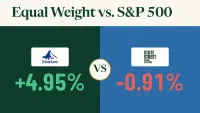
Invesco S&P 500 Equal Weight ETF (NYSEARCA:RSP) takes a different approach. It gives each company in the S&P 500 the same weight, so no single chipmaker can drive the result the way NVIDIA drives QQQ.
The test comes with NVIDIA’s next earnings report, expected November 17 after the close but not yet confirmed by the company. If QQQ closes back above $691.95, its November 4 close, after that report, the market will have treated this as a one-day burst of forced selling, and the concentration concern will look overstated.
Contact [email protected] for any questions or corrections.
Omor Ibne Ehsan is a writer at 24/7 Wall St. He is a self-taught investor with a focus on growth, cyclical, and dividend equities that have strong fundamentals, value, and long-term potential. He also has an interest in high-risk, high-reward investments such as penny stocks.