P&G Has Raised Its Dividend 70 Years In A Row. Now It Plans To Cut Up To 30% Of Its Manufacturing And Logistics Workforce By 2030 As It Targets Up To $10 Billion In Savings

This post may contain links from our sponsors and affiliates, and Flywheel Publishing may receive compensation for actions taken through them.
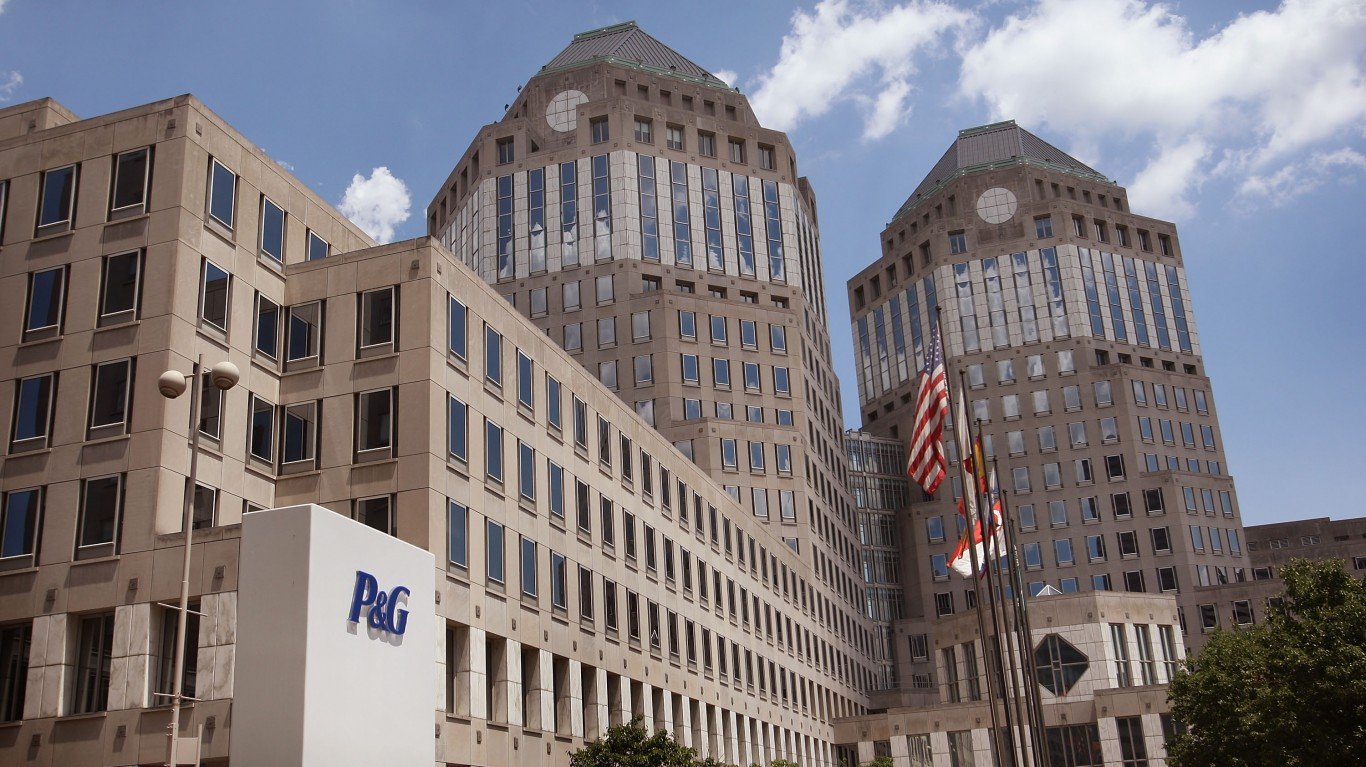
The company that makes Tide and Pampers told Wall Street it plans to need far fewer people to make them. At the investor day of Procter & Gamble (NYSE:PG | PG Price Prediction) on Thursday, Nov. 19, Chief Product Supply Officer Luc Reynaert set a target of a “20% to 30% reduction in our product supply workforce, including contractors, by 2030.” Bloomberg-based coverage describes that group as P&G’s manufacturing and logistics workforce.
The same day, CFO Andre Schulten said P&G is targeting up to $10 billion in company-wide productivity savings over fiscal years 2027 to 2030. Job cuts are one piece of that program. Luc Reynaert said P&G remains committed to delivering up to $1.8 billion in annual productivity savings, which Schulten said is part of the larger target and comes from cost of goods sold, per Reuters.
Why Procter & Gamble, a 70-Year Dividend Raiser, Is Cutting Now
Input costs tipped the math. Per Reuters, P&G warned last month that raw material, energy and freight costs would take a bigger bite out of annual profit. HR Katha reported that P&G expects commodity expenses to add $1.4 billion[1] to its costs this fiscal year. On the October earnings call, management said its outlook assumes Brent crude at $100 a barrel[2], adding, “Oil at $113 means more is coming in Q3 and Q4.” Core gross margin fell 150 basis points[3] in the first quarter.

Growth was already thin. HR Katha reported that P&G’s earnings rose 1%[1] in the fiscal year ended June 2026, its slowest growth since 2016. Fiscal 2027 core EPS guidance of $6.89 to $7.11[3] compares with last year’s $6.89[4].
Unstaffed Plants Are Already Running
HR Katha reported that P&G has opened 15[1] facilities that operate without on-site staff and plans to extend that model across its logistics network. According to HR Katha, Reynaert expects these automated sites to improve productivity by 20%[1] by 2030.
The factory cuts follow an earlier round of office reductions. The American Bazaar noted that P&G’s earlier restructuring plan, announced in June 2025, would eliminate 7,000 office-based positions over two years. The factory floor is a bigger pool: HR Katha cited a May 2025 filing showing about 52,000[1] employees across 35 countries involved in making P&G products at that time.
Per Reuters, Schulten stressed that the main objective is reinvestment so P&G can grow faster than the market. CEO Shailesh Jejurikar pitched P&G as the “consumer packaged goods company of the future,” citing its consumer-profile database and expanding use of AI.
What Income Investors Are Holding Today
Procter & Gamble says it has paid a dividend for 136[5] consecutive years and raised it for 70 straight years. On April 14, 2026[5], it declared a quarterly dividend of $1.0885 per share, a 3% increase. In its fiscal-year-end release, the company said it planned over $10 billion[4] in dividends and about $5 billion in buybacks in fiscal 2027. Procter & Gamble shares traded at $170.97 Friday morning, up 1.86% on the day and 22.74% year to date, for a forward yield of about 2.5%.

Gross Margin Will Show Whether the Plan Works
Brian Jacobsen, chief economic strategist at Annex Wealth Management, called the target substantial but questioned how much reflects new efficiencies versus offsetting higher energy and freight costs. “Cost cutting can protect profitability, but it can’t manufacture growth,” he told Reuters. “Can they cut the workforce and not sacrifice innovation, service levels, or execution? I’ll wait for proof and not rely on the promise.”

The signal to track is core gross margin in the next quarterly report, the first full quarter built on $100[2] oil. If productivity narrows the decline from the first quarter while volume keeps growing (it rose 2.4 points[2] last quarter), the cuts are funding growth. If margins keep sliding and volume stalls, Jacobsen’s doubt gains weight.
Contact [email protected] for any questions or corrections.
AJ spent 10 years writing about financial markets at The Motley Fool. His coverage centers on technology stocks and the broader macroeconomic trends, from interest rates to geopolitics, that shape where markets are headed next. AJ is drawn to the stories where big-picture economics and individual companies collide.