Bessent Warns the Fed Could Be Making a “Policy Mistake” if It Over-Tightens

This post may contain links from our sponsors and affiliates, and Flywheel Publishing may receive compensation for actions taken through them.
Treasury Secretary Scott Bessent appeared on Face the Nation on Sunday, November 22, after a hard week for stocks. He gave both a political and a monetary explanation for the selloff. In his view, it began as Democrats moved ahead in the polls, sped up after Election Day, and reflected investor worry about a Democratic push to slow the AI expansion.
He then pointed to “very hawkish remarks” from the Federal Reserve and said “many people believe that they may be making a policy mistake if they over-tighten,” quoting “a substantial tightening in financial conditions over the past few months.”
The interview aired before Monday’s rebound, when the S&P 500 gained 4.73% to close at 7,237.17. The SPDR S&P 500 ETF Trust (NYSEARCA:SPY) rose 4.71% to $722.29 after falling 3.64% on Friday.
The iShares 20+ Year Treasury Bond ETF (NASDAQ:TLT) gained just 0.29% to $81.69. That small move suggests bond investors still expect the Fed to keep hiking.
Third Warning From Treasury in Ten Days
Sunday was his third warning of this kind since November 13. That day he said it would be a mistake to hike too much into an energy supply shock that he described as easing, and he called recent inflation data noisy.
On November 20, he urged policymakers not to back a larger rise. That meant the half-point hike Governor Christopher Waller had suggested. New York Fed President John Williams had said on November 17 that there was no need for dramatic action.
On Sunday he added the financial-conditions argument. He named no officials and did not say what he wants the Fed to do in December.
Public pressure from the Treasury comes with a cost. If investors suspect the Fed gives in to politics, they demand higher yields to hold long bonds, which pushes against the lower rates the administration wants.
How Tighter Money Reaches Your Portfolio
The September hike left the Fed’s target range at 3.75%[1] to 4.00%[2]. Each further hike raises borrowing costs, tends to lift the dollar, and brings down the value investors place on future earnings.
That matters for SPY because NVIDIA (NASDAQ:NVDA | NVDA Price Prediction), Apple (NASDAQ:AAPL) and Microsoft (NASDAQ:MSFT) were its three largest holdings as of March, at 7.58%, 6.66% and 4.91%. The AI expansion also costs more to finance as rates rise.
Falling stocks and wider credit spreads slow the economy even without a rate change, which is why Bessent pointed to financial conditions. Monday’s rally eased some of that pressure. Even so, SPY finished down 2.39% for the week and 4.96% for the month.
Why Long Bonds Barely Moved
CME FedWatch put the odds of a quarter-point December hike at about 98% on Monday. On Friday, they were about 88%.
A day after Bessent spoke, Williams said he would not rule out back-to-back hikes, which markets read as support for a December move. Bill Ackman posted Sunday that a December 9 hike would be a mistake.
The 10-year yield fell to 4.92%[3] on November 20 from 5.15% on November 13. Still, TLT is down 2.6% this year and 33.26% over five years.
Hiking into a supply shock helps long bonds only if growth slows enough to pull yields down. If energy-driven inflation lingers, TLT’s about $47.0 billion[4] in long Treasuries takes the biggest hit.
Dates That Decide December
October PCE inflation and the second estimate of third-quarter GDP come out Wednesday, November 25, at 8:30 a.m. ET. A hot reading would support the hawks, and a soft one would back Bessent’s view that the inflation data are noisy.
The Fed announces its decision Wednesday, December 9, when its two-day meeting ends. Watch whether Waller keeps pressing for a half-point move and whether Williams stays with consecutive hikes.
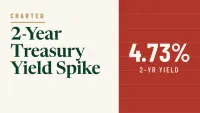
The gap between 10-year and 2-year yields is 0.29%[5]. It is positive but narrow, so the curve still allows for a soft landing.
What SPY and TLT Holders Should Weigh Before December
SPY’s longer-term record remains positive. Even after the past month’s drop, it is up 5.92% this year and 9.6% over the past year, and the market has almost fully priced in a quarter-point hike.
The main risk is a half-point move or a run of consecutive hikes. Either would likely hit the AI-heavy top holdings hardest.
TLT likely needs the Fed to reverse course before it can recover. The companies in SPY are likely better placed to keep growing earnings through a few more hikes. For investors who hold both, SPY offers more direct exposure to the policy relief Bessent is asking for, while TLT depends on long bonds to deliver it.
Contact [email protected] for any questions or corrections.
Omor Ibne Ehsan is a writer at 24/7 Wall St. He is a self-taught investor with a focus on growth, cyclical, and dividend equities that have strong fundamentals, value, and long-term potential. He also has an interest in high-risk, high-reward investments such as penny stocks.