23-Year-Old Earning $83k Owes $34k on a Car He Bought After Loss. Here’s Dave Ramsey’s Solution
On a recent episode of The Ramsey Show, a 23-year-old named Andrew called in with a story that turns a clean financial situation into a tangled one in a single decision. “I lost someone who meant very much to me,…

This post may contain links from our sponsors and affiliates, and Flywheel Publishing may receive compensation for actions taken through them.

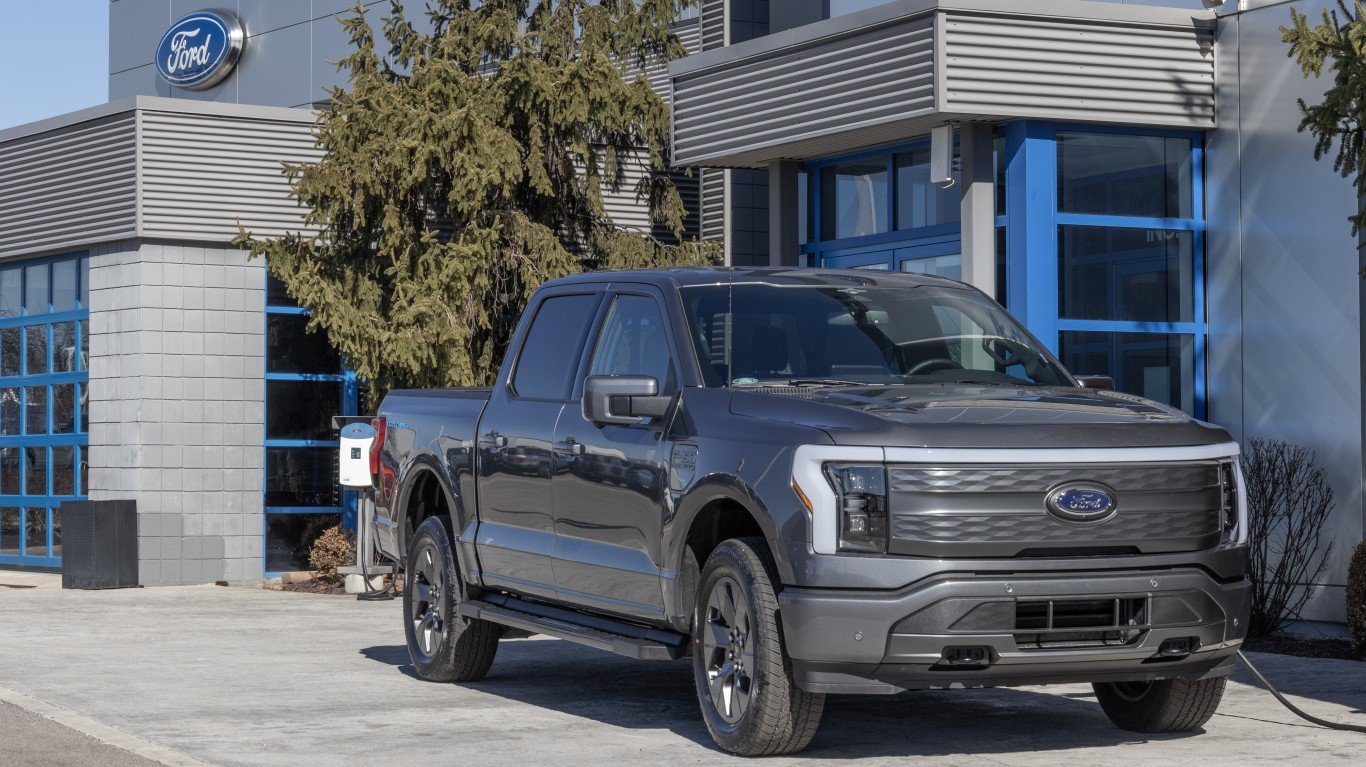
On a recent episode of The Ramsey Show, a 23-year-old named Andrew called in with a story that turns a clean financial situation into a tangled one in a single decision. “I lost someone who meant very much to me, a good friend,” he said. “I decided then to take the money that I had after becoming debt-free and buying a car. I went the spoil-myself route to feel better.”
The receipt for that grief: $34,000 owed on a car worth roughly $30,000, a $795 monthly payment at a high interest rate, $5,900 in credit card balances, and $7,000 in personal loans from Upstart. His partner is a stay-at-home mom, and their baby is due in August.
Dave Ramsey’s response cut past the math first. “That car is tied to psychological trauma for you. So every time you get in it, every time you write a check for it, you know I got ripped off because my heart was broken and I made a bad decision. I’d want that reminder out of my life.”
The verdict: sell the car, and the math agrees
Ramsey is right, and the numbers are not close. Andrew is roughly $4,000 upside down: $34,000 owed on a $30,000 asset. That gap is the cost of admission to freedom. Co-host Rachel Cruze framed the upside plainly: “And with that, an $800 a month raise.”
Run the comparison over the window before the baby arrives. Keeping the car through August means roughly four more $795 payments, most of which goes toward interest on a depreciating asset already worth less than the loan. Selling now requires scratching together about $4,000 to clear the lien, plus another $2,000 to $3,000 for a cash beater, per Ramsey’s suggestion of “a $2,000 or $3,000 car that you pay cash for.”
Call it $7,000 out the door: painful, but finite. In return, Andrew frees the $795 monthly payment entirely. Aim that freed cash flow at the $5,900 in credit card debt and $7,000 in Upstart personal loans, and the unsecured pile is gone in a handful of months. Ramsey put it this way: “all we got to do is just knock out like $10,000, $15,000, and you can do that in a few months. Think about what it would be like to get to Christmas and have zero debt.”
The variable that decides this: the car loan’s interest rate
For most upside-down auto loans, the right move is not obvious. Here, it is. Andrew described “a horrible interest” rate. With the federal funds rate currently sitting in a target range of 3.5% to 3.75%, prime auto borrowers are getting roughly mid-to-high single digits. A subprime buyer acting out of grief almost certainly signed for double digits, possibly north of 15%.
That changes the calculation completely. At a 5% loan rate, eating a $4,000 negative-equity hit to escape an $800 payment is a tough call. At 15% to 20% on a car already worth $4,000 less than the loan, every month of delay compounds the loss. The interest rate on the note is the single variable that flips this from a judgment call into a clear sell.
The grief-purchase pattern is bigger than one buyer
Andrew is not an outlier. Consumer confidence has been battered throughout 2026, pushed down by an energy price spike tied to the U.S.-Iran conflict. The University of Michigan Consumer Sentiment Index hit a record low of 44.8 in May 2026 before recovering to 49.5 in June. The preliminary July reading of 54.4 marks a second straight monthly gain, but sentiment remains 12% below where it stood a year ago. Stressed, pessimistic consumers spend emotionally. The car-as-bandage is a textbook version of that pattern.
The national savings rate tells a similar story. According to the Bureau of Economic Analysis, the personal saving rate was just 3.0% in May 2026, down sharply from 6.2% in early 2024. Households are spending more and saving less, even as inflation pressures have remained elevated: the Consumer Price Index rose 3.5% year-over-year in June 2026, well above the Fed’s 2% target.
Andrew’s $83,000 salary puts him above the national average, and the June 2026 unemployment rate of 4.2% means his income is stable. The income is not the problem. The decision was.
What to do before August
- Get the payoff letter from the auto lender and three private-party offers on the car this week. The negative equity gap is only knowable in writing, not in your head.
- List anything sellable, pick up extra sales commissions or a side shift, and earmark every dollar to cover the gap. Ramsey asked Andrew directly: “You got anything you can sell? Do you have any money saved?”
- Buy a paid-off used car in the $2,000 to $3,000 range. Reliable beats pretty.
- Redirect the freed $795 monthly payment to the highest-rate debt first, almost certainly the credit cards, then the Upstart loans.
- With CPI inflation running at 3.5% year-over-year, build a starter emergency fund before the baby arrives. Diapers, formula, and medical copays do not wait.
Grief is real. So is a $795 car payment. The first will pass on its own timeline. The second only leaves when you make it leave.
Editor’s note: This article has been updated to reflect the most current economic data available. The federal funds rate target range was corrected to 3.5%-3.75%; the U.S. personal saving rate was updated to 3.0% (May 2026, BEA); the unemployment rate was updated to 4.2% (June 2026, BLS); and the CPI inflation figure was updated to 3.5% year-over-year (June 2026, BLS). Consumer sentiment context was revised to reflect May 2026’s record-low reading of 44.8 and the June and July 2026 recoveries.
Contact [email protected] for any questions or corrections.
Don Lair writes about options income, dividend strategy, and the kind of boring-but-durable investing that actually funds retirement. He's the founder of FITools.com, an independent contributor to 24/7 Wall St., and a former writer for The Motley Fool.