They Inherited a 1920s Farmhouse in North Georgia. Should They Sell the Land to Fund a Bed-and-Breakfast Dream?
A couple in their early 60s never expected their retirement plan to include running a bed-and-breakfast. Then they inherited a 1920s farmhouse on 26 acres in North Georgia. The property is full of possibilities: mountain views, historic charm, and enough…

This post may contain links from our sponsors and affiliates, and Flywheel Publishing may receive compensation for actions taken through them.
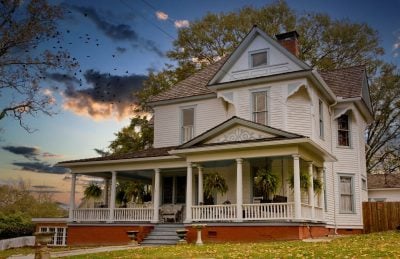
A couple in their early 60s never expected their retirement plan to include running a bed-and-breakfast. Then they inherited a 1920s farmhouse on 26 acres in North Georgia. The property is full of possibilities: mountain views, historic charm, and enough land to support everything from weddings to agritourism. The challenge is turning that vision into a business without jeopardizing retirement. They are considering selling most of the acreage, keeping the farmhouse and a few surrounding acres, and using the proceeds to fund the renovation. The question is whether converting inherited land into startup capital is a smart retirement move or simply replacing one risk with another.
The Balance Sheet Makes This Possible
The couple brings meaningful assets to the table. Their paid-off suburban Atlanta home is worth about $560,000, the inherited farmhouse with 26 acres of farm and forest is valued at roughly $645,000, and they have accumulated $821,000 in retirement savings. Their plan is to sell the Atlanta house, move to the farm, and avoid borrowing heavily for the project if possible. They wonder whether some combination of home equity, land value, and future business income can transform the farmhouse into a viable bed-and-breakfast without putting their retirement security at risk.
What a 1920s Farmhouse Actually Costs to Open for Guests
A century-old farmhouse near Cleveland, Georgia, requires substantial upgrades before it can operate as a bed-and-breakfast. Commercial lodging standards often require hard-wired interconnected smoke and carbon-monoxide detection, secondary egress from guest rooms, fire-rated separations between guest and owner spaces, sprinklers in some jurisdictions, ADA accessibility for at least one room, and a commercial kitchen if breakfast is served. White County zoning requires a conditional-use permit for lodging on rural-residential land, and insurance must be written as a commercial hospitality policy.
The biggest wildcard is what is hiding behind the walls. A house built in the 1920s may require electrical rewiring, plumbing replacement, HVAC modernization, lead-paint remediation, asbestos removal, structural repairs, termite remediation, foundation work, or a larger septic system. Any one of those discoveries can add tens of thousands of dollars to the budget. Several arriving at once can turn a manageable renovation into a major capital project.
A realistic renovation budget for a four-room bed-and-breakfast with updated systems, code compliance, and attractive guest accommodations runs roughly $350,000 to $500,000. Skilled-trades costs remain elevated, and borrowing is expensive. With the 10-year Treasury near 4.5%, commercial renovation financing can easily exceed 8%, making debt an unattractive way to fund the project.
Commercial hospitality insurance is another meaningful expense. A century-old farmhouse hosting paying guests carries liability exposures that a standard homeowner’s policy does not cover, requiring specialized coverage and higher premiums. The insurance cost can rise substantially if the owners expand beyond overnight lodging into weddings, retreats, reunions, or other events.
Does the Demand Actually Support It?
The location is stronger than it first appears. Cleveland sits just minutes from Helen, along the North Georgia wine trail, and within easy reach of Unicoi State Park, Yonah Mountain, and Anna Ruby Falls. It is also less than two hours from metro Atlanta, putting millions of potential weekend visitors within driving distance.
A well-run four-room bed-and-breakfast can realistically command average nightly rates of $185 to $235 and achieve occupancy of 55% to 62%, producing roughly $150,000 to $200,000 in annual gross revenue. The area benefits from year-round tourism tied to wineries, hiking, mountain scenery, festivals, and weekend getaways from Atlanta.
Operating costs are substantial. Cleaning, breakfast service, utilities, commercial insurance, property taxes, booking-platform commissions, marketing, software subscriptions, and ongoing maintenance on a century-old building consume a large share of revenue. A realistic net operating income is closer to $45,000 to $70,000 annually. That is meaningful supplemental income, but it is not enough to replace a retirement portfolio on its own.
The Acreage Question Most Owners Get Wrong
Selling 22 of the 26 acres at North Georgia rural rates of roughly $12,000 to $18,000 per acre nets around $260,000 to $380,000 after costs, which covers the renovation on paper. The trap: acreage is the product. Guests pay $215 a night for the view, the quiet, the firepit fifty yards from a tree line, and the option to host a small wedding or corporate retreat that doubles revenue. Subdivide and sell the back twenty, and a neighbor builds a metal pole barn or short-term rental two hundred feet from your guest porch. The rate sheet collapses.
The better structure is selling a single back parcel of eight to ten acres with a conservation easement or restrictive covenant on the remainder, netting $120,000 to $160,000, and using a small home equity line on the Atlanta sale proceeds to close the renovation gap. Georgia’s cost of living index of 96.293 keeps the household budget tight enough that the retirement portfolio stays invested.
One overlooked consideration is property-tax treatment. If the farm currently qualifies for agricultural assessment, reducing the acreage or converting portions of the property to commercial use could increase the annual tax burden. The exact impact depends on how the land is currently classified and how much acreage remains after any sale, but preserving enough land to maintain favorable treatment may be worth more over time than the proceeds from selling the final few acres.
The Number That Actually Works
Run honestly, this plan succeeds with the Atlanta home sale netting roughly $530,000 after costs, about $300,000 funding the renovation, and the remaining $230,000 added to the portfolio. A partial acreage sale of roughly $140,000 covers furnishings, equipment, and working capital, leaving the existing $821,000 retirement portfolio largely untouched. At a 3.75% withdrawal rate, the combined portfolio can support roughly $39,000 a year in retirement income. Social Security adds another $45,000 to $55,000, and a successful B&B contributes approximately $50,000 in annual net income.
That produces household income approaching $140,000 in a strong year and roughly $95,000 in a softer one. The key is restraint. Sell enough land to fund the project, but keep enough acreage to preserve the property’s appeal. Guests are paying for a North Georgia farm experience, not simply a renovated farmhouse. Done that way, the dream becomes a business supported by existing assets rather than a retirement portfolio sacrificed to one.
Contact [email protected] for any questions or corrections.
Drew Wood has edited or ghostwritten nine books and published more than 1,500 articles on investing, business, politics, travel, world cultures, wildlife, and earth science. He holds a doctorate and four master's degrees and has nearly 30 years of college teaching experience. His travels have taken him to 25 countries, including three years living in Ukraine.