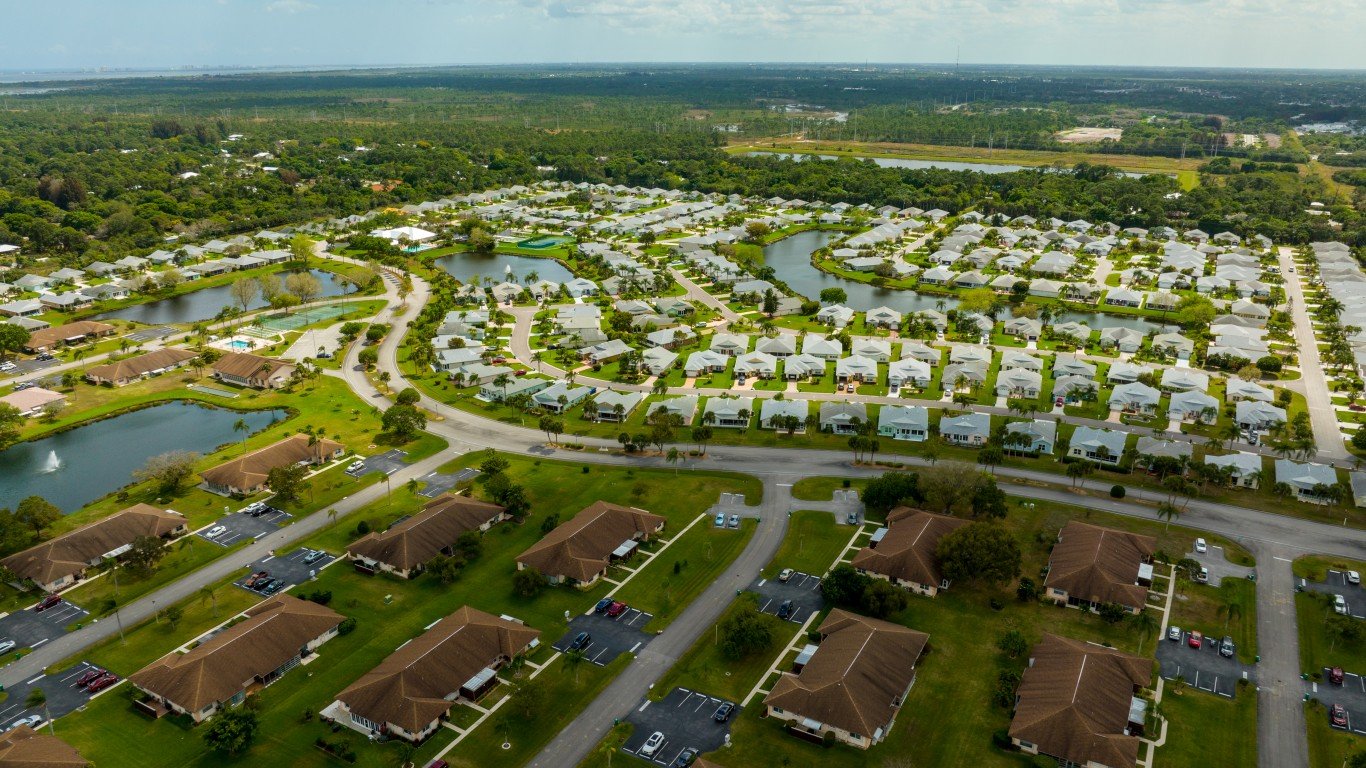
$1,500 a Month in The Villages: Here’s What That Budget Actually Gets You
A retirement budget of $1,500 a month in The Villages sounds tight but possible until you see the stack of Florida-specific costs most newcomers never price in. Several conditions have to line up perfectly before the math holds, and missing…

This post may contain links from our sponsors and affiliates, and Flywheel Publishing may receive compensation for actions taken through them.

What $1,500 a Month Really Buys Inside the Gates
A working monthly allocation at $1,500 looks roughly like this:
- Housing carrying cost on a paid-off, modest patio villa or older manufactured home: $650 to $800, covering property tax after homestead, homeowners insurance, and the community amenity fee.
- Utilities, water, trash, internet, and phone: $220 to $280.
- Groceries at the USDA Low-Cost Food Plan for one adult over 71: about $310.
- Medicare Part B premium: $202.90, plus a supplement or Advantage plan, dental, and out-of-pocket drugs, together another $150 to $250.
- Golf cart fuel and maintenance, gas for a car, plus auto insurance: $150 to $200.
- Everything else, meaning clothes, gifts, haircuts, dining, and a sinking fund for a new roof or replacement cart: whatever is left.
Rent inside The Villages does not fit this budget. Long-term rentals typically start well above what $1,500 can absorb once utilities and insurance are added. The scenario only works if the home is owned outright.
Where the Income Has to Come From
Eighteen thousand dollars a year lines up almost exactly with a below-average Social Security check. Florida has no state income tax on retirement income. For a single filer in 2026, the standard deduction is $16,100, and Social Security is only partially includable in taxable income, so a retiree drawing $1,500 a month from Social Security owes no federal or state income tax.
If the check is short of $1,500, the gap has to come from a portfolio. Using a conservative 3.5% withdrawal rate, every $100 a month of shortfall requires roughly $34,000 of invested assets. A $500 monthly gap implies about $170,000 in a mix of a broad index fund and a short treasury ladder. The 2027 cost-of-living adjustment is tracking toward 3.1%, which helps Social Security keep pace, but CPI at 332.8 reminds us that prices continue to rise and a $1,500 budget has no slack.
Hidden Costs Most Newcomers Underprice
The novel piece of this scenario is the stack of Florida-specific homeownership costs that hide inside the word “housing.” Every Village’s home carries a monthly amenity fee that funds the pools, rec centers, and executive golf courses, and that fee rises each year with CPI.
New homes also carry a bond, a long-dated infrastructure assessment paid separately from the mortgage, and it can run several hundred dollars a month for decades if not paid off at closing. Layered on top of that is Florida homeowners insurance, which has priced in hurricane risk aggressively, plus optional flood coverage for zones near retention ponds. A buyer who models only mortgage-free ownership plus utilities is routinely $300 to $500 a month short of the true carrying cost.
The Save Our Homes cap does soften property tax growth for permanent residents who file for homestead. Once established, the cap limits assessed value increases to the lower of 3% or CPI. Skip the homestead filing and the tax bill tracks market value, which in this community has moved in one direction for a very long time.
What Has to Be True for the Number to Hold
A $1,500 monthly budget in The Villages is workable, but only under specific conditions. The home has to be owned free and clear, ideally a smaller villa or an older manufactured unit where insurance and taxes stay contained. The bond has to be paid off, not carried. The retiree has to be on Medicare, which means age 65 or older, because a pre-Medicare ACA bridge alone would consume most of the budget. There has to be a reserve, roughly $25,000 to $40,000, for the roof, the HVAC, the cart battery, and the insurance deductible after the next storm.
Without that reserve, the budget survives an ordinary year and breaks in the first bad one. Medicare’s surcharges and coverage gaps can also quietly reshape a tight budget, and we mapped the ones that catch retirees off guard in a free guide here: Medicare’s Hidden Bills. Get those pieces in place, and $18,000 a year buys a real life inside the gates. Miss any of them, and the number on the headline is not the number the resident actually spends.
Contact [email protected] for any questions or corrections.
David Beren has been a Flywheel Publishing contributor since 2022. Writing for 24/7 Wall St. since 2023, David loves to write about topics of all shapes and sizes. As a technology expert, David focuses heavily on consumer electronics brands, automobiles, and general technology. He has previously written for LifeWire, formerly About.com. As a part-time freelance writer, David’s “day job” has been working on and leading social media for multiple Fortune 100 brands. David loves the flexibility of this field and its ability to reach customers exactly where they like to spend their time. Additionally, David previously published his own blog, TmoNews.com, which reached 3 million readers in its first year. In addition to freelance and social media work, David loves to spend time with his family and children and relive the glory days of video game consoles by playing any retro game console he can get his hands on.