Retirees Who Leave The Villages for Good Will Point to One Conversation That Settled It
One phone call after a hospital scare sets off a chain of financial decisions that most retirees in Florida's largest retirement community never planned for, and the math is rarely what families expect.

This post may contain links from our sponsors and affiliates, and Flywheel Publishing may receive compensation for actions taken through them.
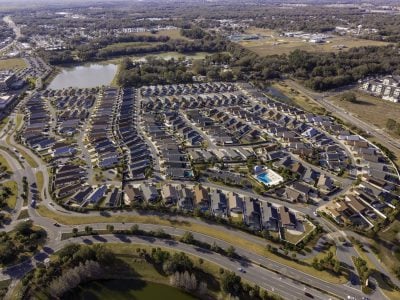
“We can’t keep flying down every time something happens.” Families who leave The Villages repeatedly describe some version of that sentence. It usually comes from a grown child after a fall, hospital stay, or scare that took days of rebooked flights to confirm, and this piece follows that conversation and the money questions that follow.
Why the Call Comes a Decade After the Move
Couples typically move south while both partners are healthy and children are busy with careers. About 60% of retirees who move after retiring go to a more affordable area and free up around $100,000 in home equity, according to a 2023 Vanguard study. Years later, a parent’s health has slipped, or children are old enough to see what’s coming.
A Health and Retirement Study analyzed 5,159 adults over 50. It found that moving 50 miles or more was significantly associated with less frequent in-person contact with family members and friends. The 50-64 age group who moved 50 miles or more was specifically less likely to meet up with their children, family members, and friends.
What Moving Back Actually Costs
The median sold price in The Villages reached $398.6K, and seller commissions run 5% to 6%, working out to roughly $19,930 to $23,916 before title fees and closing costs.
Florida caps yearly assessed value increases under the Save Our Homes rule at 3% or the change in CPI, whichever is lower. Up to $500,000 of that savings can move to a new home, but only within Florida. Leave the state, and it’s gone; the new house gets taxed at full market value.
North Carolina charges a flat 3.99% for tax years after 2025. The common destination also means other retirement income may still be taxable even though Social Security is exempt. IRA withdrawals now carry a state tax bill. The state and local tax burden is $5,110 per person in Florida and $6,021 in North Carolina.
North Carolina’s cost-of-living index is 94.3, below Florida’s 103.4. Moving partway to a cheaper town an hour from children often keeps most equity, but keeping the Florida house and leasing near family means paying for two homes at once. Staying put and spending savings on flights is worth considering; the commission alone would cover many round trips.
When the Real Subject Is Care
Sometimes the conversation is really about capacity. A child may have noticed something or worry about what happens after one parent dies. At that point the question is care, and care costs more near the kids. Assisted living has a Florida median of $5,610 a month, about $67,320 a year, with in-home care at $32 an hour.
In the Charlotte area, the median is $6,255 a month, which comes to $645 more per month, or $7,740 more per year. The national median rose 5%, while the 2027 Social Security cost-of-living raise is tracking toward 3.3%.
Deciding It While Everyone Is Still Fine
Families who agree on signals ahead of time handle the move calmly. Those who decide in crisis pay for speed: rushed sales, whatever care bed is open, markets picked under pressure. Signals can be specific: a diagnosis affecting driving, death of a partners, a set age, or a child’s family situation changing.
A workable plan sets aside $20,000 to $24,000 in selling costs, accepts that Save Our Homes savings end at the state line, and plans for higher state taxes plus about $7,740 a year in extra care costs near Charlotte. A portfolio covering those amounts without raising the withdrawal rate can handle the move.
When that isn’t possible, moving partway or staying and flying more often are better options. The most important conversation happens when nothing is wrong, with everyone at the table, before a phone call forces the decision.
Contact [email protected] for any questions or corrections.
David Beren has been a Flywheel Publishing contributor since 2022. Writing for 24/7 Wall St. since 2023, David loves to write about topics of all shapes and sizes. As a technology expert, David focuses heavily on consumer electronics brands, automobiles, and general technology. He has previously written for LifeWire, formerly About.com. As a part-time freelance writer, David’s “day job” has been working on and leading social media for multiple Fortune 100 brands. David loves the flexibility of this field and its ability to reach customers exactly where they like to spend their time. Additionally, David previously published his own blog, TmoNews.com, which reached 3 million readers in its first year. In addition to freelance and social media work, David loves to spend time with his family and children and relive the glory days of video game consoles by playing any retro game console he can get his hands on.