Compass CEO Says 42% of Homes Took a Price Cut
The Compass CEO called this the best time in years to be a buyer, armed with a surprisingly compelling statistic. But the two numbers he left out of that CNBC appearance point somewhere else entirely.

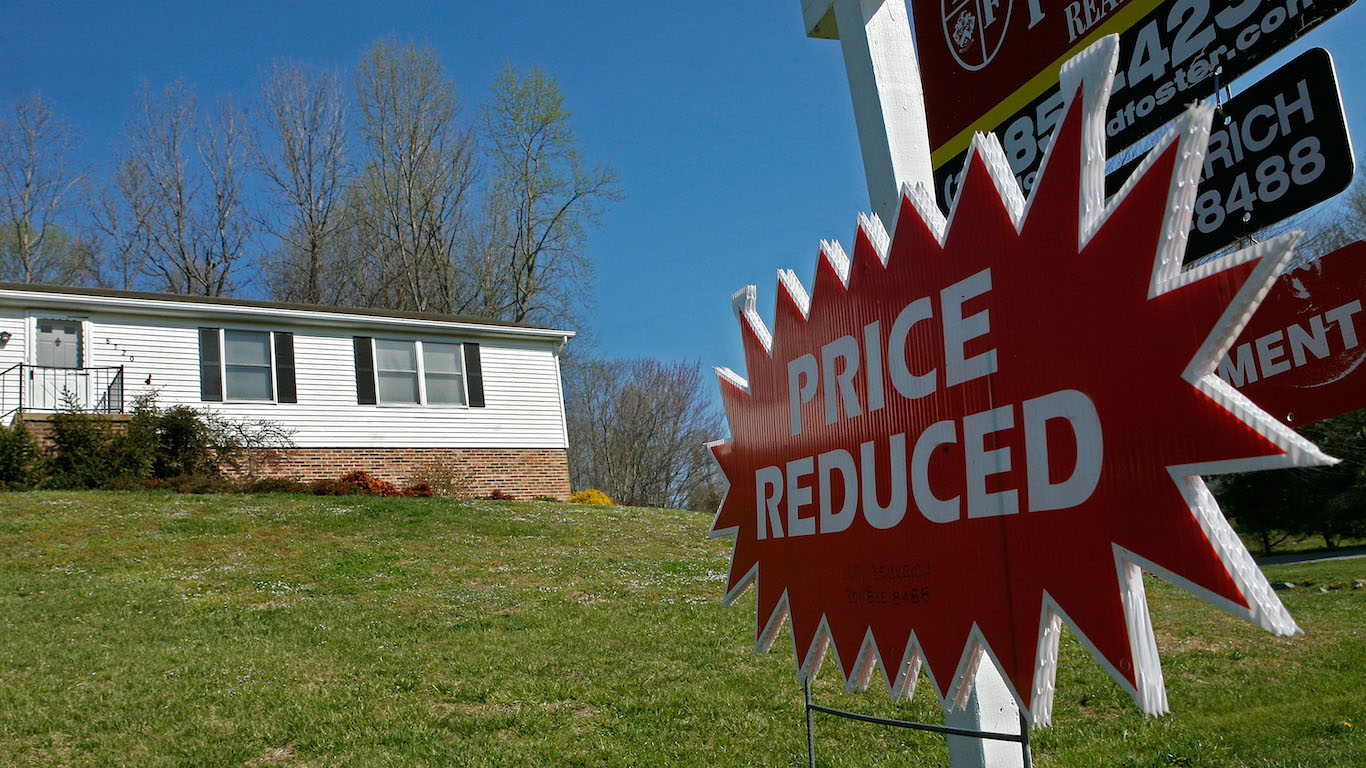
Compass (NYSE:COMP) CEO Robert Reffkin went on CNBC this morning with a striking data point and a buyer-friendly pitch. He said 42% of homes on the market in September have taken a price cut, the highest share in nearly a decade, and called it a great time to be a buyer. The problem: the two outside numbers that matter most tell a different story.
Price Cuts Mask Still-Rising Home Values
A trim off an aspirational asking price still leaves the house expensive. The S&P CoreLogic Case-Shiller U.S. National Home Price Index hit 336.7 in June 2026, up 0.4% from the prior month and the highest reading of the past year. Existing-home data tells the same story: sales fell 2% month over month in August, the slowest pace in 14 months, yet prices are still up 1.6% year over year.
Financing costs have moved the wrong way for buyers too. The 10-year Treasury yield hit 4.80% on Sept. 8, 2026, a one-year high sitting in the 99.6th percentile of the trailing year, which is why 30-year mortgage rates are at their highest level in more than a year. Reffkin misspoke on air calling mortgage rates an all-time high; the CNBC anchor corrected the framing to a one-year high.
A Sharply Bifurcated Housing Market
The pain is concentrated at the bottom. Reffkin said homes priced between $100,000 and $250,000 are down 10%, while homes at $1 million and above are up 4%, because high-end buyers are paying all cash with the stock market at an all-time high. The wealth-effect buyer is winning; the mortgage-dependent buyer is getting squeezed.
That bifurcation shows up in Compass’s own numbers. On the Aug. 4 earnings call, Reffkin said “the wealth effect created by a record stock market in a growing U.S. economy has been a driver of demand for our business and is helping offset the rise in interest rates.” Compass’s average selling price appreciated 8%, with the average price just over $1 million. In San Francisco, 140 transactions in the first half closed at least $1 million above asking, versus 8 in the same period a year earlier.
Wall Street’s Verdict on the Brokerage
Q2 was strong on the surface: revenue of $4.31 billion beat consensus by 4.70%, up 109.07% year over year on the Anywhere Real Estate merger, with adjusted EBITDA of $363 million and brokerage GTV up 15.9% year over year on a pro forma basis versus a market up 6%. But EPS of $0.11 missed the $0.2497 estimate by 55.95%, and Q3 revenue guidance of $3.85 billion to $4.05 billion pointed to a sequential slowdown.
Investors are voting with their feet. COMP trades at $10.52, down 15.16% over the past month from $12.40 on Aug. 10. Reffkin’s read on the buyer is optimistic; his own stock tells a different story.
Contact [email protected] for any questions or corrections.
Joel South covers large-cap stocks, dividend investing, and major market trends, with a focus on earnings analysis, valuation, and turning complex data into actionable insights for investors.
He brings more than 15 years of experience as an investor and financial journalist, including 12 years at The Motley Fool, where he served as an investment analyst, Bureau Chief, and later led the Fool.com investing news desk. He has also co-hosted an investing podcast and appeared across TV and radio discussing market trends.