Elon Musk Says ‘Enormous, Free Fusion Reactor in the Sky’ Will Supply 100% of Energy Needs
Elon Musk called terrestrial fusion reactors 'pet science projects' and declared the sun will supply essentially all of humanity's energy, but Tesla's own financials reveal just how steep and costly the road to that vision actually is.

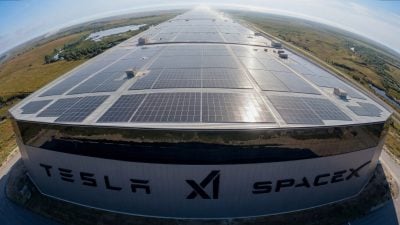
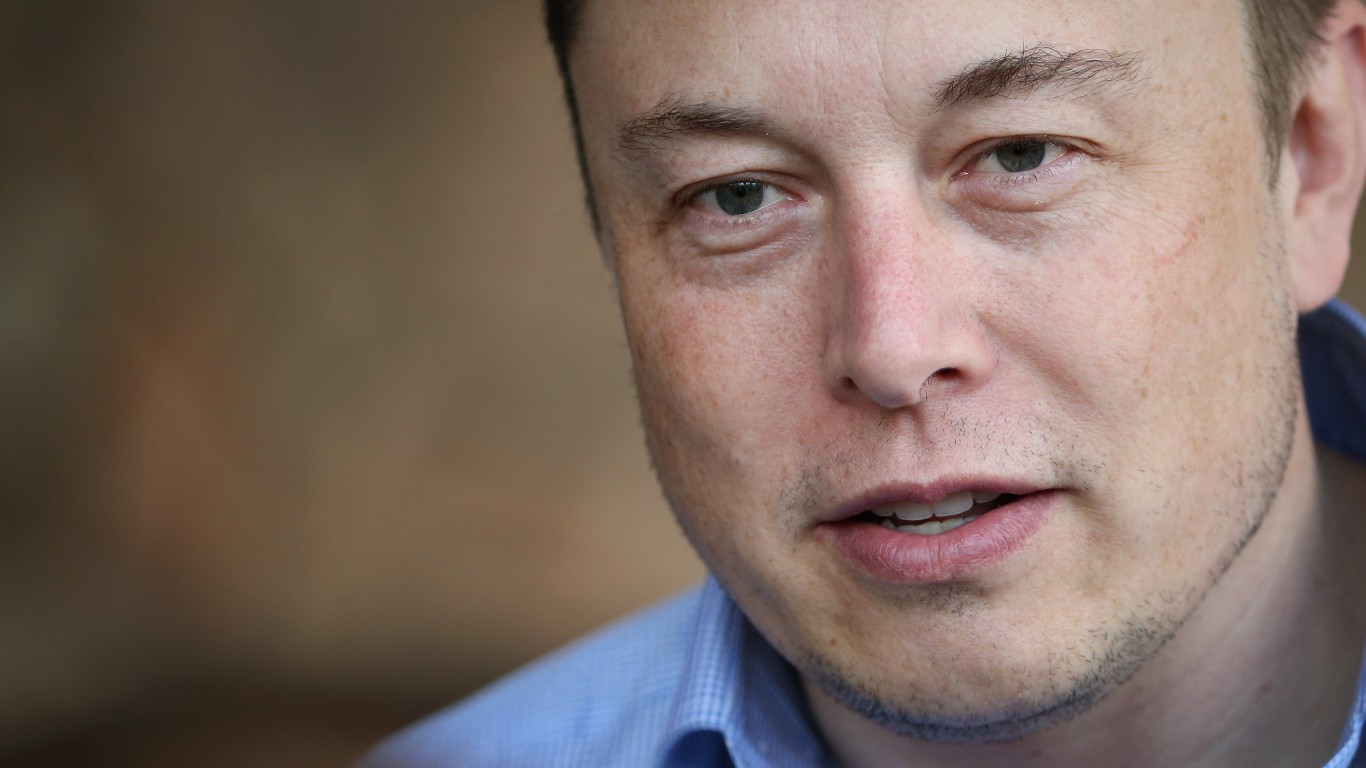
Tesla CEO Elon Musk used his X account on September 11, 2026, to restate what has become the philosophical spine of Tesla (NASDAQ:TSLA | TSLA Price Prediction) energy strategy — the sun does the fusion, so humans should stop trying to replicate it. “The Sun is an enormous, free fusion reactor in the sky,” Musk wrote, calling it “super dumb to make tiny fusion reactors on Earth” and dismissing terrestrial alternatives as “puny little reactors” and “pet science projects.” In the same thread, he added that “solar energy over time will round up to 100% of energy harnessed (obviously).” The post drew 33.2 million views.

Quote Meets the Income Statement
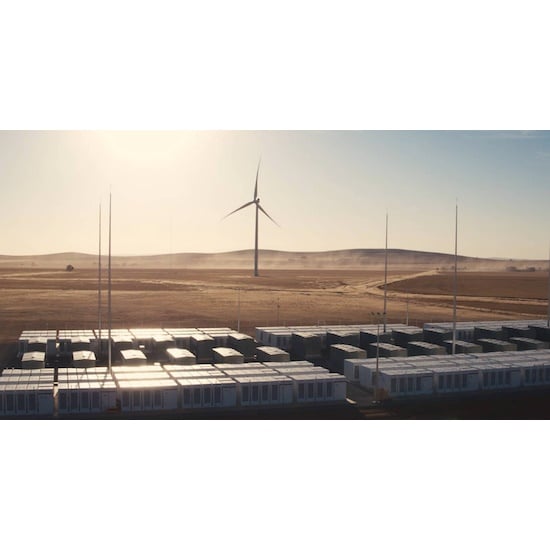
The rhetoric shows up in the P&L. In Q2 2026, Tesla’s Energy Generation and Storage segment posted revenue of $3.139 billion, up 13% year over year, with storage deployments of 13.5 GWh, a 41% YoY jump. That followed a record Q4 2025 in which energy gross profit hit $1.1 billion, the fifth consecutive record quarter, and Q3 2025 energy revenue of $3.415 billion, up 44% YoY. On the most recent call, CFO Vaibhav Taneja said the energy business should “normalize at a gross margin rate in the mid to low 20% range” after gross margin compressed from 39.5% to 20.4%, partly on a $240 million warranty true-up and lapsed tariff benefits.
A $25 Billion Bet on Panels, Cells, and Megapacks
Musk is pairing the vision with capital. Taneja said capital expenditures this year will exceed $25 billion and are expected to grow for “the next two or three years” across solar manufacturing, Megapack production, semiconductor fabs and AI compute. Tesla has secured debt facilities of up to $30 billion to fund it. Musk framed the effort as “the fastest industrial scale up since World War II in America,” spanning silicon refinement to solar cell and panel production. He argued “the solar battery combination will be how the vast majority of energy in the world is produced in the future.”
Cost Showing Up in the Numbers
Investors are already paying for the buildout. Q2 2026 capex reached $5.789 billion, up 141.8% YoY; operating income fell 56.9% to $398 million; and free cash flow swung to negative $1.092 billion. Non-GAAP EPS of $0.33 missed the $0.54 consensus. TSLA trades at $365.44, down 18.74% year to date, on a P/E near 380.

Doubts the Bull Case Has to Answer
The “100% solar” framing collides with grid realities. The EIA’s Annual Energy Outlook 2026 baseline projects solar at roughly 20% of U.S. generation by 2050, with natural gas at about 40% and wind at 20%. Utility-scale solar farms consume large tracts of land, depend on scarce polysilicon and silver, and face environmental permitting friction that Musk’s tweet does not address. Whether Tesla’s storage-heavy answer bridges that gap is the multi-year test behind the capex line.
What to Watch
Keep an eye on Megapack 3 volume production in Texas in 2026, energy gross margin normalization toward the mid-20s, and whether solar cell output at scale begins showing up in the segment mix by the next earnings report.

Contact [email protected] for any questions or corrections.
After two decades of patrolling the dark corners of suburbia as a police officer, Rich Duprey hung up his badge and gun to begin writing full time about stocks and investing. For the past 20 years, he’s been cruising the markets looking for companies to lock up as long-term holdings in a portfolio while writing extensively on the broad sectors of consumer goods, technology, and industrials. Because his experience isn’t from the typical financial analyst track, Rich is able to break down complex topics into understandable and useful action points for the average investor. His writings have appeared on The Motley Fool, InvestorPlace, Yahoo! Finance, Money Morning, and, of course, 24/7 Wall St. He has been featured in both U.S. and international publications, including MarketWatch, Financial Times, Forbes, Fast Company, and USA Today.