The Hidden Costs of The Villages Residents Only Admit After Their First Year
The listing price is the smallest number in the whole deal, and residents only discover what the real carrying costs look like after their first tax bill, insurance renewal, and amenity notice arrive at the same time.

This post may contain links from our sponsors and affiliates, and Flywheel Publishing may receive compensation for actions taken through them.
Prospective buyers tour The Villages, check out the pickleball courts and town squares, and walk away with a listing price and a monthly amenity fee. A year later, their bank statements tell a very different story. This is one of the most common questions we get from readers in their late 50s and early 60s who are stress-testing a Florida retirement: what does it actually cost to live there after the first year, and how much of a portfolio do you really need to cover the expenses that never show up in the sales materials?
The community remains one of the most in-demand master planned developments in the country, and most residents say they would move there again. The problem is that the house price is the smallest number in the whole deal.
Fees That Follow the Property, Not the Brochure
Three separate charges sit on top of the mortgage or cash purchase. The monthly amenity fee funds recreation centers, pools, and executive golf access. The developer adjusts it annually using a contractual CPI-linked formula, meaning the fee ratchets with inflation regardless of Social Security increases. For context, the 2027 Social Security COLA is tracking toward 3.1%, while the broader CPI index moved from 308.417 in January 2024 to 333.918 in July 2026. Amenity fees indexed to that curve compound quietly.
Golf Cart as a Second Vehicle
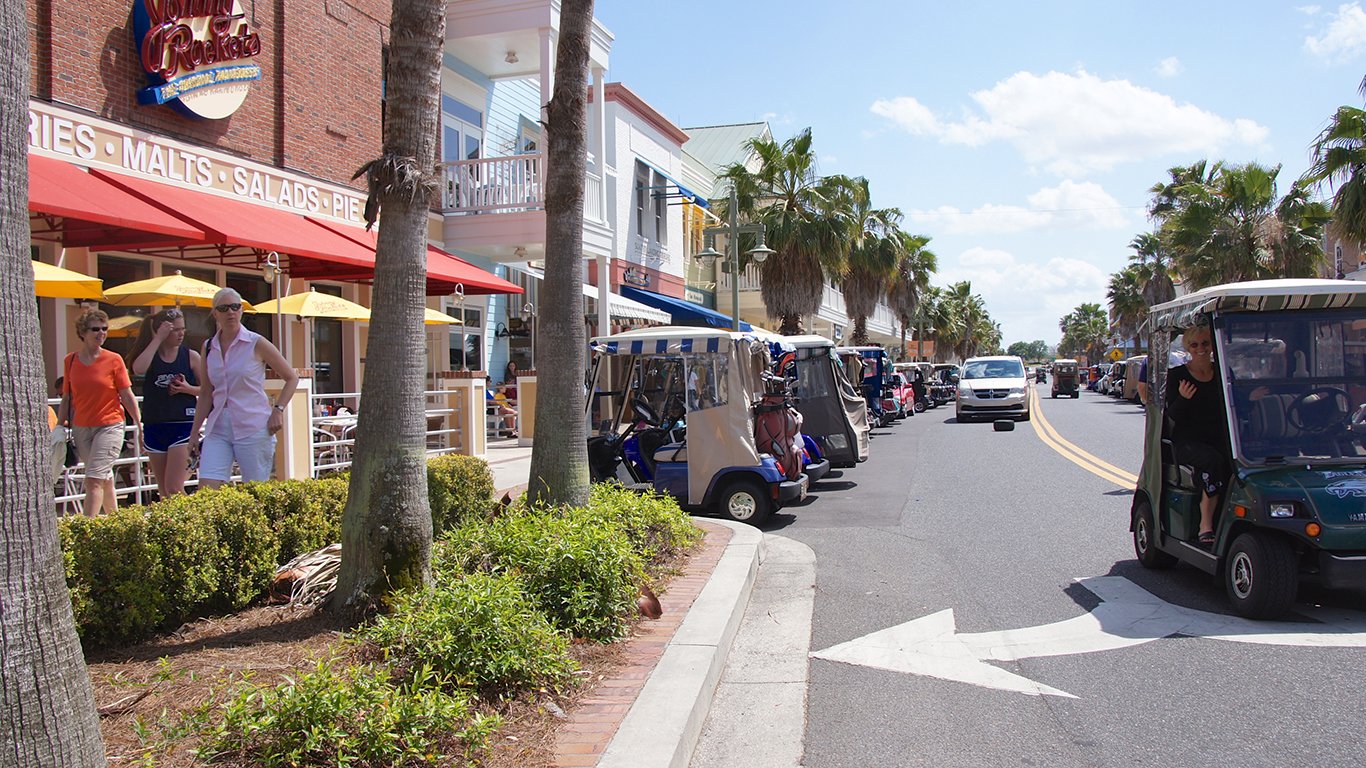
New residents budget for a golf cart like a bicycle. Owners a year in describe it as a second vehicle with battery, tires, insurance rider, annual service, and occasional windshield or motor replacement. Gas carts need oil changes. Lithium conversions run into four figures. Because trips in The Villages happen by cart rather than car, primary vehicle mileage drops, but total transportation spend rarely does. It belongs on the transportation line.
Florida Insurance and Property Tax Reality
Golf, Clubs, and the Social Line Item
What the Number Actually Needs to Be
Take the household’s baseline retirement budget, then add the amenity fee, CDD assessment, bond payment if assumed, golf cart carrying line, Florida insurance line priced against roof age, and social and club reserve. Subtract Social Security, which recently averaged $1,645.4 billion in national quarterly benefits in 2026Q2, and any pension. Divide the remainder by a 3.75% to 4% withdrawal rate for a 30-year horizon, though the original 4% research was done in a different rate environment, something we walked through in a free income-first retirement guide.
Households arriving in their early 60s who want executive and championship golf, an active social calendar, and a paid-off bond typically need a portfolio supporting roughly $90,000 to $110,000 of annual spend before taxes, given that Florida’s disposable income benchmark of 64461 understates the actual lifestyle cost here. The listing price reflects only the house cost; the tax bill, amenity notice, and insurance renewal reflect ongoing carrying costs.
Contact [email protected] for any questions or corrections.
David Beren has been a Flywheel Publishing contributor since 2022. Writing for 24/7 Wall St. since 2023, David loves to write about topics of all shapes and sizes. As a technology expert, David focuses heavily on consumer electronics brands, automobiles, and general technology. He has previously written for LifeWire, formerly About.com. As a part-time freelance writer, David’s “day job” has been working on and leading social media for multiple Fortune 100 brands. David loves the flexibility of this field and its ability to reach customers exactly where they like to spend their time. Additionally, David previously published his own blog, TmoNews.com, which reached 3 million readers in its first year. In addition to freelance and social media work, David loves to spend time with his family and children and relive the glory days of video game consoles by playing any retro game console he can get his hands on.