Cities With the Poorest Neighborhoods
The concentration of poverty in the U.S. has been increasing over the past decade. Between 2000 and the period between 2005 and 2009, the population of America’s poorest neighborhoods have increased by one-third, according to the Brookings Institute. 24/7 Wall…

This post may contain links from our sponsors and affiliates, and Flywheel Publishing may receive compensation for actions taken through them.
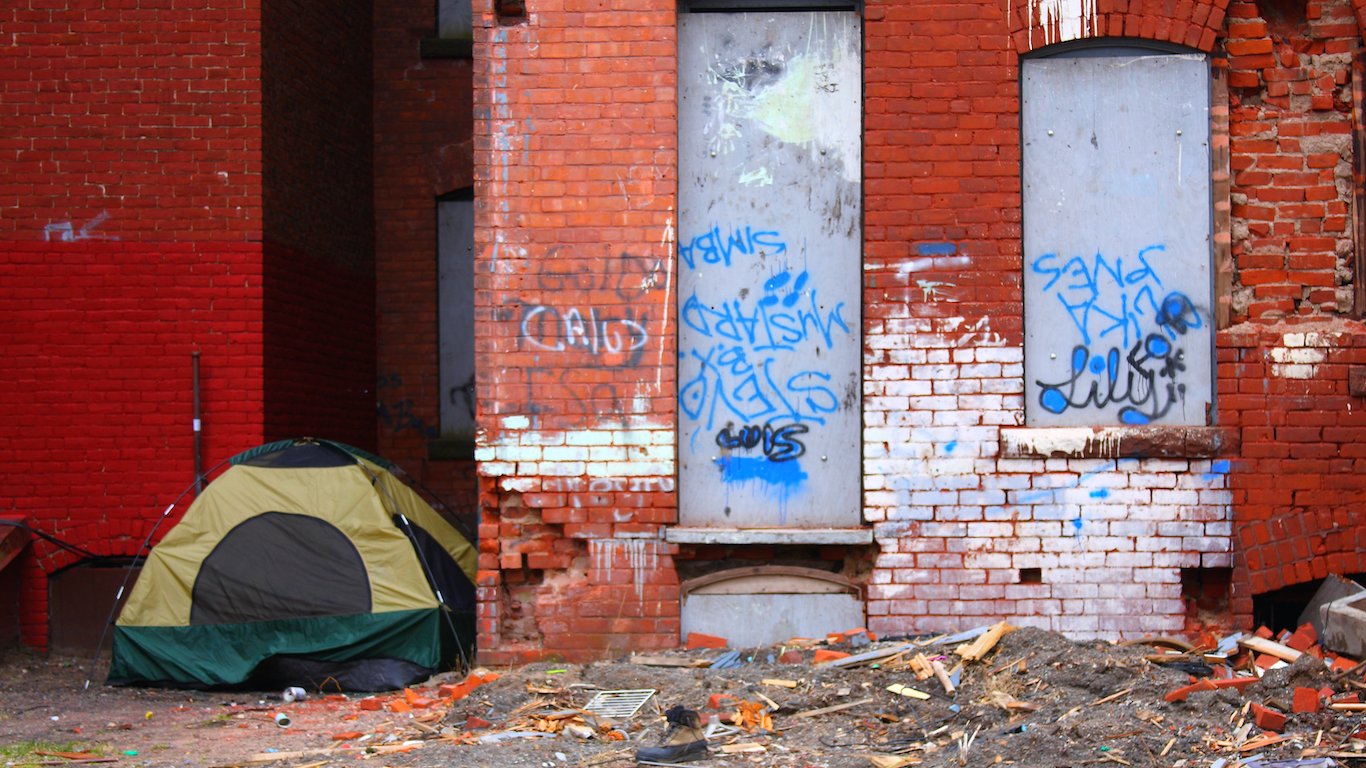
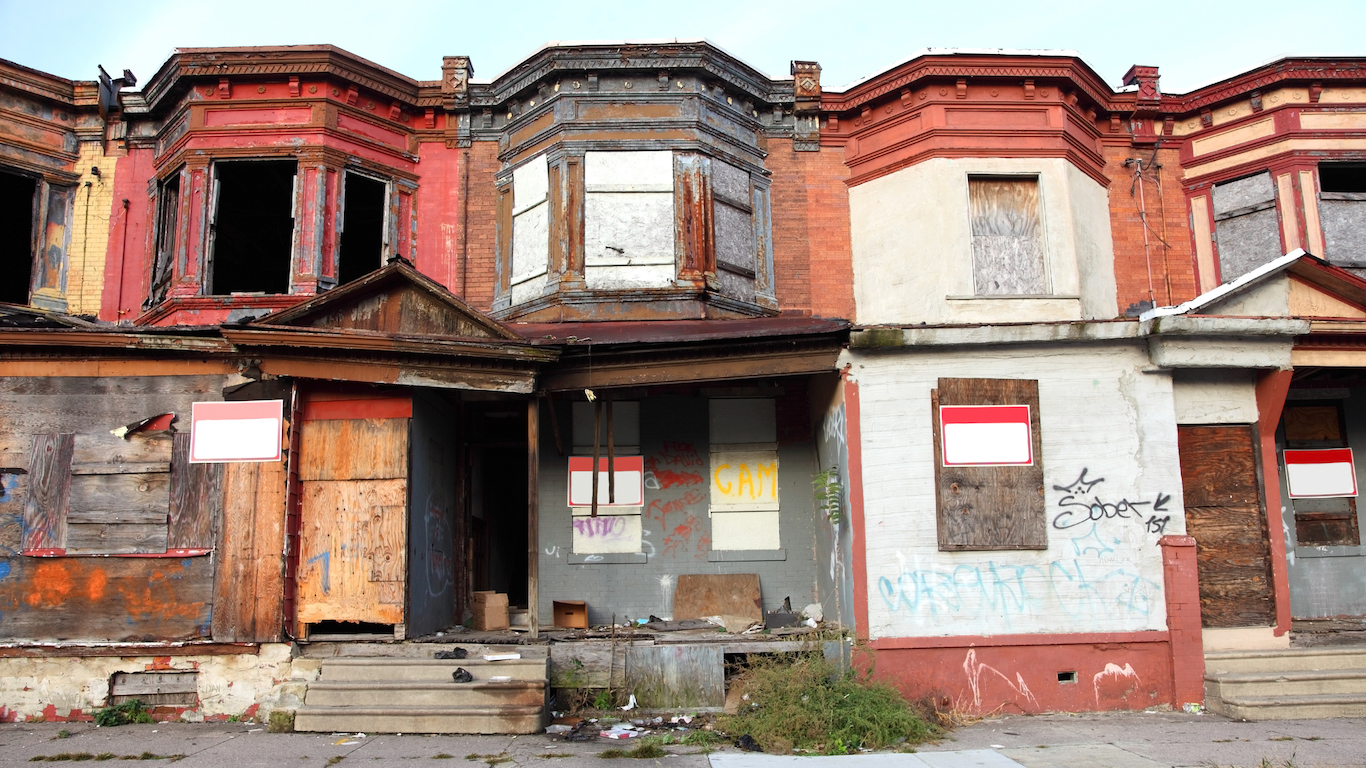
 The concentration of poverty in the U.S. has been increasing over the past decade. Between 2000 and the period between 2005 and 2009, the population of America’s poorest neighborhoods have increased by one-third, according to the Brookings Institute. 24/7 Wall St. has identified the eleven cities with the highest concentration of poverty and looked at factors that could be impacting this trend.
It is not surprising that most of the regions with the highest concentration of poverty also have the highest poverty rates in the country. For example, in McAllen, Tex., 35.7% of the population lives below the poverty line. This is the highest poverty rate in the country. There are exceptions, however. In Poughkeepsie, N.Y., just 9.8% of the population is poor. The reason Poughkeepsie makes the list is that a full 27% of poor people in the region live in the same three poor neighborhoods.
Read: Cities With the Poorest Neighborhoods
Unfortunately, for regions with a high concentration of poverty, conditions are getting even worse. According to the Brookings report, all but three of the cities have seen substantial increases in poverty concentration. Since 2000, the Toledo, Ohio, region saw an increase of 15.3%, the largest rise in poverty concentration in the country. Now, 23.5% of the region’s poor live in neighborhoods characterized by extreme poverty.
Many of the regions with a high concentration of poverty also have some of the highest unemployment rates in the country. Fresno, Calif., has an unemployment rate of 14.9%. However, in others, unemployment is actually below the national average. Jackson, Miss., has the sixth-highest poverty rate in the country among large metropolitan areas, but an unemployment rate of just 8.6%. This is lower than the national average of 9.1%.
In order to identify the 11 metropolitan statistical areas with the highest concentration of poverty, 24/7 Wall St. used data compiled by the Brookings Institute in a paper titled “The Re-Emergence of Concentrated Poverty: Metropolitan Trends in the 2000s.” From this report, we looked at the cities with the highest concentration of poverty. We also included the number of people living below the poverty line, the number of poor neighborhoods, termed poverty tracts, and the total population in the regions, all of which the Brookings Institute compiled from U.S. Census data. Median household income values from the 2010 American Community Survey, and unemployment rates from the Bureau of Labor Statistics were also included.
11. Jackson, Mississippi
> Population in extreme poverty areas: 22.7%
> Population that is poor: 17.3% (6th highest)
> Median household income: 42,501 (137th lowest)
> Unemployment: 8.6%
Over 17% of Jackson’s population is currently living below the poverty line — one of the highest rates in the country. Additionally, its median household income is approximately $8,000 lower than the national average. The region has 18 different neighborhoods with extreme poverty, and 22.7% of the region’s poor live in those neighborhoods.
Also Read: Large Companies Pay Relatively Little in Taxes
10. Baton Rouge, Louisiana
> Population in extreme poverty areas: 22.7%
> Population that is poor:15.6% (8th highest)
> Median household income: $48,294 (247th lowest)
> Unemployment: 7.0%
Baton Rouge’s impoverished residents make up 15.6% of the metropolitan area’s population, the eighth highest rate in the country. According to a Census report, the city has one of the widest income gaps between the rich and poor in the country. There is also a huge division between where the rich and poor live in the area. Almost a quarter of poor people live in extreme poverty neighborhoods.
9. Milwaukee, Wisconsin
> Population in extreme poverty areas: 23.4%
> Population that is poor: 12.2% (48th highest)
> Median household income: $49,774 (258th lowest)
> Unemployment: 7.6%
Over 12% of Milwaukee’s population is poor, which is roughly average among large metropolitan regions. The region also had a median household income just under that of the U.S. average. The region’s unemployment of 7.6% is also healthy when compared to the U.S. average of 9.1%. Nevertheless, Milwaukee has one of the worst distributions of poor people in the country. More than 23% of the five-county region’s poor population live in neighborhoods with extreme poverty. Almost all of these neighborhoods are located within the city of Milwaukee itself. According to The Milwaukee, Wisconsin Journal-Sentinel, while the poverty rate in the Milwaukee MSA is just 12.2%, nearly one in three residents within the city limits live in poverty.
8. Cleveland, Ohio
> Population in extreme poverty areas: 23.5%
> Population that is poor: 13.3% (32nd highest)
> Median household income: $37,193 (36th lowest)
> Unemployment: 7.6%
Cleveland is one of the many cities with a growing population of impoverished people. This portion of the population is highly concentrated, with 23.5% living in extreme poverty areas. Since the recession, Cleveland’s poor population has moved from the city to the suburbs at a greater rate than the rest of the country. According to the New York Times, nearly 60% of Cleveland’s poor now live in the suburbs, compared to 46% in 2000. On a national level, 55% of the poor population lives in the suburbs, up from 49%.
Also Read: Cyclical Unemployment Disappears
7. Toledo, Ohio
> Population in extreme poverty areas: 23.5%
> Population that is poor: 14.9% (14th highest)
> Median household income: $41,583 (109th lowest)
> Unemployment: 9.2%
Toledo’s middle class has been among the nation’s hardest hit by the recession. According to The Toledo Blade, the metropolitan area had 60,000 manufacturing jobs in 2000. This number has since decreased by nearly half. Much of the area’s poverty exists in the suburbs. More tha 23% of Toledo’s poor live in extreme poverty areas.
6. Detroit-Warren, Michigan
> Population in extreme poverty areas: 23.6%
> Population that is poor: 14.0% (22nd highest)
> Median household income: $48,294 (245th lowest)
> Unemployment: 11.7%
The Detroit-Warren metropolitan area is the tenth largest in the country. Its poor population is the eighth largest among the nation’s big cities. The decline of the automobile industry has caused 25% of the city of Detroit’s population to flee during the recession. The city now has a poverty rate of 38%, as well as a high concentration of poverty in destitute neighborhoods.
5. Fresno, California
> Population in extreme poverty areas: 25.1%
> Population that is poor: 10.5% (3rd highest)
> Median household income: $45,221 (179th lowest)
> Unemployment: 14.9%
Fresno, CA, has the third highest poverty rate in the nation of 20.5%. The inland city also has an unemployment rate of 14.9%, which is significantly higher than the national rate of 9.1%. Currently, more than one in four impoverished people in the metropolitan area live in neighborhoods where at least 40% of individuals live below the poverty line.
4. Poughkeepsie, New York
> Population in extreme poverty areas: 27%
> Population that is poor: 9.5% (78th highest)
> Median household income: $67,269 (364th lowest)
> Unemployment: 7.5%
Poughkeepsie stands out from the other metropolitan areas on this list because of its relatively low poverty rate. Additionally, at $67,269, the metropolitan area has one of the highest median incomes in the country. The national average is $50,046. Regardless, an exceptionally large percentage of the metro area’s impoverished people live in extreme poverty areas, illustrating a strong physical separation among income groups.
3. Memphis, Tennessee-Mississippi-Arkansas
> Population in extreme poverty areas: 27.7%
> Population that is poor: 18.0% (5th highest)
> Median household income: $45,366 (183rd lowest)
> Unemployment: 10.5%
The Memphis metropolitan area has the fifth highest poverty rate in the country. The metro area also has one of the highest rates of income inequality in the nation, according to Census data. More than a quarter of the poor people in Memphis live in extreme poverty areas.
Also Read: The Endless Unwinding of Kodak
2. El Paso, Texas
> Population in extreme poverty areas: 34.9%
> Population that is poor: 26.1% (2nd highest)
> Median household income: $36,015 (23rd lowest)
> Unemployment: 10.6%
El Paso has the second highest rate of impoverished people in the country. The metropolitan area is located directly on the Mexican border, resulting in El Paso having a high immigration rate. Median household income is approximately $16,000 lower than the national average. A large portion of the poor people — more than one in three — live in extreme poverty area.
1. McAllen, Texas
> Population in extreme poverty areas: 53.2%
> Population that is poor: 35.7% (the highest)
> Median household income: $33,732
> Unemployment: 12.3%
A stunning 35.7% of people in the McAllen metropolitan area are poor. This is the highest rate in the nation. Worst still, the majority of these people — 53.2% — live in extreme poverty areas. This is a significantly higher percentage than anywhere else in the country. The metro area is located on the Mexican border. This has had a great impact on the region, especially in the suburbs. As of 2009, McAllen had a poverty rate of 44.4% among foreign-born, suburban-dwelling residents.
-Charles B. Stockdale, Michael B. Sauter
Contact [email protected] for any questions or corrections.
Michael Sauter is Lead Editor at 24/7 Wall St. He has worked here in various capacities since 2010, starting out as a healthcare industry beat writer. He helped develop the site’s data-driven content, which contributed to 24/7 Wall St. becoming a recognized brand in the field of data journalism, covering a wide range of social and economic issues. Today, he rarely writes but enjoys working with authors and data to find the best way to present information clearly and effectively. In his occasional spare time, Michael loves cycling, listening to audiobooks, and (passably) playing the piano.