US Drivers Remain Skeptical of Self-Driving Cars
American consumers remain wary of autonomous driving technology. One exception is an advanced emergency braking and steering system for which they are willing to pay significant premium.


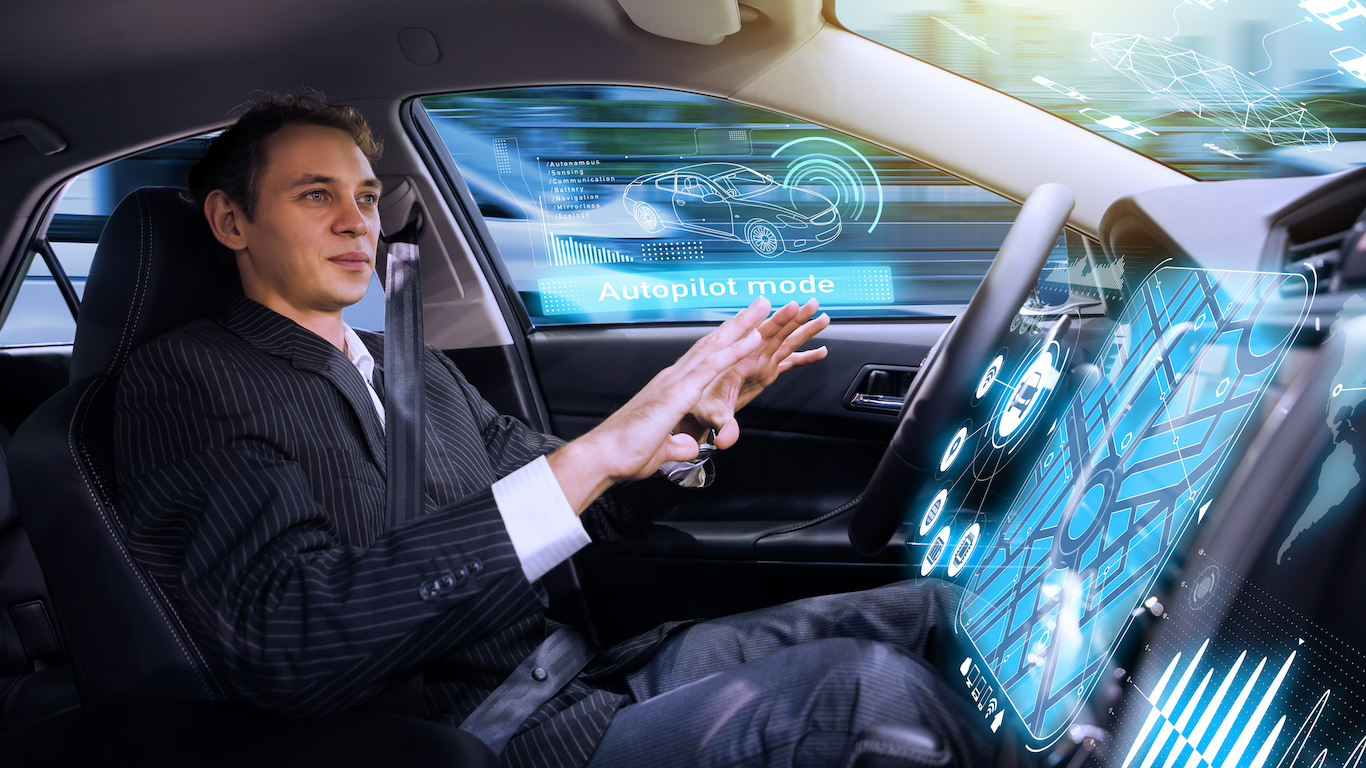
Even though automakers, computer hardware companies, and just about any industry with a pulse is gasping over the opportunities available in the autonomous driving sector, U.S. drivers are much warier. That’s not to imply that they aren’t curious about what’s in store for them from automakers, but most people, particularly older ones, have adopted a wait-and-see attitude toward self-driving cars.
According to a survey released Tuesday by J.D. Power, 11% more Generation Z (born 1994 through 2004) and 9% more pre-Boomers (born before 1946) than last year “definitely would not” trust autonomous driving technology. Nearly a third (30%) of Gen Z consumers and nearly half (49%) of Boomers say that their biggest concern with a self-driving vehicle is a technology error or failure.
Consumers of all ages, however, are very interested in collision protection and driving assistance technologies, and their six top features are smart headlights, camera rear-view mirror, emergency braking and steering system, lane-change assist, camera side-view mirrors, and advanced windshield display. At least, these are the features they are interested in before learning the price.
J.D. Power executive Kristin Kolodge said:
Along with collision mitigation, there are many benefits to autonomous vehicles, including allowing those who are unable to drive today’s vehicles to experience freedom of mobility. Interesting, though, 40% of Boomers do not see any benefits to self-driving vehicles. Automated driving is a new and complex concept for many consumers; they’ll have to experience it firsthand to fully understand it. As features like adaptive cruise control, automatic braking and blind-spot warning systems become mainstream, car buyers will gain more confidence in taking their hands off the steering wheel and allowing their vehicles to step in to prevent human error.
Nearly a third of all consumers are willing to pay $700 for an advanced emergency braking and steering system. That’s a higher percentage than are willing to pay for other, cheaper features like digital keys ($250), dash cameras ($300), or mobile system controls ($400).
Contact [email protected] for any questions or corrections.
Paul Ausick has been writing for 247Wallst.com for more than a decade. He has written extensively on investing in the energy, defense, and technology sectors. In a previous life, he wrote technical documentation and managed a marketing communications group in Silicon Valley.
He has a bachelor's degree in English from the University of Chicago and now lives in Montana, where he fishes for trout in the summer and stays inside during the winter.