This Is the Hottest Place in the World
Parts of India and Pakistan are sweltering under unprecedented temperatures now, with one city reaching more than 120° Fahrenheit.

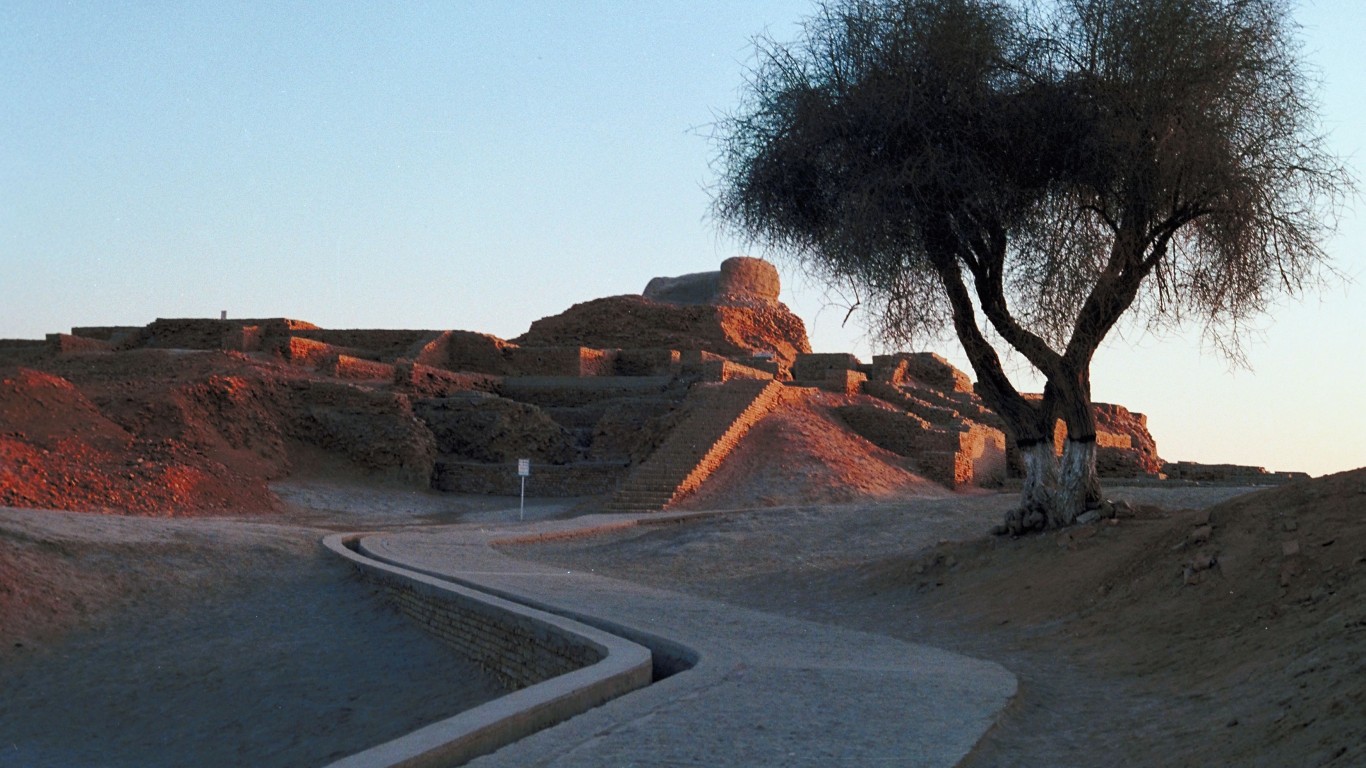
Parts of India and Pakistan are sweltering under record temperatures now. The conditions have threatened a broad range of long-term damage, from includes human health to crops. Dr. Chandni Singh, Intergovernmental Panel on Climate Change lead author and senior researcher at the Indian Institute for Human Settlements, told CNN: “This heatwave is definitely unprecedented. We have seen a change in its intensity, its arrival time, and duration. This is what climate experts predicted and it will have cascading impacts on health.”
Today, the temperature in Nawabshah, Pakistan rose above 121° Fahrenheit. It was well above 115° in Jacobabad, Pakistan; Pad Idanm, Pakistan; Khanpur, Pakistan; Bikaner, India; Sibi, Pakistan; Ganganagar, India; and Barmer, India. Each is near the northwest corner of India near the Pakistan border.
Jacobabad has been called one of the hottest places on Earth. The mean temperature in summer is 99° F. Humans cannot survive for long in this kind of heat. The record temperature is 127°.
Jacobabad is a modest-sized city based on Pakistan standards. It ranks 43rd in population in the country, with 190,000 residents. Pakistan is the fifth largest nation based on a population of 220 million people. That trails well behind India’s 1.38 billion.
Temperatures above 120° can easily bring about heat exhaustion. Ready.gov describes the symptoms as “heavy sweating, paleness, muscle cramps, tiredness, weakness, fast or weak pulse, dizziness, headache, fainting, nausea, and vomiting.”
Contact [email protected] for any questions or corrections.
Douglas A. McIntyre is the co-founder, chief executive officer and editor in chief of 24/7 Wall St. and 24/7 Tempo. He has held these jobs since 2006.
McIntyre has written thousands of articles for 24/7 Wall St. He is an expert on corporate finance, the automotive industry, media companies and international finance. He has edited articles on national demographics, sports, personal income and travel.
His work has been quoted or mentioned in The New York Times, The Wall Street Journal, Los Angeles Times, The Washington Post, NBC News, Time, The New Yorker, HuffPost USA Today, Business Insider, Yahoo, AOL, MarketWatch, The Atlantic, Bloomberg, New York Post, Chicago Tribune, Forbes, The Guardian and many other major publications. McIntyre has been a guest on CNBC, the BBC and television and radio stations across the country.
A magna cum laude graduate of Harvard College, McIntyre also was president of The Harvard Advocate. Founded in 1866, the Advocate is the oldest college publication in the United States.
TheStreet.com, Comps.com and Edgar Online are some of the public companies for which McIntyre served on the board of directors. He was a Vicinity Corporation board member when the company was sold to Microsoft in 2002. He served on the audit committees of some of these companies.
McIntyre has been the CEO of FutureSource, a provider of trading terminals and news to commodities and futures traders. He was president of Switchboard, the online phone directory company. He served as chairman and CEO of On2 Technologies, the video compression company that provided video compression software for Adobe’s Flash. Google bought On2 in 2009.