Oil Demand Hit by Trade War
In the latest IEA oil markets report, its experts commented that the trade war has dented demand and may do so more forcefully if the battle goes one.


The gold standard of oil price and demand forecasts is the International Energy Agency’s oil markets report. In the one just issued, its experts commented that the trade war has dented demand and may do so more forcefully if the battle goes one. The only silver lining is that low oil prices tend to help the economy.
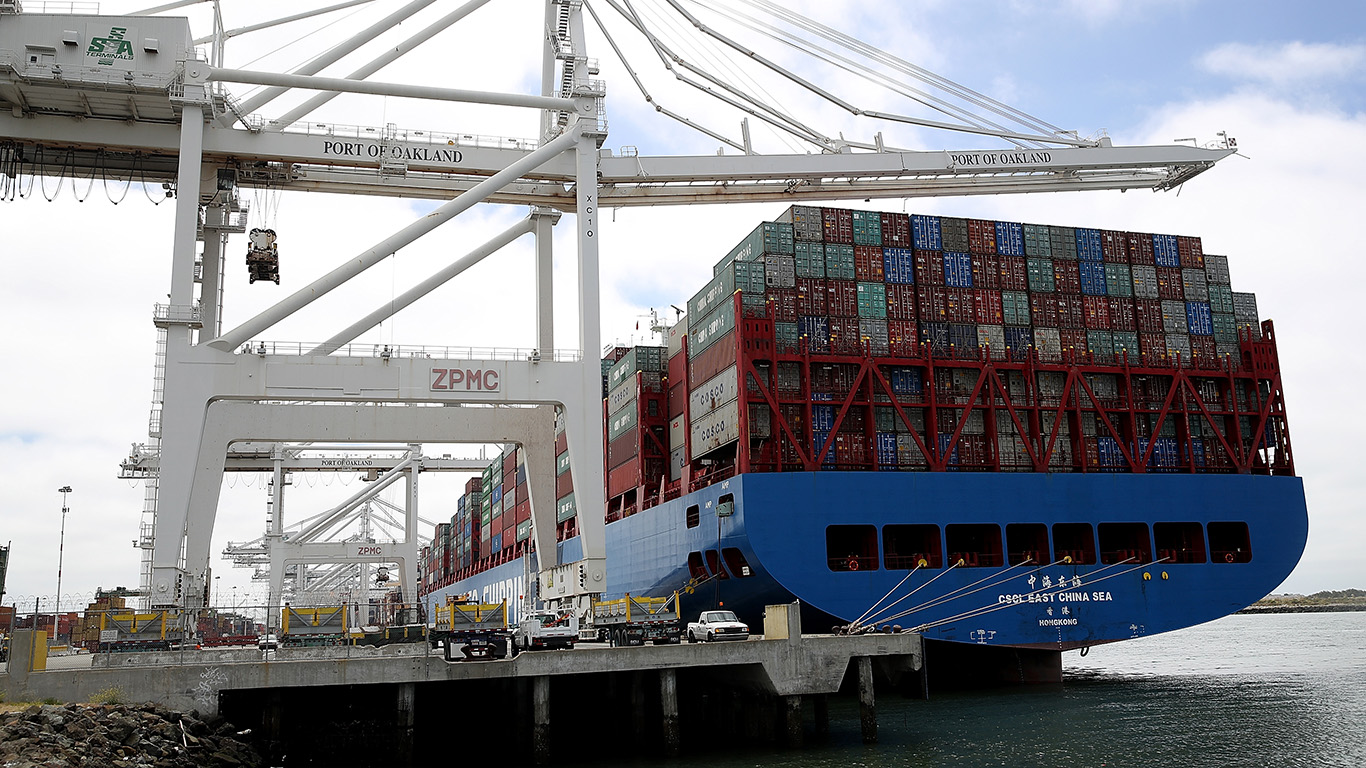
The IEA experts wrote, “… the US-China trade dispute remains unresolved and in September new tariffs are due to be imposed. Tension between the two has increased further this week, reflected in heavy falls for stock and commodity markets.” New tariffs on $300 billion of Chinese goods will be tacked on to current tariffs that the Trump administration has imposed.
The trade war may not end for months. The chief economist at Goldman Sachs expects it to go on until after the 2020 election. He assumes that the Federal Reserve will need to cut rates three times by then to steady the economy. In the meantime, no major trade talks between China and the United States are scheduled for weeks.
The IEA looked at the near-term future and the effects of the tension between the world’s two largest economies: “Oil demand growth estimates have already been cut back sharply: in 1H19, we saw an increase of only 0.6 mb/d [million barrels a day], with China the sole source of significant growth at 0.5 mb/d. Two other major markets, India and the United States, both saw demand rise by only 0.1 mb/d. For the OECD as a whole, demand has fallen for three successive quarters.”
The only major cut in production at the current moment is a slight reduction from OPEC. That will not affect prices much if the trade war saps demand further.
The IEA reported that it will hold its estimate of oil consumption at 100.4 mb/d for the balance of the year. However, “The outlook is fragile with a greater likelihood of a downward revision than an upward one.”
Contact [email protected] for any questions or corrections.
Douglas A. McIntyre is the co-founder, chief executive officer and editor in chief of 24/7 Wall St. and 24/7 Tempo. He has held these jobs since 2006.
McIntyre has written thousands of articles for 24/7 Wall St. He is an expert on corporate finance, the automotive industry, media companies and international finance. He has edited articles on national demographics, sports, personal income and travel.
His work has been quoted or mentioned in The New York Times, The Wall Street Journal, Los Angeles Times, The Washington Post, NBC News, Time, The New Yorker, HuffPost USA Today, Business Insider, Yahoo, AOL, MarketWatch, The Atlantic, Bloomberg, New York Post, Chicago Tribune, Forbes, The Guardian and many other major publications. McIntyre has been a guest on CNBC, the BBC and television and radio stations across the country.
A magna cum laude graduate of Harvard College, McIntyre also was president of The Harvard Advocate. Founded in 1866, the Advocate is the oldest college publication in the United States.
TheStreet.com, Comps.com and Edgar Online are some of the public companies for which McIntyre served on the board of directors. He was a Vicinity Corporation board member when the company was sold to Microsoft in 2002. He served on the audit committees of some of these companies.
McIntyre has been the CEO of FutureSource, a provider of trading terminals and news to commodities and futures traders. He was president of Switchboard, the online phone directory company. He served as chairman and CEO of On2 Technologies, the video compression company that provided video compression software for Adobe’s Flash. Google bought On2 in 2009.