Buffett’s oil play, a renewables bubble, and a plan to use sea snow to carry carbon away
By David Callaway, Callaway Climate Insights Given Warren Buffett’s investment philosophy of buying when blood is in the water, it’s no surprise he picked up $4 billion worth of Chevron Corp. (CVX) shares last year as oil stocks collapsed. With Chevron’s gain…


By David Callaway, Callaway Climate Insights
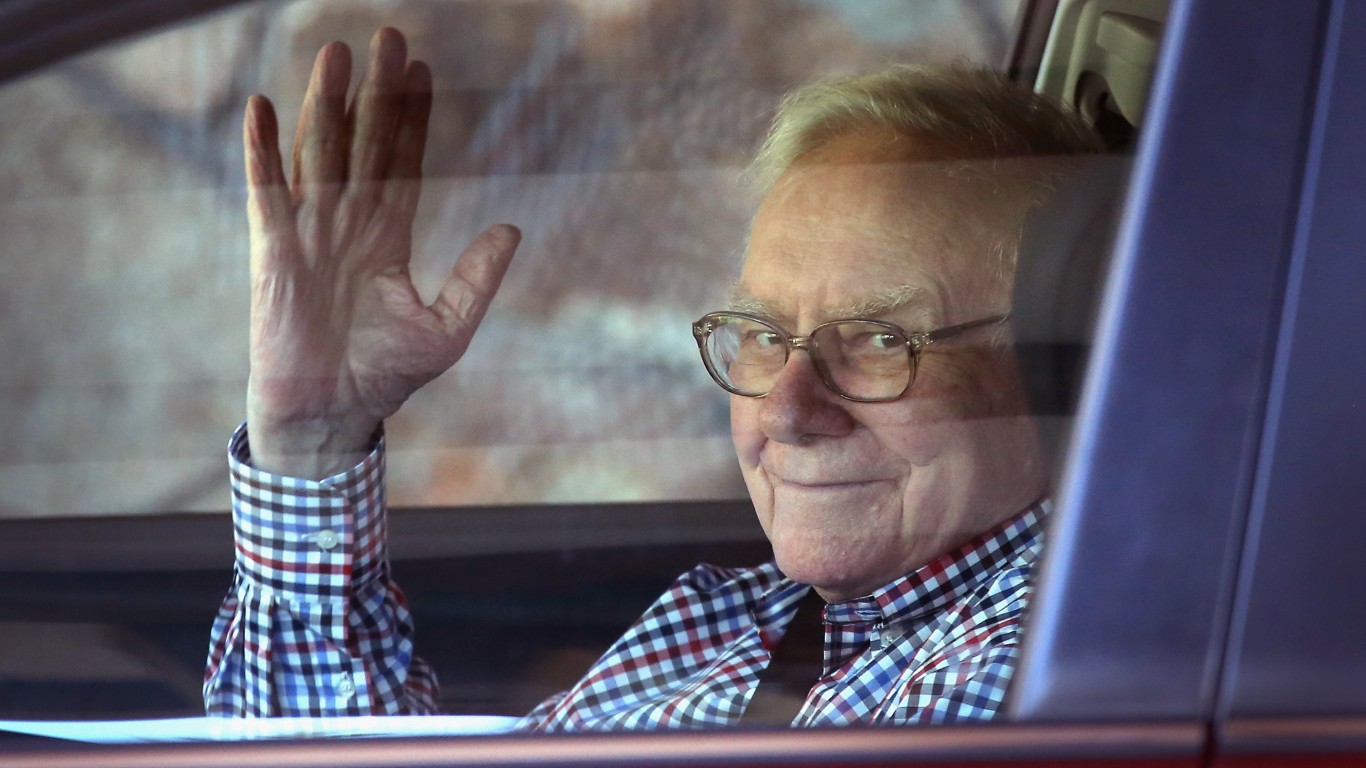
Given Warren Buffett’s investment philosophy of buying when blood is in the water, it’s no surprise he picked up $4 billion worth of Chevron Corp. (CVX) shares last year as oil stocks collapsed.
With Chevron’s gain of almost 3% on Wednesday, Buffett’s Berkshire Hathaway (BRK,A BRK.B) could be up more than 40% on some of the shares it bought in the fourth quarter if it bought at the quarter lows near Thanksgiving. More than 50% if it bought earlier in the year. At 90 years old, he’s probably not too worried about the criticism he’ll get from the divestment crowd.
But assuming Chevron will be around for awhile and part of any energy transition to renewables over time, he could be worried about the cost of that transition to Chevron and other Berkshire oil assets. Total CEO Patrick Pouyanne, in an interview with the Financial Times this morning, said he’s seeing price tags on renewable investments in Europe surging, indicating a bubble developing that could hinder buying, at least by Total.
As investor funds flow into environmental, social and governance (ESG) deals, and fossil fuel companies like Total and Chevron start to enter the fray for renewable investments, a mergers and acquisitions boom is likely. Also this morning, in a small deal, investment manager Nuveen Investments agreed to acquire Greenworks Lending, a commercial clean energy financer.
Buffett swims in his own ocean, so don’t expect a surge in oil investments to follow. In fact, shares are already up with oil itself early this year. But the frothy market right now, combined with enthusiasm for green investing, could provide a healthy backdrop for more renewable deals in coming weeks.
More insights below. . . .
ZEUS: Marine snow, a Croatian plan to store carbon on the bottom of the sea
. . . . In the search for ways to withdraw carbon from the atmosphere, (for reasons not the least of which is a $100 million prize offered by Jeff Bezos) a popular professor at a university in Zagreb, Croatia, has struck upon a plan to make it snow under the sea, and in the process store carbon for hundreds of thousands of years. David Callaway has the story of Dr. Stasa Puskaric and his marine snow. Read more here. . . .
Free Callaway Climate Insights Newsletter
Contact [email protected] for any questions or corrections.
Trey has been an editor and author at 24/7 Wall St. for more than a decade, where he has published thousands of articles analyzing corporate earnings, dividend stocks, short interest, insider buying, private equity, and market trends. His comprehensive coverage spans the full spectrum of financial markets, from blue-chip stalwarts to emerging growth companies.
Beyond 24/7 Wall St., Trey has created and edited financial content for Benzinga and AOL's BloggingStocks, contributing additional hundreds of articles to the investment community.
Trey's editorial expertise extends across multiple publishing environments. He served as production editor at Dearborn Financial Publishing and development editor at Kaplan, where he helped shape financial education materials. Earlier in his career, he worked as a writer-producer at SVE. His freelance editing portfolio includes work for prestigious clients such as Sage Publications, Rand McNally, the Institute for Supply Management, the American Library Association, Eggplant Literary Productions, and Spiegel.
Outside of financial journalism, Trey writes fiction and has been an active member of the writing community for years, moderating workshop sessions at regional conventions.