AMC Drops 97%
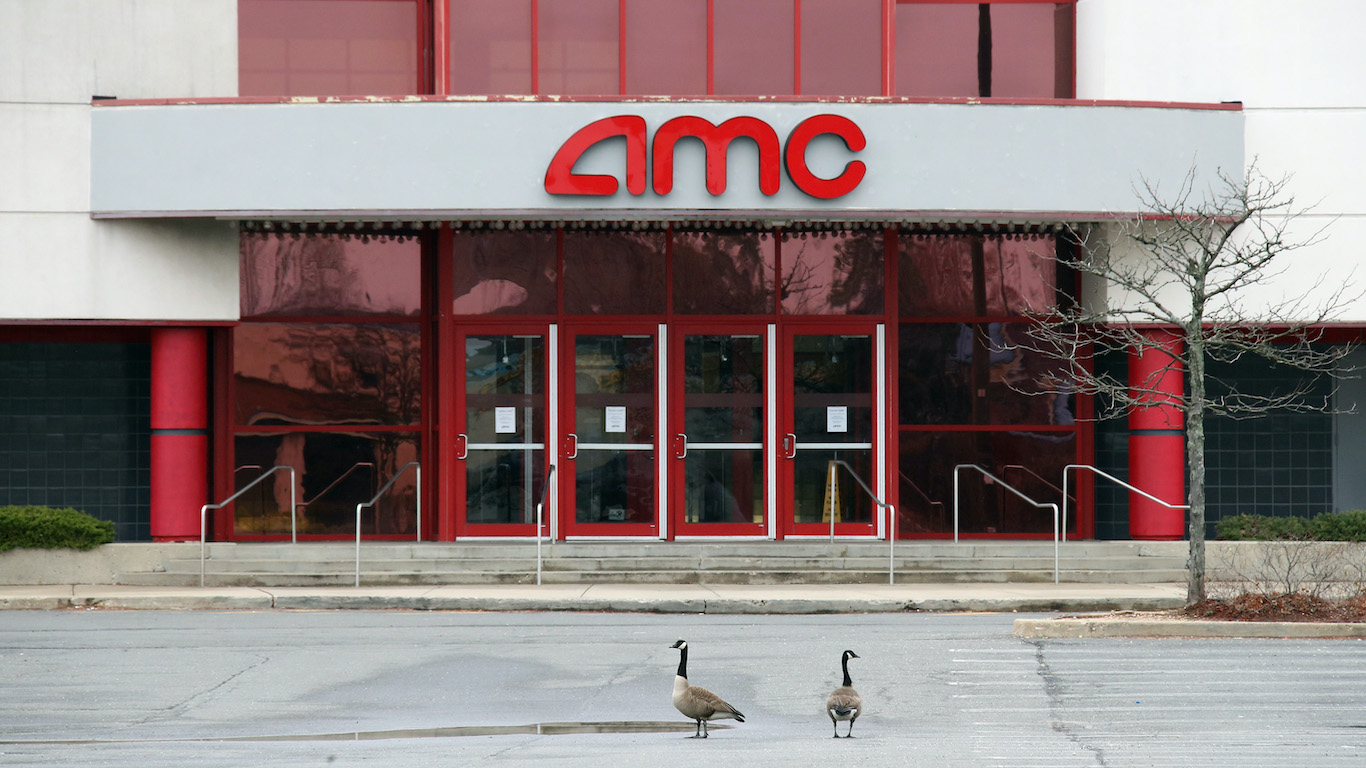
Movie theater company AMC’s stock was not anything special. AMC was the largest company in its sector. Threatened by a consumer move to streaming, many people worried about its future, but traffic to its locations was steady enough. The pandemic…

Movie theater company AMC’s stock was not anything special. AMC was the largest company in its sector. Threatened by a consumer move to streaming, many people worried about its future, but traffic to its locations was steady enough. The pandemic nearly bankrupted it, as people fled public places and turned to streaming almost completely. It appeared AMC would go under.
A series of refinancings kept AMC in business. Among them was a loan convertible to stock, which meant common shareholders faced much dilution. Even before the event that threatened shareholders, a violent tug of war among shareholders lifted trading volume to unimaginable levels, and the stock jumped up and down wildly some days.
According to CNBC, AMC has lost 97% of its price since it peaked in June 2021. Social media triggered much of the trading, as did short sellers who benefited from occasional price crashes.
This chaos put AMC into the meme stock category, built on irrational prices and volume.
The 97% share price is largely due to a retreat of retail investors who became unwilling to bet on a rate of return that might just as well spell disaster. Short sellers, who some regulators believed traded in a way that ignored federal law, also disappeared.
What is left of AMC? For the most part, it is a theater company still threatened by streaming. Its survival is likely because people have not given up on the “big screen” experience and probably never will. This is not a very good business but is good enough to sustain a small company nevertheless.
Contact [email protected] for any questions or corrections.
Michael Sauter is Lead Editor at 24/7 Wall St. He has worked here in various capacities since 2010, starting out as a healthcare industry beat writer. He helped develop the site’s data-driven content, which contributed to 24/7 Wall St. becoming a recognized brand in the field of data journalism, covering a wide range of social and economic issues. Today, he rarely writes but enjoys working with authors and data to find the best way to present information clearly and effectively. In his occasional spare time, Michael loves cycling, listening to audiobooks, and (passably) playing the piano.