The Overriding Reason That Peloton Stock Is Sinking
Peloton's stock dropped sharply following an analysts' downgrade on Tuesday morning. An announced holiday ad campaign sparked some early gains, though.

This post may contain links from our sponsors and affiliates, and Flywheel Publishing may receive compensation for actions taken through them.
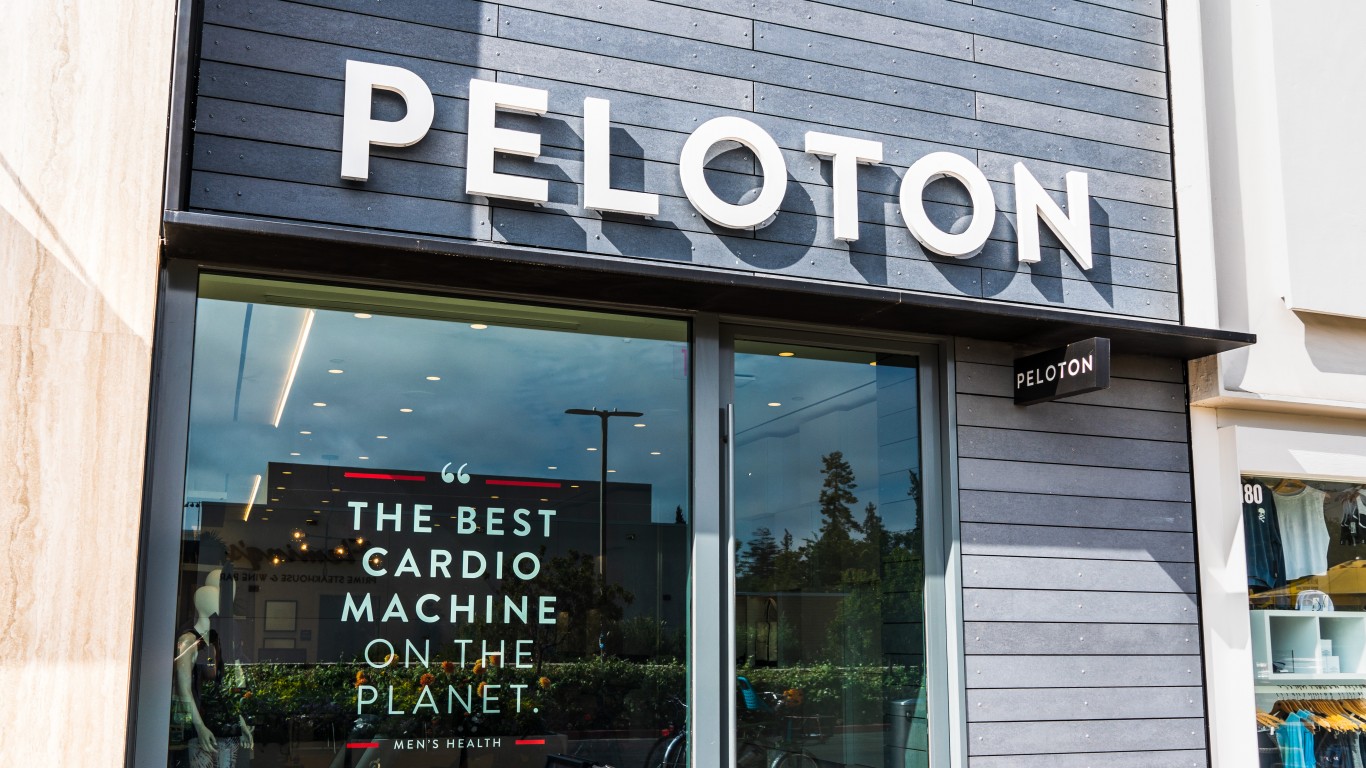
Exercise bike and interactive fitness platform provider Peloton Interactive Inc. (NASDAQ: PTON) saw its stock price rise by more than 450% in the 12-month period from January 2020 to January 2021. Stay-at-home orders due to the COVID-19 pandemic played a huge part in the company’s rise.
Like at things that can’t last, Peloton’s soaring stock price didn’t last either. Since that peak in January 2021, Peloton stock has dropped by 97%. And there’s not a lot of confidence that a turnaround is in the company’s near future.
A new downgrade
 Before U.S. markets opened on Tuesday, Deutsche Bank analyst Lee Horowitz, who recently assumed the bank’s coverage of Peloton, cut the bank’s rating on the shares from Buy to Hold and slashed his price target on the stock from $13 to $4.
Canaccord Genuity cut its rating on the stock from Buy to Hold after Peloton reported quarterly results last week. The firm left its price target at $5 a share.
Also last week, BofA analysts Curtis Nagle and Nafeesa Gupta left their rating at Underperform while raising their price target from $4.15 to $4.60.
What are key drivers in the fitness market?
 In a new report published last month, Precedence Research estimated the global market for fitness equipment reached $13.8 billion in 2022 and will rise to $13.91 billion this year. By 2032, the total market is forecast to reach $15.62 billion. (Check out the most popular exercise fad every year since 1956..)
That’s not a high-growth pace. The U.S. market size totaled $3.77 billion in 2022 and is expected to reach $4.35 billion in 2032, a compound annual growth rate of 1.3%.
Peloton’s total revenue in fiscal 2023, which ended in September, was $2.8 billion, about 20% of the global total and around 90% of the North American total.
The better news for Peloton is that the home consumer segment holds a 53% share of revenue. Smart, interactive equipment like Peloton’s addresses that key market. Another key growth driver is emerging with the integration of wearable technology with smart fitness equipment.
What’s keeping Peloton in the doldrums
 When BofA reiterated its rating last month, the analysts noted that the company’s strategy to benefit from partnerships, rentals, and app expansion “could take time to scale and are not material enough to offset still soft subscriber trends for the core connected fitness base” in the near-to-medium term.
Deutsche Bank likes the size of the company’s total addressable market and believes that the market “can support accelerative growth.” What DB’s analyst lacks is confidence in Peloton’s ability to activate those growth drivers in the medium term. The analyst also cited a “lack of clarity” in the company’s growth outlook as a reason for the downgrade.
A relatively slow-growth market is Peloton’s biggest headache. Analysts expect the market to grow, but can Peloton hold its share with no articulated path to do so? Analyst firms expect the company to come out of its funk, but none is willing to bet that will happen any time soon.
Shortly after Tuesday’s opening bell, Peloton stock traded up by about 1.2% at around $5.10, in a 52-week range of $4.28 to $17.83. A new holiday season ad campaign was announced this morning. That’s helped boost the share price, but it’s not guaranteed to boost the stock price. Premarket trading had the stock down as much as 5%.
Short interest in Peloton totals nearly 16% of the stock’s float. The short interest is roughly equal to the portion of Peloton stock that is not held by institutional investors and insiders.
Contact [email protected] for any questions or corrections.
Paul Ausick has been writing for 247Wallst.com for more than a decade. He has written extensively on investing in the energy, defense, and technology sectors. In a previous life, he wrote technical documentation and managed a marketing communications group in Silicon Valley.
He has a bachelor's degree in English from the University of Chicago and now lives in Montana, where he fishes for trout in the summer and stays inside during the winter.